


 English
 한국어
한국어 日本語
日本語 中文 (中国)


Does Getting a Porcelain Crown Hurt in Vietnam? Many people postpone dental treatment because they fear pain — especially when it comes to crowns. The thought of drilling, injections, or having a tooth “shaved down” can sound intimidating. But here’s the truth: getting a porcelain crown in Vietnam is virtually painless, thanks to modern anesthesia, advanced digital tools, and gentle dental techniques used by leading clinics.
In this article, we’ll explain exactly what to expect before, during, and after the dental crown procedure, why most patients report little to no pain, and how Vietnam’s dental professionals make the experience surprisingly comfortable — even for those with sensitive teeth or dental anxiety.
1. Does a Porcelain Crown Hurt? The Honest Answer
The short answer is no — getting a porcelain crown does not hurt. Most patients describe it as a calm and easy experience, similar to getting a deep cleaning. The entire procedure is performed under local anesthesia, which numbs the area completely. You’ll feel pressure but no pain.
Clinics in Vietnam use ultra-fine needles and computer-assisted anesthesia systems to ensure precise numbing with minimal discomfort. Even the injection feels like a mild pinch. Once anesthesia takes effect, the tooth preparation and fitting process are completely pain-free.
According to the Vietnam Dental Association (2024), over 92% of international patients rated their crown procedure as “comfortable” or “painless.” Advances in CAD/CAM technology, 3D digital scanning, and microscopic precision tools have made the traditional “drilling pain” nearly obsolete.
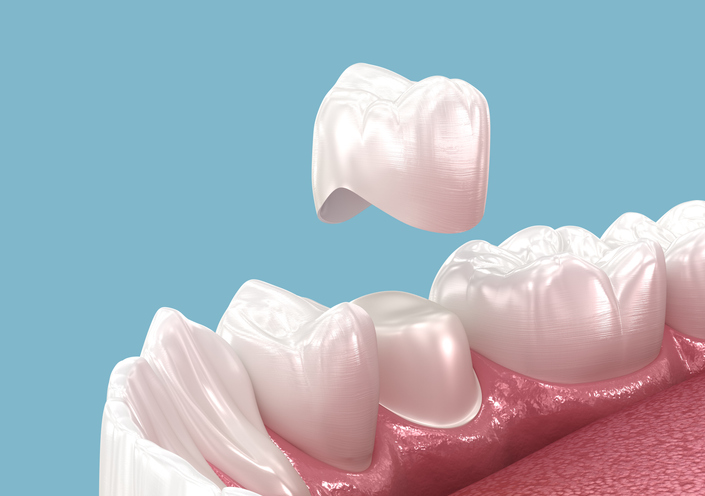
2. Pain During Different Stages of the Crown Procedure
Let’s break down what you might feel at each step of the porcelain crown procedure in Vietnam so you know exactly what to expect:
- Consultation and X-ray:
Absolutely painless. Your dentist will take 3D scans or X-rays to plan your treatment. These tools help avoid unnecessary grinding and make the process faster. - Tooth Preparation:
If your tooth needs reshaping, local anesthesia ensures you feel no pain — just slight pressure or vibration from the tool. For non-prep crowns, even this step is minimized. - Temporary Crown Placement:
You may notice mild tightness when the temporary crown is fitted, but it doesn’t hurt. - Final Crown Cementation:
When the permanent porcelain crown is bonded, you might feel gentle pressure as the dentist adjusts the bite. Once anesthesia wears off, some sensitivity (especially in front tooth crown cases) can occur for 1–2 days but fades quickly.
3. Why the Procedure Feels So Comfortable in Vietnam
Modern Vietnamese dental clinics have invested heavily in pain-control technology. At premium centers, you’ll find:
- Digital local anesthesia systems that deliver smaller, steady doses, avoiding “injection shock.”
- Rubber dam isolation that keeps the area dry and comfortable.
- CAD/CAM crown fabrication, eliminating long sessions and repeat drilling.
- Painless laser gum contouring, if needed for aesthetics.
Moreover, Vietnamese dentists are known for their gentle touch and attention to patient comfort. Many trained abroad (in Korea, Japan, or Europe) and bring a spa-like approach to dentistry. Clinics such as BeDental even design their rooms with soft lighting and calming music to help patients relax.
4. What About After the Anesthesia Wears Off?
After the procedure, you may experience mild sensitivity or pressure when biting — especially if you received a front tooth crown or if the gum around the tooth was slightly inflamed. This is completely normal.
Here’s what you can expect:
- Mild tenderness for 24–48 hours.
- Occasional sensitivity to hot or cold drinks.
- Slight gum soreness as it adjusts to the new crown margins.
Painkillers are rarely needed. If discomfort occurs, over-the-counter pain relief such as ibuprofen or paracetamol is more than enough.
According to a 2023 study in the Journal of Advanced Dentistry, fewer than 8% of crown patients required any post-operative medication when treated with modern adhesive and anesthesia techniques.
5. Common Causes of Crown-Related Pain (and How to Avoid Them)

While the dental crown procedure itself shouldn’t hurt, here are rare situations where you might feel discomfort later — and how to prevent them:
- High Bite: If your crown sits slightly higher than adjacent teeth, it can cause soreness when chewing. This is easily corrected with a quick bite adjustment.
- Gum Inflammation: If you don’t floss or brush properly, bacteria can accumulate near the crown edge. Regular hygiene prevents this.
- Nerve Sensitivity: Teeth with deep decay or old fillings may be close to the pulp; your dentist may recommend root canal treatment beforehand to avoid future pain.
- Re-Crowning Pain: If an old crown fails and needs replacement, slight tenderness can occur when removing old cement. Proper anesthesia prevents real pain.
These issues are rare at reputable clinics, where crowns are digitally designed to fit within microns and bonded seamlessly.
6. Real Patient Story: From Fear to Relief
To better understand what the experience feels like, meet Caroline, a 38-year-old teacher from Australia who had always feared the dentist. After cracking a front tooth while eating, she needed an urgent crown but dreaded the pain. A friend recommended BeDental in Hanoi, known for its painless cosmetic dentistry.
“I honestly expected the worst,” Caroline admits. “But it was shockingly easy. They numbed me so gently I didn’t even feel the needle. The whole process was smooth — no pain, no panic. When the numbness faded, there was just a bit of pressure for a day. Now my front crown looks completely natural, and I wish I hadn’t waited so long.”
Her story reflects the experience of many foreign patients who come to Vietnam anxious and leave pleasantly surprised — not just by the price, but by the gentle, human-centered care.
7. Pain Management Tips After Getting a Crown
If you still worry about post-treatment discomfort, here are professional care tips to ensure a smooth recovery:
- Avoid chewing hard foods (like ice or nuts) for the first two days.
- Rinse with warm salt water to soothe gums.
- Brush gently using a soft-bristle toothbrush.
- Use fluoride toothpaste to protect enamel and reduce sensitivity.
- Visit your dentist for bite adjustment if any pain persists after 3–4 days.
In most cases, front tooth crown pain or sensitivity disappears within a week. If discomfort continues, your dentist can check for pressure spots or gum irritation and fix it quickly.
>> See more: Venus Porcelain Teeth in Vietnam: The German Standard for a Perfect Smile
8. Re-Crowning and Sensitivity — What to Expect
If you’re replacing an old or damaged crown, you might wonder whether re-crowning hurts. The answer remains the same: it’s a painless process when performed under anesthesia. The old crown is gently lifted off, the base cleaned, and a new one bonded — often within a single visit using digital milling.
Patients who had metal-ceramic crowns replaced with porcelain ones often describe the second procedure as “even easier” than the first, because the tooth is already shaped. A small percentage report mild gum soreness, but not true pain.
9. How Vietnam Keeps You Comfortable from Start to Finish
Vietnam’s growing dental tourism industry places strong emphasis on comfort and communication. Clinics catering to international clients often provide:
- English-speaking staff who explain each step clearly.
- Comfort lounges with soothing interiors to reduce anxiety.
- Shorter treatment windows — often just 3–5 days for a full crown.
- Follow-up support, including online check-ins for overseas patients.
This holistic care model makes the crown experience both efficient and stress-free. It’s no surprise that according to Dental Departures (2024), Vietnam ranks among the top three destinations globally for patients seeking painless, affordable dental crowns.
10. How to Prepare Mentally and Physically for a Painless Experience
Dental anxiety is one of the biggest reasons people delay treatment, even when they’re in pain or embarrassed about their smile. The good news is that modern crown procedures don’t require bravery — just preparation and communication.

Before your appointment, eat a balanced meal if you’re not undergoing sedation. A full stomach helps stabilize blood sugar and reduces light-headedness during the procedure. Avoid caffeine, which can raise anxiety levels and heart rate. Get a good night’s sleep the day before — fatigue amplifies sensitivity and makes your body less cooperative with anesthesia.
Next, share your fears openly with your dentist. In Vietnam, doctors are trained to manage anxious patients with empathy and patience. The more they know about your past experiences — whether a bad childhood memory or needle phobia — the better they can tailor care to keep you calm.
Many clinics also provide relaxation options beyond the usual local anesthesia. You might be offered calming aromatherapy, low-volume music, or mild oral sedatives that help you stay relaxed without losing awareness. For particularly anxious travelers, nitrous oxide (“laughing gas”) is available at select centers, producing a light, floaty sensation that makes time fly.
Another tip: bring comfort items such as earphones or your favorite playlist. Clinics are happy to let you listen to music during the procedure, helping you focus on rhythm instead of dental sounds. Breathing slowly through your nose and keeping your hands relaxed on the armrest also signals your body to stay calm.
Remember: a porcelain crown is not surgery. It’s a conservative restoration designed to protect your natural tooth. Modern dentists see themselves not just as doctors, but as artisans shaping enamel with microscopic precision. The process has become so refined that most patients leave saying, “It didn’t hurt at all — I wish I’d done it sooner.”
11. How Much Does a Painless Porcelain Crown Cost in Vietnam?
When people hear about digital anesthesia, CAD/CAM scanners, and same-day crown technology, they assume the price must rival Western clinics. In reality, Vietnam remains one of the most affordable and transparent dental destinations worldwide.
Let’s look at average 2025 rates in top-tier clinics:
- Single porcelain crown: USD 250 – 400
- Front tooth cosmetic crown: USD 300 – 500 (crafted with E.max or layered zirconia for lifelike translucency)
- Full zirconia crown: USD 400 – 600 (monolithic type, ideal for heavy biters)
- Full smile makeover (10 – 12 crowns): USD 3,000 – 4,500, including diagnostics, anesthesia, temporary crowns, and adjustments
These prices are 60 – 70 % lower than in Australia or the United States, where a single crown can cost between USD 1,200 and 2,500.
In Vietnam, the cost covers everything: consultation, 3D scans, anesthetic application, temporary crown fitting, lab fees, cementation, polishing, and follow-up. There are no surprise add-ons for “lab work” or “numbing injections,” which often inflate bills abroad.
Patients also benefit from multi-crown packages. If you restore several teeth at once, most clinics reduce the per-crown cost by up to 20 – 25 %. Some even include hotel support or airport transfers for international clients, turning dental care into a comfortable mini-vacation.
To illustrate, an American patient named Robert K. shared his experience:
“I paid nearly USD 1,800 for a single crown in California. In Ho Chi Minh City, I replaced four teeth with high-grade zirconia for the same price — flights included. The entire process was painless, and the crowns still look flawless two years later.”
Such testimonials highlight why Vietnam’s painless porcelain crown treatment is not just affordable, but exceptional value for the quality received.
| Category | Price | ||
|---|---|---|---|
| 1. Phục hình tháo lắp - (Tìm hiểu thêm...) Removable Denture (More detail...) | |||
| Giá Hàm nền nhựa thường Conventional Denture (More detail...) | (1teeth) | 4.000.000 | |
| Giá Hàm nền nhựa dẻo Flexible acrylic partial denture | (1teeth) | 5.500.000 | |
| Giá Hàm khung kim loại thường Cast metal partial denture | (1teeth) | 4.500.000 | |
| Giá Hàm khung Titan Titanium partial denture | (1teeth) | 6.000.000 | |
| 2. Răng giả (Tìm hiểu thêm...) False teeth | |||
| Giá Răng giả hàm tháo lắp nhựa nội Acrylic resin teeth -made in Vietnam | (1teeth) | 350.000 | |
| Giá Răng giả hàm tháo lắp nhựa Mỹ Acrylic resin teeth -made in USA | (1teeth) | 600.000 | |
| Giá Răng giả hàm tháo lắp sứ Porcelain teeth backed with metal | (1teeth) | 1.800.000 | |
| Máng nâng khớp Denture occlúion | 1.000.000 | ||
| 3. Phục hình cố định : Non-removable denture | |||
| Giá Sứ kim loại (Tìm hiểu thêm...) Porcelain teeth backed with metal | |||
| Giá Răng sứ kim loại thường (Ni,Cr) Porcelain teeth backed with metal (Ni,Cr) | 1.800.000 | ||
| Giá Răng sứ kim loại Vivadent france (Cr,Co) Porcelain teeth backed with metal Vivadent France (Cr,Co) | 1.800.000 | ||
| Giá Răng sứ kim loại Jelenko USA ( Cr, Co) Porcelain teeth backed with metal Jelenko USD (Cr,Co) | 2.000.000 | ||
| Giá Răng sứ kim loại titan Porcelain teeth backed with titanium | 3.500.000 | ||
| Giá Sứ không kim loại : (Tìm hiểu thêm) Non-metal Teeth | |||
| Giá Răng sứ Katana (bảo hành 7 năm) Porcelain Veneer Katana from Japan | 3.500.000 | ||
| Giá Răng sứ Venus ( bảo hành 7 năm) (Tìm hiểu thêm...) Porcelain Veneer Venus from Germany (More detail...) | 4.000.000 | ||
| Giá Răng sứ Roland ( bảo hành 10 năm) (Tìm hiểu thêm...) Porcelain Veneer Roland from Germany (More detail...) | 4.800.000 | ||
| Giá Răng sứ Roland HD (bảo hành 10 năm) (Tìm hiểu thêm...) Porcelain Veneer Roland HD from Germany | 5.900.000 | ||
| Giá Răng sứ Ceramill (bảo hành 10 năm)(Tìm hiểu thêm...) Porcelain Veneer Ceramil from Germany | 6.000.000 | ||
| Giá Răng sứ Emax Nanoceramics ( bảo hành 15 năm) Porcelain Veneer Emax from Germany | 7.000.000 | ||
| Giá Răng sứ HTsmile (Bảo hành 15 năm) (Tìm hiểu thêm...) Porcelain Veneer Htsmile from Germany (More detail...) | 7.000.000 | ||
| Giá Răng sứ Emax* Press Lithium Disilicate (Bảo hành 15 năm) (Tìm hiểu thêm...) Porcelain Veneer Emax press from Germany (More detail...) | 8.000.000 | ||
| Giá Răng sứ Cercon (Bảo hành 15 năm) (Tìm hiểu thêm...) Porcelain Veneer Cercon from Germany (More detail...) | 7.000.000 | ||
| Giá Răng sứ Nacera Pearl Shade ( bảo hành 10 năm) Porcelain Veneer Nacera from Germany | 10.000.000 | ||
| Giá Răng sứ Lava 3M Premium Plus ( bảo hành 15 năm) (Tìm hiểu thêm...) Porcelain Veneer Lava 3M Plus from USA (More detail...) | 9.000.000 | ||
| Giá Răng sứ Lava Esthentics ( bảo hành 15 năm) Porcelain Veneer 3M Lava Esthetic from USA | 12.000.000 | ||
| Giá Răng sứ Lisi Press (bảo hành 15 năm) (Tìm hiểu thêm...) Porcelain Veneer Lisi from Japan (More detail...) | 12.000.000 | ||
| Giá Răng sứ kim cương (Bảo hành trọn đời) Porcelain Veneer Diamond from USA | 16.000.000 |
>> See more: Does getting a porcelain crown require a root canal? in Vietnam
12. Why Vietnamese Clinics Are Winning Global Trust
Beyond cost, the secret to Vietnam’s dental success lies in its balance of technology, skill, and genuine human care. Clinics have adopted European-standard sterilization protocols, ISO-certified workflows, and imported materials from Germany, Switzerland, and Japan. Yet what truly impresses patients is the compassion behind every interaction.
Dentists here take time to explain each step clearly, ensuring you understand the procedure before it begins. There’s no rush, no pressure — just dialogue. Patients are encouraged to see photos, touch sample crowns, and even watch 3D simulations of their upcoming smile. This transparency eliminates fear and builds trust long before treatment starts.
Technologically, Vietnam’s leading clinics rival any global dental hub. They use digital anesthesia delivery systems that maintain steady, micro-dosed flow — preventing the sharp sting of traditional injections. 3D intraoral scanners replace messy impressions, while CEREC CAD/CAM milling enables same-day porcelain crowns. You can walk in the morning with a cracked tooth and leave that afternoon with a fully restored, pain-free smile.
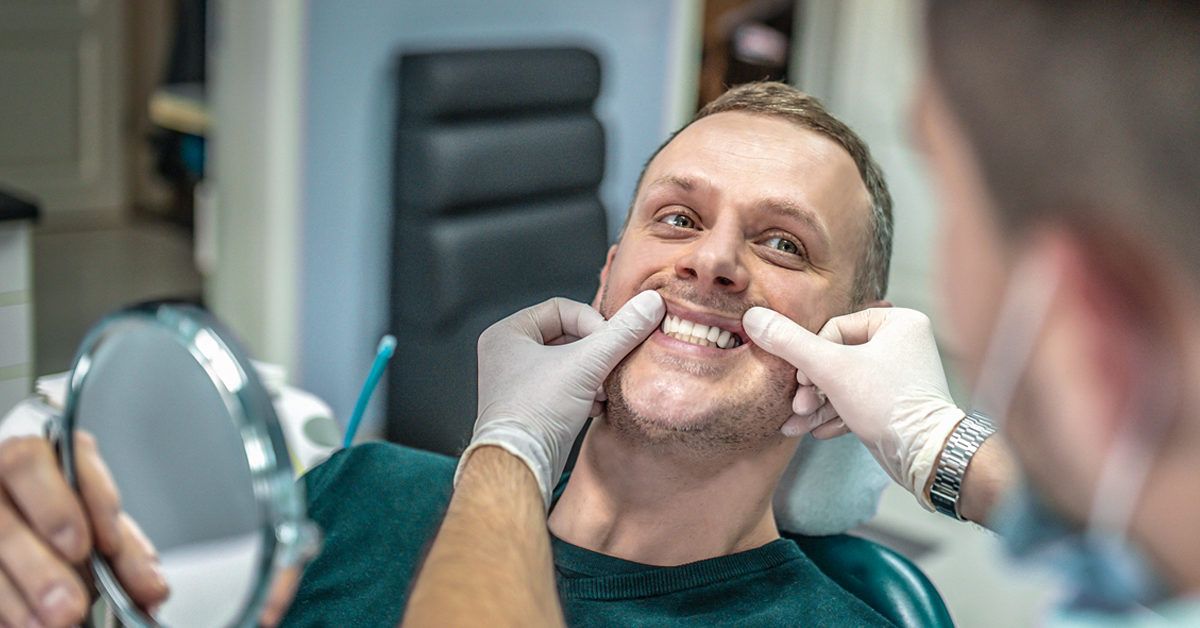
Clinics also emphasize aftercare continuity. You’re given digital copies of X-rays, treatment plans, and bite simulations, allowing you to share them easily with your home dentist if needed. Many centers offer free online follow-ups for six months — a reassurance few Western practices provide.
The result? Vietnam consistently ranks among the top three dental tourism destinations in Asia, with patient satisfaction scores exceeding 90 %. Visitors praise not only the quality of their crowns but also the warmth of their caregivers.
As one British traveler summarized:
“In Vietnam, you don’t feel like a number — you feel like someone they genuinely want to help. My crown didn’t just fix my tooth; it restored my faith in dentists.”
That sentiment captures the essence of Vietnam’s rise in global dentistry: cutting-edge science guided by authentic human kindness — proving that a pain-free porcelain crown isn’t just possible, but beautifully accessible.
13. Final Thoughts: Pain-Free, Beautiful, and Worth It
If you’ve been wondering, “Does getting a porcelain crown hurt?” — rest assured, the answer is no. In Vietnam, advanced dental techniques have turned what was once a feared procedure into a smooth, comfortable experience.
From gentle anesthesia to precision technology and compassionate care, every step is designed to protect your comfort and confidence.
Whether you’re fixing a broken tooth, upgrading an old crown, or seeking a cosmetic crown to perfect your smile, you’ll find that the experience is far easier — and far more affordable — than you ever imagined.
Experience Comfort and Care at BeDental Vietnam
At BeDental, patient comfort comes first. The clinic specializes in pain-free porcelain crown procedures, using digital anesthesia and ultra-thin restorations crafted by in-house technicians. International patients consistently praise its transparency, English-speaking team, and welcoming atmosphere.
For anyone anxious about dental work, BeDental proves that modern dentistry can be gentle, beautiful, and accessible — a place where fear turns into confidence, and every smile has a story worth sharing.

Tư vấn chuyên môn bài viết:
BÁC SĨ DƯƠNG THỊ THÙY NGA
BEDENTAL - TOP STANDARD DENTISTRY SYSTEM
In HANOI
Address 1: 7B Thi Sach St, Ngo Thi Nham, Hai Ba Trung Dist, Ha Noi. - 0934.61.9090
Address 2: No 129 Hoang Ngan, Yen Hoa, Cau Giay Dist, Ha Noi. - 0934.61.9090
In HO CHI MINH
Address 1: 53 -55 -57 Pho Duc Chinh St, Nguyen Thai Binh, Dist. 1, Ho Chi Minh. - 0766.00.8080
Working: 9am - 8pm everyday
Website: https://bedental.vn/en/