


 English
 한국어
한국어 日本語
日本語 中文 (中国)


One of the most common questions patients ask before getting a crown is Does getting a porcelain crown require a root canal? in Vietnam. Many people worry that placing a crown automatically means the tooth nerve will be removed, leading to fear, hesitation, or even delaying necessary treatment. In reality, a root canal is not always required before a crown, and the decision depends entirely on the health of the tooth, not the crown itself.
A porcelain crown is designed to restore the shape, strength, and appearance of a tooth. It does not directly affect the tooth nerve. However, if the tooth already has deep decay, cracks, or nerve damage, a root canal may be necessary before the crown can be safely placed. Understanding this distinction helps patients avoid unnecessary anxiety and make informed decisions.
Is root canal needed before a crown? What dentists actually evaluate
The key question dentists consider is not Is root canal required for crown, but rather whether the tooth nerve is healthy enough to remain intact. During the examination, dentists assess symptoms, X-rays, and sometimes additional tests to evaluate nerve vitality.
If the tooth has deep decay close to the nerve, a history of severe pain, prolonged sensitivity to hot or cold, swelling, or signs of infection, a root canal is often recommended before crown placement. This prevents future pain or infection trapped under the crown, which would be more difficult to treat later.
On the other hand, if the tooth is structurally weakened but the nerve is healthy, a crown can often be placed without root canal treatment. In such cases, the crown acts as a protective cap, reinforcing the tooth and reducing the risk of future damage.
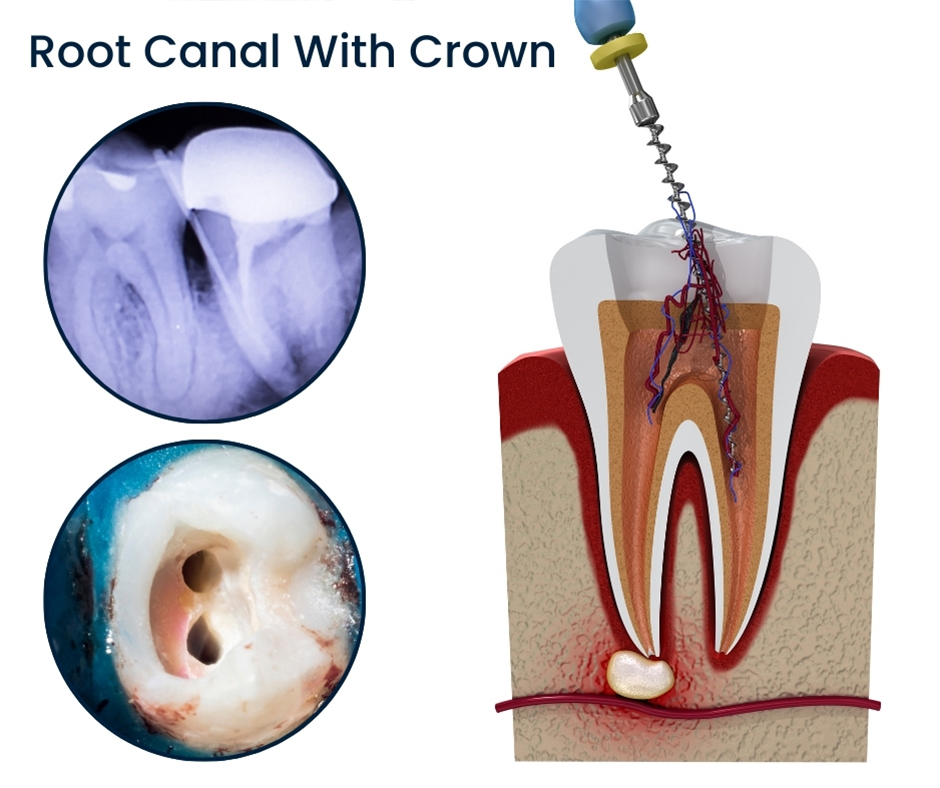
Crown and root canal: understanding the relationship
The relationship between crown and root canal treatment is often misunderstood. A root canal treats infection or damage inside the tooth, while a crown restores the outer structure. They serve different purposes but are often combined when a tooth is severely compromised.
After a root canal, the tooth becomes more brittle because it no longer has a living nerve and blood supply. This is why dentists commonly recommend a crown after root canal treatment. The crown protects the weakened tooth from cracking or breaking under chewing forces.
In Vietnam, many dentists follow international guidelines that strongly suggest placing a crown on molars and premolars after root canal treatment to prevent long-term failure.
Crown after root canal: why it is usually recommended
For patients wondering about Crown after root canal, the recommendation is based on biomechanics rather than cosmetics. Teeth that have undergone root canal treatment are structurally weaker, especially if a large amount of decay or old filling was removed.
A crown restores the tooth’s strength and allows it to function normally during chewing. Without a crown, root canal–treated teeth are at higher risk of fracture, which may eventually lead to tooth loss.
Patients sometimes delay getting a crown after a root canal because the tooth no longer hurts. However, absence of pain does not mean the tooth is strong. Crowning at the right time significantly increases the long-term survival of the tooth.
Crown for root canal teeth: is it always necessary?
While Crown for root canal teeth is strongly recommended in most cases, there are exceptions. Front teeth, which experience less biting force, may sometimes survive with a high-quality filling instead of a crown if minimal tooth structure was lost.
However, for back teeth that endure heavy chewing forces, crowns are usually essential. Studies in restorative dentistry consistently show that root canal–treated molars without crowns have a much higher fracture rate compared to those protected by crowns.
Dentists in Vietnam typically explain these differences during consultation so patients understand why a crown may be optional in some cases but critical in others.
Should get root canal before crown or after? Timing matters
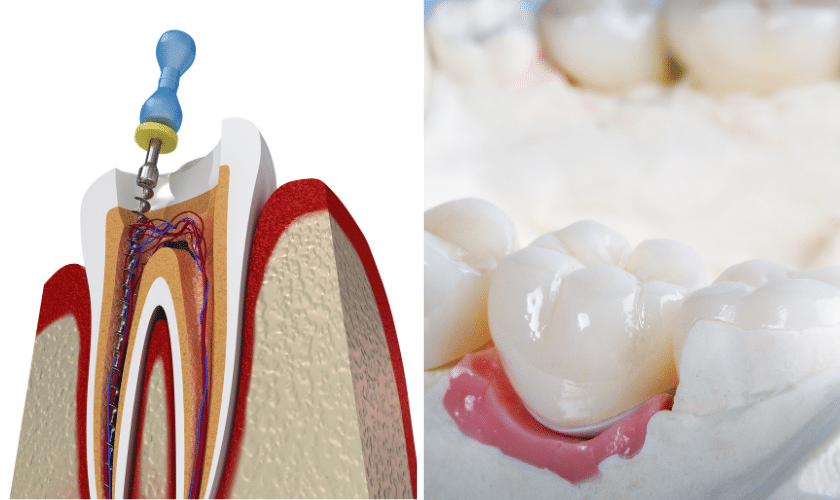
Patients often ask Should get root canal before crown, especially when they are experiencing mild discomfort. The general rule is simple: if a root canal is needed, it must be completed before placing the crown.
Placing a crown over a tooth with an infected or inflamed nerve can trap bacteria inside, leading to severe pain or abscess later. This often results in removing or drilling through the crown to perform the root canal, increasing cost and treatment complexity.
In Vietnam, dentists usually recommend completing all necessary internal treatments first, allowing the tooth to stabilize, and then proceeding with crown placement for long-term success.
>> See more: Venus Porcelain Teeth in Vietnam: The German Standard for a Perfect Smile
Post-root canal crown pain: what is normal and what is not
Experiencing discomfort after treatment is a common concern, especially regarding Post-root canal crown pain. Mild soreness or pressure when biting shortly after crown placement is normal and usually resolves within a few days.
This discomfort often comes from bite adjustment or temporary inflammation of surrounding tissues. Dentists can easily correct minor bite issues to improve comfort.
However, persistent pain, throbbing, swelling, or sensitivity lasting weeks is not normal and should be evaluated promptly. These symptoms may indicate unresolved infection, bite imbalance, or issues with crown fit. Early intervention helps prevent more serious complications.
Is root canal required for crown in cosmetic cases?
In cosmetic dentistry, many patients worry that improving the appearance of a tooth automatically means losing the tooth nerve. This is why the question Is root canal required for crown comes up so often when the tooth looks healthy but needs aesthetic enhancement. In most cosmetic cases, the answer is no. A porcelain crown placed for appearance alone does not require root canal treatment as long as the tooth nerve is healthy and remains protected during the procedure.
The key factor is how the tooth is prepared. Cosmetic crowns should be planned conservatively, with minimal enamel reduction to create space for the crown without exposing or overheating the nerve. When this balance is respected, the tooth can remain comfortable and vital long after the crown is placed. Patients often feel reassured when they understand that a crown itself does not damage the nerve; problems usually arise only when preparation is too aggressive or poorly planned.
This is why dentists carefully evaluate tooth thickness, existing fillings, and sensitivity before proceeding. By choosing the right crown material and preparation technique, skilled dentists are able to achieve natural-looking aesthetic results while preserving nerve health. For patients seeking cosmetic improvement, protecting the natural tooth structure is always the priority.
Why proper diagnosis matters more than speed
Vietnam’s cosmetic dentistry market has grown rapidly, offering patients many fast and attractive treatment options. While quick crown procedures may seem convenient, prioritizing speed over proper diagnosis increases the risk of complications, including the need for a root canal after crown placement.
A thorough diagnosis allows the dentist to assess nerve vitality, bite forces, and hidden issues that are not visible to the naked eye. Skipping these steps can lead to crowns being placed on teeth that are already inflamed or structurally compromised, trapping problems beneath the crown and causing pain weeks or months later. In such cases, patients often require root canal treatment through or around the crown, which is more complex and costly.
Ethical dental care focuses on long-term outcomes rather than immediate cosmetic results. Taking the time to diagnose correctly helps avoid unnecessary nerve removal, reduces the risk of post-treatment pain, and increases the lifespan of the crown. For patients, this careful approach offers peace of mind, knowing that their smile improvement is built on a healthy foundation rather than rushed decisions.
>> See more: Reducing Protruding Front Teeth in Vietnam: Safe, Natural, and Beautiful Results
How dentists check nerve health before cosmetic crowns

Before placing a cosmetic crown, one of the most important responsibilities of the dentist is to confirm that the tooth nerve is healthy and can safely remain intact. This step is especially critical for patients who ask Is root canal required for crown when their teeth look normal but need aesthetic improvement.
Dentists begin by listening carefully to symptoms. Questions about spontaneous pain, lingering sensitivity to hot or cold, or discomfort when biting provide early clues about nerve condition. A tooth that only feels sensitive briefly and settles quickly is often considered healthy, while prolonged or sharp pain may signal nerve inflammation.
Dental X-rays play a key role in this evaluation. They allow dentists to see how close decay or old fillings are to the nerve and to detect hidden infections at the root tip. In some cases, additional vitality tests may be used to assess how the nerve responds to controlled stimuli. These tests help dentists determine whether the nerve is alive and stable or already compromised.
Just as important is evaluating tooth thickness and structure. Teeth with thin enamel or large existing fillings are more vulnerable to nerve irritation during crown preparation. Skilled dentists adjust their preparation technique accordingly, using conservative reduction and proper cooling to minimize heat and trauma to the nerve.
By combining symptoms, imaging, and clinical judgment, dentists can confidently decide whether a cosmetic crown can be placed safely without root canal treatment. This careful evaluation is what protects patients from unnecessary nerve removal and post-treatment pain.
Patient experience: avoiding unnecessary root canal treatment
A young professional visited the clinic worried that a crown automatically meant a root canal. After examination, the tooth was found to be structurally weak but nerve-healthy. A crown was placed without root canal treatment, and the tooth remained comfortable and functional.
This experience reassured the patient that crowns do not always mean losing the tooth nerve, reinforcing the importance of individualized treatment planning.
Final thoughts: making the right decision
The answer to Does getting a porcelain crown require a root canal? in Vietnam is simple: only if the tooth nerve is unhealthy. A crown and a root canal are separate treatments that work together only when necessary.
Understanding when Is root canal needed, when a Crown after root canal is essential, and how to manage Post-root canal crown pain empowers patients to make confident decisions. With proper diagnosis, conservative treatment, and skilled execution, many teeth can be crowned successfully without root canal treatment, preserving comfort and natural tooth structure for years to come.

Tư vấn chuyên môn bài viết:
BÁC SĨ DƯƠNG THỊ THÙY NGA
BEDENTAL - TOP STANDARD DENTISTRY SYSTEM
In HANOI
Address 1: 7B Thi Sach St, Ngo Thi Nham, Hai Ba Trung Dist, Ha Noi. - 0934.61.9090
Address 2: No 129 Hoang Ngan, Yen Hoa, Cau Giay Dist, Ha Noi. - 0934.61.9090
In HO CHI MINH
Address 1: 53 -55 -57 Pho Duc Chinh St, Nguyen Thai Binh, Dist. 1, Ho Chi Minh. - 0766.00.8080
Working: 9am - 8pm everyday
Website: https://bedental.vn/en/