


 English
 한국어
한국어 日本語
日本語 中文 (中国)


Tooth Preparation Pain for Crowns in Vietnam – For many patients considering dental crowns, the idea of tooth grinding can sound intimidating. Questions like “Does tooth grinding hurt?” or “Is crown grinding really necessary?” are common among those seeking porcelain crowns in Vietnam. The truth is that tooth preparation pain today is minimal — thanks to advanced anesthesia, digital precision tools, and gentle techniques used by modern Vietnamese dentists.
This article explains what happens during the tooth grinding phase, whether it causes pain, why it’s needed, and how clinics like BeDental ensure a painless, precise experience for both local and international patients.
1. Why Tooth Grinding Is Necessary for Crowns
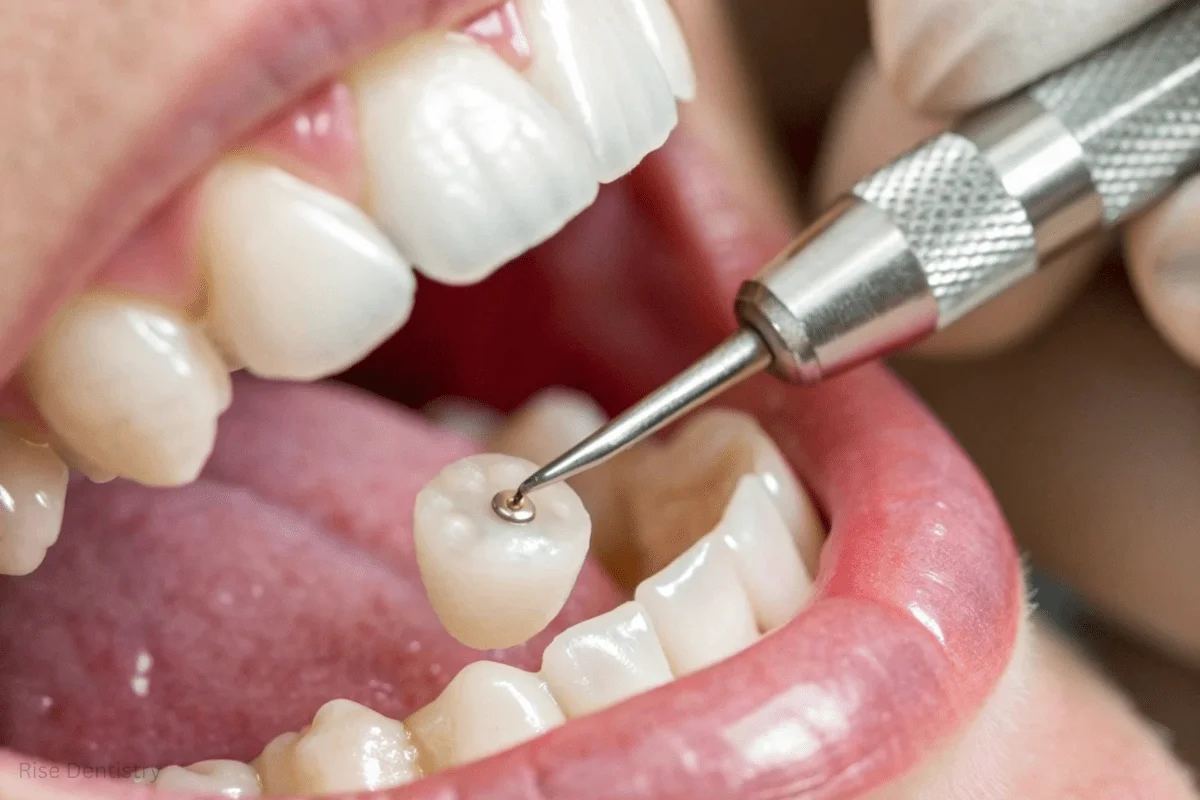
When getting a crown, the dentist must slightly reshape the tooth to make space for the porcelain cap. This step, known as tooth preparation or tooth grinding, removes a thin layer of enamel — typically 0.5–1.5 mm — so that the dental crown can fit naturally without appearing bulky or uneven.
Grinding isn’t a sign of damage; it’s a necessary part of restoring function and aesthetics. Without it, the new crown might interfere with your bite or gum line. The process also helps smooth and contour the tooth, improving the bond between your natural tooth and the crown’s inner surface.
At high-end clinics such as BeDental Vietnam, this step is performed using digital-guided preparation. Specialized handpieces with micro-tips are used under magnification, allowing dentists to remove the minimal amount of enamel needed for a perfect fit. This ensures precision, comfort, and long-term crown stability.
2. Does Tooth Grinding Hurt?
Thanks to modern local anesthesia and digital instruments, grinding pain is virtually nonexistent. Before the procedure, your dentist numbs the area using a fine, computer-assisted injection that evenly delivers anesthetic around the tooth. The numbing effect lasts throughout the session, meaning you’ll feel vibration or pressure — but not pain.
Afterward, some patients experience mild sensitivity when chewing or brushing, usually lasting 24–48 hours. This is completely normal and subsides as the gum tissue adjusts to the new crown. Over-the-counter pain relief (like ibuprofen or paracetamol) is rarely needed, but your dentist can prescribe it if discomfort persists.
A 2023 study from the Vietnam Dental Association reported that over 92% of patients receiving crowns under local anesthesia described their experience as “painless” or “very comfortable.”
At BeDental, patient comfort is a top priority. The clinic uses electronic anesthetic delivery systems that release medication slowly and evenly, reducing the typical “sting” sensation. In most cases, patients are surprised at how gentle and quick the grinding process feels.
“I was nervous about the grinding, but I didn’t feel a thing,” shared Lisa P., an Australian patient treated at BeDental Hanoi. “It was over in 20 minutes, and even the sound was quieter than I expected.”
3. How Dentists in Vietnam Minimize Tooth Preparation Pain
Vietnamese dental clinics have adopted the latest innovations in tooth preparation technology, making the process faster, more precise, and far less invasive than in the past.
At BeDental, dentists follow a minimally invasive protocol:
- Digital scanning instead of traditional molds – eliminating the gag reflex and reducing chair time.
- Microscopic visualization – ensuring accuracy within 0.1 mm to protect healthy enamel.
- Water-cooled handpieces – preventing overheating or friction that could cause sensitivity.
These techniques ensure that only the necessary amount of enamel is removed while preserving maximum tooth structure. The result is a perfectly aligned crown that feels natural from the very first bite.
>> See more: Cosmetic Porcelain Crown in Vietnam: The Ultimate Smile Transformation
4. Is Crown Grinding Always Needed?
In most cases, yes — some level of teeth alignment grinding is essential to ensure your crown fits seamlessly with your natural teeth. However, the amount of grinding depends on the type of restoration and your current dental condition.
If your tooth already has significant wear, cracks, or a filling, your dentist may remove only minimal enamel before placing the crown. Conversely, if you’re getting a cosmetic porcelain crown purely for aesthetic improvement, more detailed contouring might be required to correct shape or symmetry.
For patients who want to avoid grinding altogether, non-prep or minimal-prep crowns (made from ultra-thin ceramics) are sometimes available. These require little to no enamel removal but are suitable only for specific cases — typically for front teeth with good alignment and minimal damage.
Your dentist will always explain whether grinding is necessary during the consultation and show you a 3D simulation of how much enamel will be removed.
5. Aftercare and Sensitivity Management

Once the tooth preparation phase is complete, your dentist will place a temporary crown made from resin or acrylic to protect the reshaped tooth while your permanent porcelain crown is being fabricated. This temporary solution preserves aesthetics and function — allowing you to eat and speak normally — while preventing bacterial contamination or temperature sensitivity.
It’s common to feel mild tenderness when chewing or brief tooth sensitivity to hot or cold food for the first few days. This happens because a small portion of enamel was removed during grinding, exposing the inner dentin temporarily. The discomfort is mild, typically lasting no more than 48–72 hours, and can be easily managed with simple home care.
To minimize irritation, dentists recommend avoiding extreme temperatures — such as ice-cold drinks or freshly brewed coffee — for a few days. Soft foods like yogurt, soup, and steamed vegetables are best during this period. Brush gently with a soft-bristle toothbrush and use a fluoride toothpaste or desensitizing gel (like Sensodyne Repair & Protect or Elmex Sensitive) to help strengthen the exposed surface.
If you feel slight gum soreness around the tooth, rinsing with warm salt water twice daily can reduce inflammation naturally. It’s important not to bite sticky or hard foods (like caramel, gum, or nuts) since they can dislodge the temporary crown.
Once your permanent crown is cemented — usually within 3–5 days — any sensitivity quickly fades as your tooth adapts to its new restoration. The final porcelain layer provides full coverage, sealing off exposed dentin and restoring normal comfort. Dentists at BeDental recommend biannual check-ups to monitor crown stability, bite alignment, and gum health. This routine maintenance ensures both your comfort and the longevity of your restoration.
“Most patients tell us the sensitivity is minimal — much less than they feared,” says a BeDental specialist. “Within a week, their bite feels completely natural, as if it were their own tooth.”
6. How Long Does the Grinding Process Take?
The actual tooth grinding process is faster and gentler than most people expect. With modern high-speed, water-cooled handpieces and digital CAD/CAM precision, reshaping a single tooth typically takes 20–40 minutes, depending on the tooth’s position and complexity.
Front teeth, which require finer aesthetic detailing, may take slightly longer as dentists carefully contour the angles for a natural look. Molars, on the other hand, are reshaped faster due to simpler access and less aesthetic demand. The goal is always conservative — removing just enough enamel (0.5–1.5 mm) to make space for the crown without affecting the tooth’s core structure.
For patients needing multiple crowns, BeDental offers single-session preparations under consistent anesthesia, allowing the dentist to work efficiently across several teeth while maintaining patient comfort. Most patients are surprised at how calm the experience feels — there’s no heat, burning, or drilling discomfort.
To enhance relaxation, BeDental creates a stress-free clinical atmosphere: private treatment suites, gentle background music, and noise-reducing equipment help ease anxiety. Patients can even wear headphones or watch a movie during the procedure. This approach transforms what was once a feared dental step into an almost spa-like experience.
“I expected loud noise and pain, but it felt like a routine cleaning,” shared a Korean patient after getting four crowns done in one sitting at BeDental HCMC. “The dentist explained every step, and I didn’t even realize how quickly it finished.”
>> See more: Beautiful Porcelain Teeth in Vietnam: Redefining the Art of a Natural Smile
7. Cost of Crown Preparation and Pain-Free Crowns in Vietnam
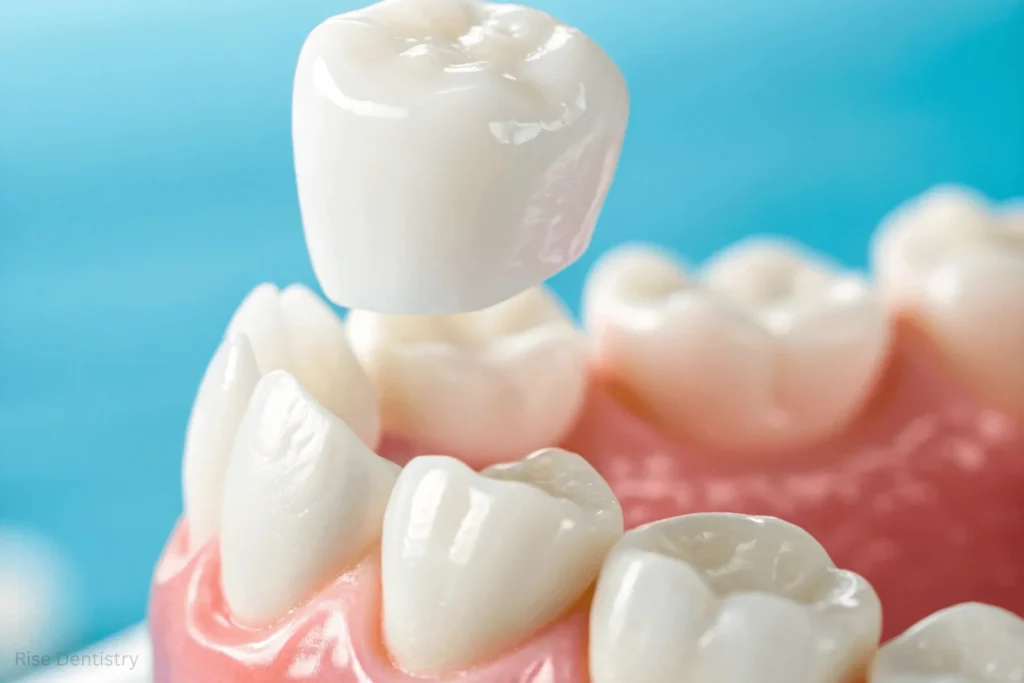
The cost of tooth preparation and porcelain crowns in Vietnam remains one of the most competitive worldwide — offering premium quality at a fraction of Western prices. The total price for a single crown, including preparation, ranges between USD 250–500, depending on the chosen material and clinic location.
- E.max Porcelain Crown: USD 300–400 per tooth — ideal for front teeth requiring natural translucency.
- Zirconia Porcelain Crown: USD 400–600 per tooth — durable and suitable for both aesthetic and functional restorations.
- PFM Crown (Porcelain-Fused-to-Metal): USD 250–350 per tooth — a cost-effective option with reliable strength.
Unlike in countries such as the U.S. or Australia, where a crown may cost USD 1,200–1,800 per tooth, clinics in Vietnam achieve 60–70% lower prices thanks to reduced operational expenses and locally optimized dental technology. Importantly, the lower cost never compromises quality — all materials used by BeDental are FDA-approved and imported from Switzerland, Japan, or Germany.
Each treatment plan at BeDental is all-inclusive, covering consultation, 3D digital scanning, local anesthesia, temporary crowns, laboratory fabrication, and post-treatment adjustments. There are no hidden costs, and every patient receives a detailed breakdown of expenses before treatment begins.
For international patients, BeDental also provides travel-friendly packages, which include airport pickup, translation assistance, and priority scheduling for faster completion — often finishing full smile makeovers within a week.
“I saved over 70% compared to the quote I received in Sydney,” recalls Emma T., an Australian expat. “The results were beyond my expectations — natural color, perfect shape, and zero pain. I felt cared for every step of the way.”
With its blend of affordability, artistry, and advanced technology, Vietnam — and BeDental in particular — continues to be a top global destination for painless, high-quality porcelain crowns that are as functional as they are beautiful.
| Category | Price | ||
|---|---|---|---|
| 1. Phục hình tháo lắp - (Tìm hiểu thêm...) Removable Denture (More detail...) | |||
| Giá Hàm nền nhựa thường Conventional Denture (More detail...) | (1teeth) | 4.000.000 | |
| Giá Hàm nền nhựa dẻo Flexible acrylic partial denture | (1teeth) | 5.500.000 | |
| Giá Hàm khung kim loại thường Cast metal partial denture | (1teeth) | 4.500.000 | |
| Giá Hàm khung Titan Titanium partial denture | (1teeth) | 6.000.000 | |
| 2. Răng giả (Tìm hiểu thêm...) False teeth | |||
| Giá Răng giả hàm tháo lắp nhựa nội Acrylic resin teeth -made in Vietnam | (1teeth) | 350.000 | |
| Giá Răng giả hàm tháo lắp nhựa Mỹ Acrylic resin teeth -made in USA | (1teeth) | 600.000 | |
| Giá Răng giả hàm tháo lắp sứ Porcelain teeth backed with metal | (1teeth) | 1.800.000 | |
| Máng nâng khớp Denture occlúion | 1.000.000 | ||
| 3. Phục hình cố định : Non-removable denture | |||
| Giá Sứ kim loại (Tìm hiểu thêm...) Porcelain teeth backed with metal | |||
| Giá Răng sứ kim loại thường (Ni,Cr) Porcelain teeth backed with metal (Ni,Cr) | 1.800.000 | ||
| Giá Răng sứ kim loại Vivadent france (Cr,Co) Porcelain teeth backed with metal Vivadent France (Cr,Co) | 1.800.000 | ||
| Giá Răng sứ kim loại Jelenko USA ( Cr, Co) Porcelain teeth backed with metal Jelenko USD (Cr,Co) | 2.000.000 | ||
| Giá Răng sứ kim loại titan Porcelain teeth backed with titanium | 3.500.000 | ||
| Giá Sứ không kim loại : (Tìm hiểu thêm) Non-metal Teeth | |||
| Giá Răng sứ Katana (bảo hành 7 năm) Porcelain Veneer Katana from Japan | 3.500.000 | ||
| Giá Răng sứ Venus ( bảo hành 7 năm) (Tìm hiểu thêm...) Porcelain Veneer Venus from Germany (More detail...) | 4.000.000 | ||
| Giá Răng sứ Roland ( bảo hành 10 năm) (Tìm hiểu thêm...) Porcelain Veneer Roland from Germany (More detail...) | 4.800.000 | ||
| Giá Răng sứ Roland HD (bảo hành 10 năm) (Tìm hiểu thêm...) Porcelain Veneer Roland HD from Germany | 5.900.000 | ||
| Giá Răng sứ Ceramill (bảo hành 10 năm)(Tìm hiểu thêm...) Porcelain Veneer Ceramil from Germany | 6.000.000 | ||
| Giá Răng sứ Emax Nanoceramics ( bảo hành 15 năm) Porcelain Veneer Emax from Germany | 7.000.000 | ||
| Giá Răng sứ HTsmile (Bảo hành 15 năm) (Tìm hiểu thêm...) Porcelain Veneer Htsmile from Germany (More detail...) | 7.000.000 | ||
| Giá Răng sứ Emax* Press Lithium Disilicate (Bảo hành 15 năm) (Tìm hiểu thêm...) Porcelain Veneer Emax press from Germany (More detail...) | 8.000.000 | ||
| Giá Răng sứ Cercon (Bảo hành 15 năm) (Tìm hiểu thêm...) Porcelain Veneer Cercon from Germany (More detail...) | 7.000.000 | ||
| Giá Răng sứ Nacera Pearl Shade ( bảo hành 10 năm) Porcelain Veneer Nacera from Germany | 10.000.000 | ||
| Giá Răng sứ Lava 3M Premium Plus ( bảo hành 15 năm) (Tìm hiểu thêm...) Porcelain Veneer Lava 3M Plus from USA (More detail...) | 9.000.000 | ||
| Giá Răng sứ Lava Esthentics ( bảo hành 15 năm) Porcelain Veneer 3M Lava Esthetic from USA | 12.000.000 | ||
| Giá Răng sứ Lisi Press (bảo hành 15 năm) (Tìm hiểu thêm...) Porcelain Veneer Lisi from Japan (More detail...) | 12.000.000 | ||
| Giá Răng sứ kim cương (Bảo hành trọn đời) Porcelain Veneer Diamond from USA | 16.000.000 |
8. Real Patient Experience: Comfort Beyond Expectation
One of BeDental’s returning patients, Marcus L., from Singapore, shared his story:
“I’d avoided dental crowns for years because I was terrified of the grinding. But BeDental completely changed that. The dentist walked me through every step and showed me the 3D model before starting. I barely felt any vibration, and there was zero pain. The result? My crowns look natural, and I can finally chew comfortably again.”
His experience reflects a growing truth about Vietnamese dentistry — it’s not just about affordability, but about patient-centered care that combines expertise, comfort, and empathy.
9. Final Thoughts
The idea of tooth grinding for crowns can sound intimidating, but in reality, it’s a safe, precise, and virtually painless procedure — especially when performed by skilled professionals using advanced tools. Vietnam’s modern clinics, particularly BeDental, have transformed what used to be a stressful step into a smooth, comfortable experience that prioritizes both accuracy and patient ease.
Whether you’re repairing a damaged tooth or enhancing your smile with cosmetic porcelain crowns, you can rest assured that tooth preparation in Vietnam is gentle, efficient, and handled with exceptional care.
In the hands of the right dentist, even the hum of the handpiece becomes a promise — not of pain, but of transformation.

Tư vấn chuyên môn bài viết:
BÁC SĨ DƯƠNG THỊ THÙY NGA
BEDENTAL - TOP STANDARD DENTISTRY SYSTEM
In HANOI
Address 1: 7B Thi Sach St, Ngo Thi Nham, Hai Ba Trung Dist, Ha Noi. - 0934.61.9090
Address 2: No 129 Hoang Ngan, Yen Hoa, Cau Giay Dist, Ha Noi. - 0934.61.9090
In HO CHI MINH
Address 1: 53 -55 -57 Pho Duc Chinh St, Nguyen Thai Binh, Dist. 1, Ho Chi Minh. - 0766.00.8080
Working: 9am - 8pm everyday
Website: https://bedental.vn/en/