


 English
 한국어
한국어 日本語
日本語 中文 (中国)


Many patients choose porcelain crowns to improve their smile and restore damaged teeth, but a common concern that often appears after treatment is Gum recession after porcelain crown in Vietnam. Why does the gum line start to recede even when the crown looks perfect? Is this a normal reaction or a sign of a deeper problem? Understanding the causes, risks, and prevention of gum recession around crowns is essential to protect both your oral health and your long-term investment in dental care.
Understanding gum recession around porcelain crowns
Gum recession refers to the gradual pulling back of the gum tissue, exposing more of the tooth or even the root underneath. In the context of dental restorations, Crown gum recession occurs when the gum around a crowned tooth becomes thinner or shifts downward over time.
This condition is not uncommon. According to periodontal research, mild gum recession affects a large portion of adults, especially those over the age of 30. However, when it occurs around a crown, it becomes more noticeable and concerning because it can impact both aesthetics and oral health.
Patients often first notice that the crown appears “longer” than before, or that a dark line becomes visible near the gum margin. In some cases, sensitivity or food trapping may also develop.
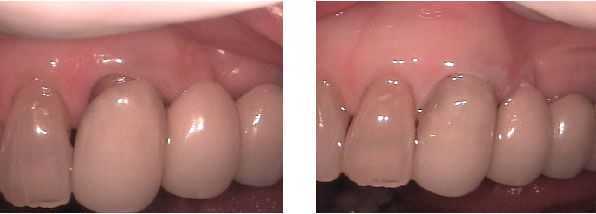
Why gum recession happens after a porcelain crown
The causes of Gum recession after porcelain crown in Vietnam are often multifactorial. It is rarely due to a single issue but rather a combination of biological response, technique, and long-term habits.
One of the most common causes is improper crown margin placement. If the edge of the crown is placed too deep under the gum or does not fit precisely, it can irritate the surrounding tissue. Over time, this irritation leads to inflammation and eventual gum shrinkage.
Another key factor is oral hygiene. Even with a perfectly made crown, plaque accumulation around the gum line can trigger inflammation. Studies in periodontal journals show that plaque-induced gingival inflammation is one of the leading causes of gum recession globally.
Bite force also plays a role. If the crown is slightly too high or uneven, it can create excessive pressure on the supporting structures of the tooth. This chronic stress may contribute to gum recession over time.
Additionally, patients with naturally thin gum biotypes are more prone to recession. In such cases, even minor irritation can lead to visible gum loss.
Crown with gum loss: when should you be concerned?
Not all cases of Crown with gum loss are severe, but some signs should not be ignored. If the gum continues to recede progressively, exposes the root surface, or causes persistent sensitivity, it may indicate underlying periodontal issues.
In more advanced cases, gum recession can lead to bone loss, which affects the stability of both the tooth and the crown. This is why early detection and management are crucial.
Patients should also be aware of aesthetic concerns. Gum recession around front teeth can create uneven gum lines, affecting smile symmetry and confidence.
>> See more: Porcelain crown failure in Vietnam: Causes & repair
The role of crown quality in preventing gum recession
The quality of the crown and the precision of its placement play a major role in preventing Crown gum recession. A well-designed crown should have smooth, well-adapted margins that fit seamlessly with the natural tooth.
In modern dentistry, digital scanning and CAD/CAM technology help improve crown accuracy. These technologies reduce the risk of gaps or overhangs that can trap bacteria and irritate the gums.
Equally important is the dentist’s technique. Proper margin design, gentle handling of gum tissue, and careful cementation all contribute to long-term gum health.
Oral hygiene and lifestyle factors
Even the best crown cannot compensate for poor oral hygiene. Daily habits play a critical role in preventing Gum recession after porcelain crown in Vietnam.
Brushing too aggressively with a hard-bristled toothbrush can damage gum tissue over time. On the other hand, inadequate cleaning allows plaque to accumulate, leading to inflammation.
Smoking is another major risk factor. Research shows that smokers are significantly more likely to experience gum disease and recession due to reduced blood flow and impaired healing.
Stress and systemic conditions such as diabetes can also affect gum health, making it more difficult for tissues to recover from minor irritation.
How dentists diagnose and treat crown-related gum recession
When a patient presents with Crown with gum loss, dentists perform a comprehensive evaluation. This includes checking crown margins, measuring gum levels, assessing bone support, and reviewing oral hygiene habits.
Treatment depends on the severity of the condition. In mild cases, improving oral hygiene and professional cleaning may be sufficient to stop progression.
In cases where the crown is poorly fitted, replacement may be necessary. A new crown with proper margins can eliminate irritation and allow the gum to stabilize.
For more advanced recession, periodontal treatments such as gum grafting may be recommended. These procedures help restore lost gum tissue and improve both function and appearance.
A real patient story: learning from experience
A 35-year-old patient came to the clinic after noticing that her front crown looked longer than before. Initially, she thought it was just a cosmetic issue. However, examination revealed early Crown gum recession caused by a combination of plaque buildup and a slightly over-contoured crown.
After replacing the crown and improving her oral hygiene routine, the progression of gum recession was stopped. Over time, her gum health improved, and the appearance of her smile became more balanced.
Her experience highlights an important lesson: gum recession is often preventable when addressed early and managed properly.
>> See more: Porcelain crowns causing bad breath in Vietnam?
How to prevent gum recession after getting a crown
Preventing Gum recession after porcelain crown in Vietnam requires a combination of professional care and daily habits.
Regular dental check-ups allow dentists to detect early signs of gum inflammation before they become serious. Professional cleaning removes plaque and tartar that cannot be eliminated by brushing alone.
Using a soft-bristled toothbrush and proper brushing technique helps protect the gum tissue. Flossing daily is also essential to remove plaque between teeth and around crown margins.
Patients should also be mindful of their diet and habits. Limiting smoking and maintaining overall health can significantly improve gum resilience.
Does crown material affect gum health?
Patients often assume that gum recession is purely related to technique, but crown material also plays a role. In cases of Crown gum recession, the type of material used can influence how the gum tissue reacts over time.
Modern all-ceramic crowns are generally more biocompatible and less likely to irritate the gums compared to older metal-based crowns. Their smoother surface also reduces plaque accumulation, which helps maintain healthier gum tissue.
However, even the best material cannot compensate for poor fit or improper placement. A well-designed crown made from high-quality material offers the best protection against Crown with gum loss, but only when combined with proper technique and maintenance.
Can replacing the crown stop gum recession?
For patients dealing with Gum recession after porcelain crown in Vietnam, one important question is whether replacing the crown can solve the problem. The answer depends on the underlying cause.

If gum recession is caused by a poorly fitted crown, replacing it with a properly designed restoration can eliminate irritation and help stabilize the gum tissue. In some cases, this alone is enough to prevent further recession.
However, if the recession has progressed significantly or involves bone loss, additional periodontal treatment may be required. Replacing the crown is often just one part of a comprehensive treatment plan.
This is why accurate diagnosis is critical before deciding on any corrective procedure.
The link between bite (occlusion) and gum recession
Bite alignment is an often-overlooked factor in Crown gum recession. When a crown is slightly higher than surrounding teeth, it can create excessive pressure during chewing. This repeated stress affects not only the tooth but also the surrounding gum and bone.
Over time, this can contribute to gum recession, especially in patients who grind their teeth or have uneven bite distribution. Studies in occlusion and periodontology show that excessive occlusal force is a contributing factor in localized gum recession.
Adjusting the bite properly after crown placement is essential to ensure even force distribution and reduce the risk of Crown with gum loss.
Why some patients are more prone to gum recession
Not all patients have the same risk level when it comes to Gum recession after porcelain crown in Vietnam. Some individuals are naturally more susceptible due to biological and lifestyle factors.
Patients with thin gum tissue are more likely to experience visible recession even with minor irritation. Genetic predisposition, smoking habits, and systemic conditions such as diabetes also increase the risk.
Understanding these risk factors allows dentists to customize treatment plans and preventive strategies, reducing the likelihood of Crown gum recession over time.
Long-term outlook: can gum recession be reversed?
One of the most common concerns about Crown with gum loss is whether it can be reversed. In early stages, gum recession can often be stabilized, preventing further progression.
However, lost gum tissue does not grow back naturally. In cases where aesthetics or sensitivity are affected, periodontal procedures may be needed to restore the gum line.
The good news is that with proper care, most patients can maintain stable gum health and avoid further complications.
BeDental – Supporting long-term gum health
At BeDental, every crown treatment is designed with long-term gum health in mind. The team focuses not only on aesthetics but also on precise margin design, gentle tissue management, and patient education.
Many patients come to BeDental after experiencing issues like Gum recession after porcelain crown in Vietnam from previous treatments. With careful evaluation and personalized care, the clinic helps restore both function and confidence.
Choosing the right dental partner is essential. A well-made crown is not just about how it looks today, but how it supports your gums and oral health for years to come.
Final thoughts
Gum recession after porcelain crown in Vietnam is a condition that should not be ignored. While it can be caused by multiple factors, it is often preventable with proper technique, good oral hygiene, and regular dental care.
Understanding the risks of Crown gum recession and recognizing early signs of Crown with gum loss can help patients take proactive steps to protect their smile. In dentistry, long-term success always comes from the combination of professional expertise and consistent care.

Tư vấn chuyên môn bài viết:
BÁC SĨ DƯƠNG THỊ THÙY NGA
BEDENTAL - TOP STANDARD DENTISTRY SYSTEM
In HANOI
Address 1: 7B Thi Sach St, Ngo Thi Nham, Hai Ba Trung Dist, Ha Noi. - 0934.61.9090
Address 2: No 129 Hoang Ngan, Yen Hoa, Cau Giay Dist, Ha Noi. - 0934.61.9090
In HO CHI MINH
Address 1: 53 -55 -57 Pho Duc Chinh St, Nguyen Thai Binh, Dist. 1, Ho Chi Minh. - 0766.00.8080
Working: 9am - 8pm everyday
Website: https://bedental.vn/en/