

 English
 한국어
한국어 日本語
日本語 中文 (中国)


The braces procedure in Vietnam, also known as orthodontic treatment, is a modern dental solution that uses specialized appliances to gradually move teeth into their correct positions on the dental arch.
Beyond improving aesthetics, orthodontic treatment plays a crucial role in correcting bite problems, enhancing chewing function, and supporting clearer pronunciation. With the development of dental technology and professional expertise, the braces procedure in Vietnam has become increasingly systematic, safe, and highly effective.
So how does the braces procedure in Vietnam actually take place? What are the key stages that patients need to go through before achieving a complete and stable result? Let’s explore the entire orthodontic journey in detail, from the initial examination to the long-term maintenance phase.
Overview of the Braces Procedure in Vietnam
The braces procedure in Vietnam is not a single appointment but a structured, long-term biological process that requires patience from patients and precision from orthodontists. On average, comprehensive orthodontic treatment lasts 12 to 24 months, though complex skeletal cases may extend to 30–36 months.
Teeth typically move at a rate of 0.5–1 mm per month, guided by controlled forces of approximately 20–150 grams per tooth, depending on the type of movement (tipping, rotation, bodily movement, or root torque). Each stage of treatment is carefully timed around the body’s bone remodeling cycle, which occurs every 21–28 days.
See more: Orthodontic Treatment in Vietnam
Stage 1: Initial Consultation and Treatment Planning

The first and most crucial step in the braces procedure in Vietnam is the comprehensive consultation. At this stage, the orthodontist performs a thorough examination of the patient’s oral health to identify any existing issues such as cavities, gum inflammation, tartar buildup, or periodontal diseases that must be treated before braces can be applied.
Next, diagnostic imaging is conducted, which usually includes panoramic X-rays (panorex), cephalometric X-rays, and in some clinics, 3D CT scans. These images allow the dentist to evaluate the jawbone structure, tooth roots, bite alignment, and potential hidden problems such as impacted teeth or bone abnormalities.
In addition, impressions or digital 3D scans of the dental arches are taken. These records help create a precise model of the patient’s teeth, which is essential for designing a customized orthodontic treatment plan.
Based on all collected data, the orthodontist develops a detailed treatment strategy. This includes deciding whether tooth extractions or interproximal reduction (IPR) is needed to create space, selecting the most suitable type of braces (metal braces, ceramic braces, lingual braces, or clear aligners), estimating treatment duration, and calculating overall costs.
At this stage, patients receive in-depth counseling about the entire braces procedure in Vietnam, including expected outcomes, potential discomfort, required commitment, and post-treatment maintenance. This consultation ensures that patients fully understand what they are about to undertake and can choose an option that fits both their aesthetic preferences and financial capacity.
Stage 2: The First Three Months – Initial Tooth Movement
During the first three months of the braces procedure in Vietnam, the main goal is to initiate tooth movement and create sufficient space for proper alignment.
If necessary, the orthodontist may perform tooth extractions or enamel reduction before placing the braces. Once the dental arches are ready, brackets are bonded to each tooth, and archwires are inserted to apply light, continuous force.
This phase is usually when patients notice the most dramatic changes, especially in cases of severe crowding or misalignment. Teeth that were previously overlapping or rotated start to move into more organized positions.
Although the movement is visible, the alignment is still far from perfect. The primary objective here is to stimulate biological responses in the bone and periodontal tissues, allowing teeth to begin shifting safely.
If teeth respond well during the first three months, it is considered a positive sign that the overall braces procedure in Vietnam will progress smoothly.
Stage 3: After Six Months – Controlled Alignment and Bite Adjustment
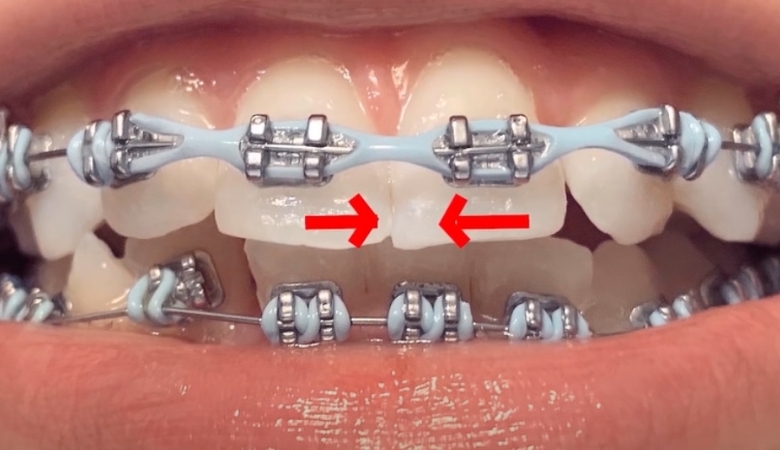
At around six months into the braces procedure in Vietnam, tooth movement continues, but at a slower pace compared to the initial phase.
In many cases, teeth appear more aligned, yet some imbalances may occur, particularly in the front teeth. For example, incisors may protrude slightly as space is being redistributed. This is completely normal and part of the orthodontic process.
At this stage, orthodontists focus on precise force control by adjusting archwires, replacing elastic bands, and in some cases, using interarch elastics to guide jaw relationships. The goal is not only to straighten teeth but also to ensure that upper and lower jaws fit together correctly.
Patients are advised not to panic if their teeth seem temporarily misaligned or awkward. The braces procedure in Vietnam requires continuous fine-tuning, and this phase is critical for preventing bite problems later on.
Stage 4: After Nine Months – Stabilizing the Dental Arch
By the ninth month, patients are already halfway through the braces procedure in Vietnam. At this point, the dental arch becomes more stable, and bite relationships between the upper and lower jaws are significantly improved.
Most teeth are now close to their final positions, but minor adjustments are still necessary. The orthodontist focuses on achieving symmetry, balancing the dental midline, and ensuring proper contact between opposing teeth.
This stage plays a vital role in shaping the final outcome, as it transforms basic alignment into functional harmony.
Stage 5: After Fifteen Months – Fine-Tuning for Aesthetics and Function

Around fifteen months into the braces procedure in Vietnam, the orthodontist enters the finishing phase.
Here, the emphasis shifts to detailed refinement. Small imperfections such as slight rotations, uneven tooth edges, or minor spacing issues are corrected. The orthodontist carefully adjusts bracket positions and wire tensions to optimize the smile.
In addition, bite accuracy is thoroughly evaluated. The goal is to ensure that the teeth not only look straight but also distribute chewing forces evenly, preventing future jaw joint problems or abnormal tooth wear.
This phase determines the overall aesthetic quality of the final result, making it one of the most important steps in the entire braces procedure in Vietnam.
Stage 6: Completion and Retention Phase
Once the orthodontist confirms that teeth have reached stable and ideal positions, the braces are removed. This marks the official end of active treatment.
However, the braces procedure in Vietnam does not truly end here. The retention phase is mandatory to maintain the achieved results.
Patients are required to wear retainers, which may be removable clear plastic trays or fixed wires bonded behind the teeth. Retainers prevent teeth from shifting back to their original positions, which is a natural tendency due to memory in periodontal tissues.
Orthodontists provide detailed instructions on how long and how often retainers should be worn. Regular follow-up visits are scheduled to monitor stability and ensure long-term success.
BeDental – A Trusted Dental Clinic for Braces in Vietnam

Founded in 2012, BeDental has become one of Vietnam’s reputable dental systems specializing in orthodontic treatment, with clinics in both Hanoi and Ho Chi Minh City. Over 12 years of operation, the clinic has treated more than 5,000 patients, including over 1,500 orthodontic cases. Approximately 70% of braces patients are adults, and overall treatment completion rates exceed 95%.
From the first consultation, patients undergo comprehensive oral examinations, including enamel assessment, gum evaluation, bite analysis, and jaw structure review. More than 85% of orthodontic cases are planned using 3D intraoral scanning and digital simulations, supported by Cone Beam CT imaging when indicated. This digital workflow has improved treatment precision by an estimated 25–30% and, in selected cases, reduced treatment time by 3–5 months.
Each treatment plan is fully customized, outlining the type of braces, orthodontic techniques, estimated duration, and staged progress expectations. Complex malocclusion cases account for nearly 40% of treated patients, reflecting the clinic’s experience in managing advanced orthodontic conditions.
BeDental emphasizes transparent pricing, with all costs clearly explained upfront and no hidden fees. Flexible 0% interest installment plans are available to improve financial accessibility. Internal surveys show patient satisfaction rates above 94%, particularly in communication clarity and treatment transparency.
During treatment, supportive procedures such as periodontal therapy or enhanced hygiene protocols may be recommended to optimize outcomes. Follow-up adherence exceeds 90%, and in cases of inflammation or delayed tooth movement, orthodontists proactively adjust strategies and inform patients promptly.
With experienced specialists, standardized medical protocols, and continuous investment in modern technology, BeDental positions itself as a reliable and clinically accountable destination for professional orthodontic care in Vietnam.
Why the Braces Procedure in Vietnam Is Increasingly Popular
The braces procedure in Vietnam has gained significant popularity in recent years due to several factors. Dental clinics across the country have invested heavily in modern technology, such as digital orthodontic planning, 3D imaging, and advanced bracket systems. This has significantly improved treatment accuracy and comfort.
Moreover, orthodontists in Vietnam receive comprehensive training both domestically and internationally, ensuring that clinical techniques meet global standards. Combined with affordable costs compared to many Western countries, Vietnam has become an attractive destination not only for local patients but also for international dental tourists.
In addition, the braces procedure in Vietnam is highly flexible. Patients can choose from a wide range of options, including traditional metal braces, aesthetic ceramic braces, lingual braces, or nearly invisible clear aligners. This variety allows patients to balance effectiveness, comfort, and aesthetics according to their lifestyle.
Final Thoughts on the Braces Procedure in Vietnam
The braces procedure in Vietnam is a structured and scientifically guided journey that requires patience, discipline, and professional supervision. While the process may take over a year, the long-term benefits are substantial, including improved appearance, better oral function, and enhanced self-confidence.
With reputable clinics like BeDental, patients can feel confident that they are receiving high-quality care based on modern dental standards. Whether your goal is to correct misaligned teeth, improve your bite, or simply achieve a more harmonious smile, the braces procedure in Vietnam offers a reliable and effective solution for long-lasting oral health and aesthetic satisfaction.
See more: Does getting braces hurt? Which stage is the most painful?
Tại BeDental, khách hàng có thể an tâm điều trị với dịch vụ bảo lãnh viện phí nha khoa nhanh chóng và tiện lợi. BeDental hiện liên kết với nhiều công ty bảo hiểm uy tín, hỗ trợ thanh toán trực tiếp chi phí các dịch vụ nha khoa như nhổ răng, trám răng, điều trị tủy, phục hình răng sứ... Quy trình linh hoạt, minh bạch giúp tiết kiệm thời gian và tối ưu chi phí. Hãy liên hệ BeDental để được tư vấn chi tiết và tận hưởng trải nghiệm chăm sóc răng miệng chuyên nghiệp, không lo gánh nặng tài chính.
🔹 Các đơn vị nha khoa chấp nhận bảo lãnh bao gồm : Hùng Vương Insurance, Bảo Long Insurance, BSH (Bảo hiểm BSH), FWD Insurance Cathay Life Fubon Insurance, Tokio Marine Insurance Group VNI (Bảo hiểm Hàng không), HD Insurance MSIG AAA Insurance PTI (Bảo hiểm Bưu điện), BIDV MetLife, PJICO, Techcom, Insurance, AIA, Dai-ichi Life MIC GIC DBV Insurance VBI (Bảo hiểm VietinBank)
🔹 Các công ty bảo hiểm BeDental có thể xuất hóa đơn: Manulife Dai-ichi Life Prudential AIA Hanwha Life PVI VCLI (Bảo hiểm nhân thọ Vietcombank - Cardif) BIC (Bảo hiểm BIDV), Bảo Việt Insurance và PVI