

 English
 한국어
한국어 日本語
日本語 中文 (中国)


Hanoi walking tours: This walking tour through Hanoi’s Old Quarter explores how history, belief, commerce, and daily routines have shaped the city over time. Rather than focusing only on monuments, the route reveals Hanoi as a living urban environment, where ancient legends, colonial influences, and modern lifestyles coexist within a compact area.
By walking through lakeside spaces, religious sites, guild streets, markets, and nightlife zones, visitors gain insight into how Hanoi developed not through rigid planning, but through trade, adaptation, and social interaction. The tour invites participants to observe how public space is used, how traditions persist, and how the past continues to influence the rhythm of contemporary city life.
1. Starting Point – Hoan Kiem Lake- Hanoi Walking Tours
The symbolic heart of Hanoi and a living space where history shapes modern urban life.
Rather than focusing on military victory, the Legend of the Returned Sword emphasizes humility, responsibility, and balance of power. King Le Loi’s decision to return the sword after achieving independence reflects a core Vietnamese value: true leadership is shown not through possession of power, but through knowing when to let it go. This idea remains deeply embedded in Vietnamese cultural thinking today.
>>> See more: Saigon tour: city highlights and sightseeing guide
In modern Hanoi, Hoan Kiem Lake functions less as a historical monument and more as a shared civic space. It is where residents exercise, socialize, relax, and escape the pace of the surrounding Old Quarter. The lake represents calm and continuity in a rapidly changing city, acting as a psychological “pause” amid traffic, commerce, and urban density.
As the city has expanded and modernized, Hoan Kiem Lake has remained deliberately protected. No high-rise buildings surround it, preserving open views and reinforcing its role as a symbolic center rather than a commercial one. This reflects how Hanoi balances development with cultural preservation.
Today, Hoan Kiem Lake connects myth to modern identity. It is not only a place to remember the past, but a space where tradition continues to shape how the city lives, breathes, and moves forward.
2. Ngoc Son Temple
A reflection of Vietnamese spiritual life shaped by Confucian, Taoist, and folk beliefs.
Ngoc Son Temple illustrates how Vietnamese belief systems are layered rather than exclusive. Instead of following a single religion, the temple brings together Confucian ideals of morality and scholarship, Taoist concepts of harmony with nature, and indigenous folk beliefs centered on spirits and protection. This blending reflects the practical and inclusive way spirituality developed in Vietnam.
The temple is dedicated to multiple figures, including national heroes and scholars, emphasizing values such as loyalty, wisdom, and righteousness rather than divine worship alone. This reveals an important aspect of traditional Vietnamese thinking: religion serves daily life and ethical behavior, not just the afterlife.
Architecturally, Ngoc Son Temple is rich in symbolism. The red The Huc Bridge represents the connection between the human world and the spiritual realm, while elements like calligraphy, altars, and courtyard layout reflect balance, order, and respect for learning. The surrounding water further reinforces the Taoist idea of harmony between humans and nature.
In the context of modern Hanoi, Ngoc Son Temple remains an active spiritual space rather than a static monument. Locals still come here to seek peace, good fortune, or clarity, showing how traditional beliefs continue to coexist naturally within the rhythm of contemporary urban life.
3. Old Quarter Streets – “36 Guild Streets”
Where trade shaped not only the economy, but the urban identity of Hanoi.
The Old Quarter developed as a network of craft guild streets, each specializing in a specific trade such as silverwork, silk, or textiles. Streets like Hang Bac, Hang Gai, and Hang Dao were named after the goods they produced and sold, creating a highly organized commercial system long before modern zoning laws existed. This structure shows how trade, rather than royal planning, played a central role in shaping the city.
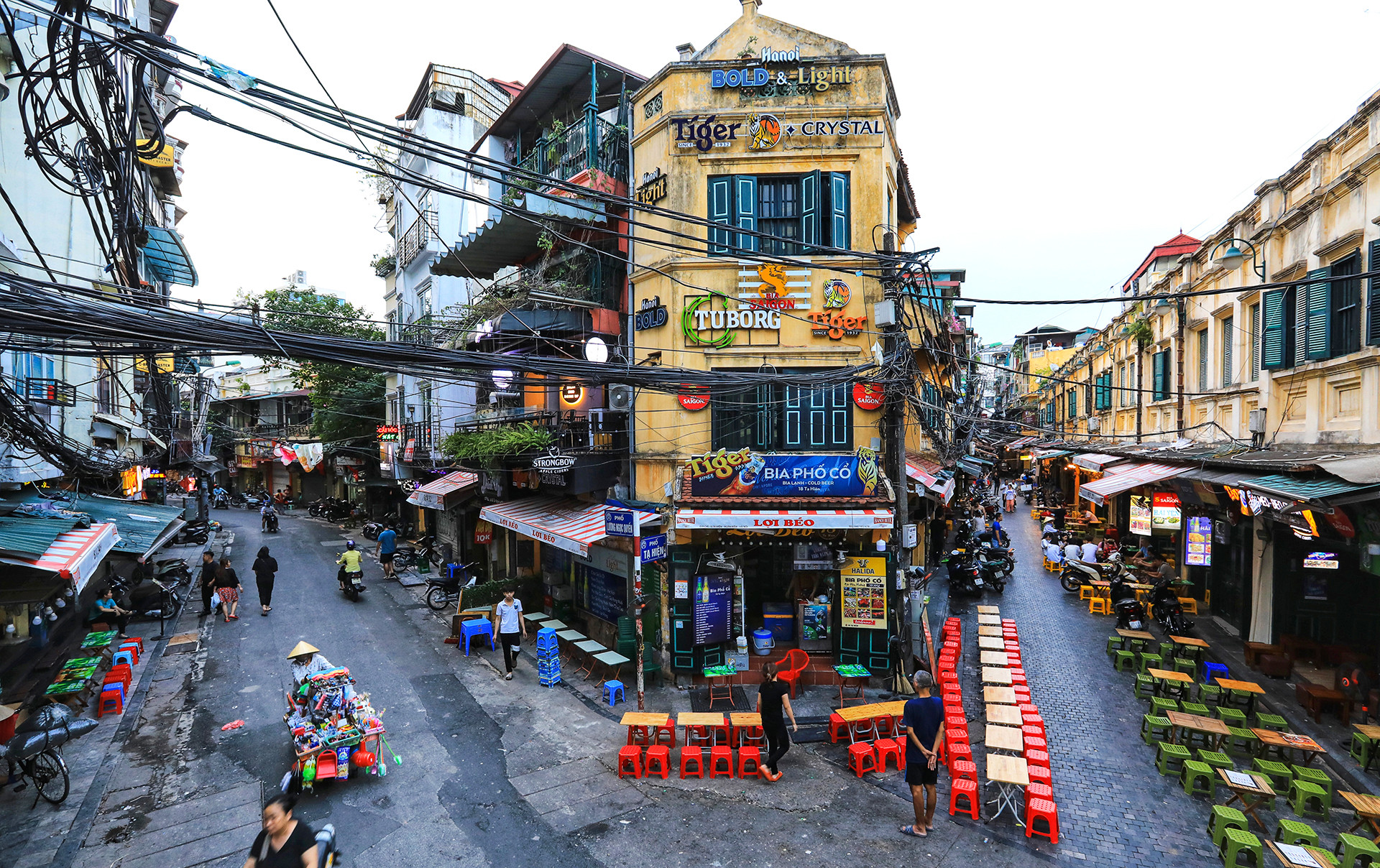
One of the most distinctive features of the Old Quarter is the tube house. Built narrow and deep to minimize taxes while maximizing usable space, these houses reflect both economic necessity and adaptability. Over time, colonial balconies and French architectural details were added, creating layered façades that visually tell the story of Hanoi’s changing political and economic influences.
Daily commerce continues to define life here. Street vendors, small family-run shops, and sidewalk businesses blur the line between public and private space. Pavements become kitchens, workshops, and meeting places, revealing a uniquely Vietnamese approach to urban living where flexibility matters more than strict order.
In the modern city, the Old Quarter is not a preserved museum but a living commercial ecosystem. Its constant movement, noise, and negotiation illustrate how centuries-old trading traditions continue to shape Hanoi’s rhythm, social interactions, and urban culture today.
4. St. Joseph’s Cathedral Hanoi
A colonial landmark where religion, architecture, and modern café culture intersect.
St. Joseph’s Cathedral is one of the most visible reminders of French colonial influence in Hanoi. Inspired by Gothic churches in Europe, its twin towers, pointed arches, and stained-glass windows contrast sharply with the surrounding Old Quarter architecture. The cathedral represents a period when Western political power and cultural ideas were physically embedded into the city’s landscape.
Beyond architecture, the cathedral reflects the history of Catholicism in Vietnam, which arrived through missionaries long before the colonial era but expanded significantly under French rule. For Vietnamese Catholics, this remains an important place of worship, while for others it stands as a symbol of cultural encounter, adaptation, and sometimes tension between East and West.
In contemporary Hanoi, the space around the cathedral has taken on a new social function. Cafés line the square, and locals and visitors gather here not for religious purposes alone, but to meet, observe city life, and enjoy coffee. This everyday use of the space shows how colonial landmarks have been reinterpreted and absorbed into modern urban culture.
Stopping here for egg coffee or iced black coffee allows visitors to experience this transformation firsthand—where a historic religious monument now anchors one of Hanoi’s most vibrant and relaxed social spaces.
5. Food & Snack Break – Street Food Zone
Street food as a reflection of Hanoi’s social habits and urban rhythm.
Street food in Hanoi is not simply about eating; it is an essential part of how the city functions socially and spatially. Dishes such as pho, bun cha, banh mi, and nem ran are designed to be quick, affordable, and deeply connected to daily routines rather than special occasions. Meals are short, informal, and often repeated, reinforcing food as a constant presence in everyday life.
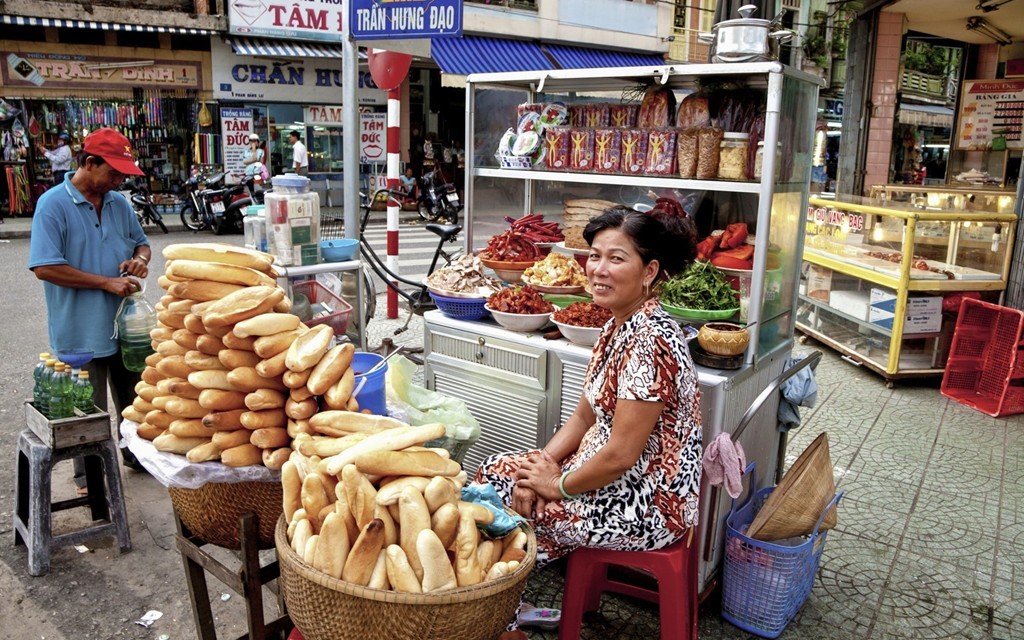
The practice of sidewalk dining blurs the boundary between public and private space. Plastic stools, portable kitchens, and narrow pavements turn the street into a shared dining room, where office workers, students, and vendors sit side by side. This openness encourages conversation, observation, and a strong sense of community, even among strangers.
From an urban perspective, street food demonstrates Hanoi’s adaptability. Limited space and heavy traffic have shaped a food culture that is mobile, flexible, and efficient. Rather than resisting these constraints, locals have turned them into an advantage, creating a vibrant culinary scene that operates seamlessly within the city’s daily flow.
For visitors, a food and snack break is more than a tasting experience. It offers direct insight into how Hanoi eats, interacts, and lives—right on the sidewalk.
6. Dong Xuan Market
The commercial backbone of the Old Quarter and a window into everyday trade.
Dong Xuan Market is the largest traditional market in the Old Quarter and has long functioned as a central trading hub for Hanoi. Unlike street stalls that focus on direct sales to consumers, the market operates primarily on a wholesale model, supplying goods to smaller shops and vendors across the city and northern Vietnam. This distinction highlights how Hanoi’s economy works through layered networks rather than a single type of marketplace.
Inside the market, daily life revolves around negotiation, repetition, and long-standing relationships between traders. Many vendors represent family businesses passed down through generations, reflecting continuity and resilience rather than rapid change. For visitors, Dong Xuan Market offers insight into the practical side of Hanoi’s urban life—where commerce is not designed for display, but for function, efficiency, and survival within a dense city environment.
7. O Quan Chuong
A surviving boundary between the fortified past and the open modern city.
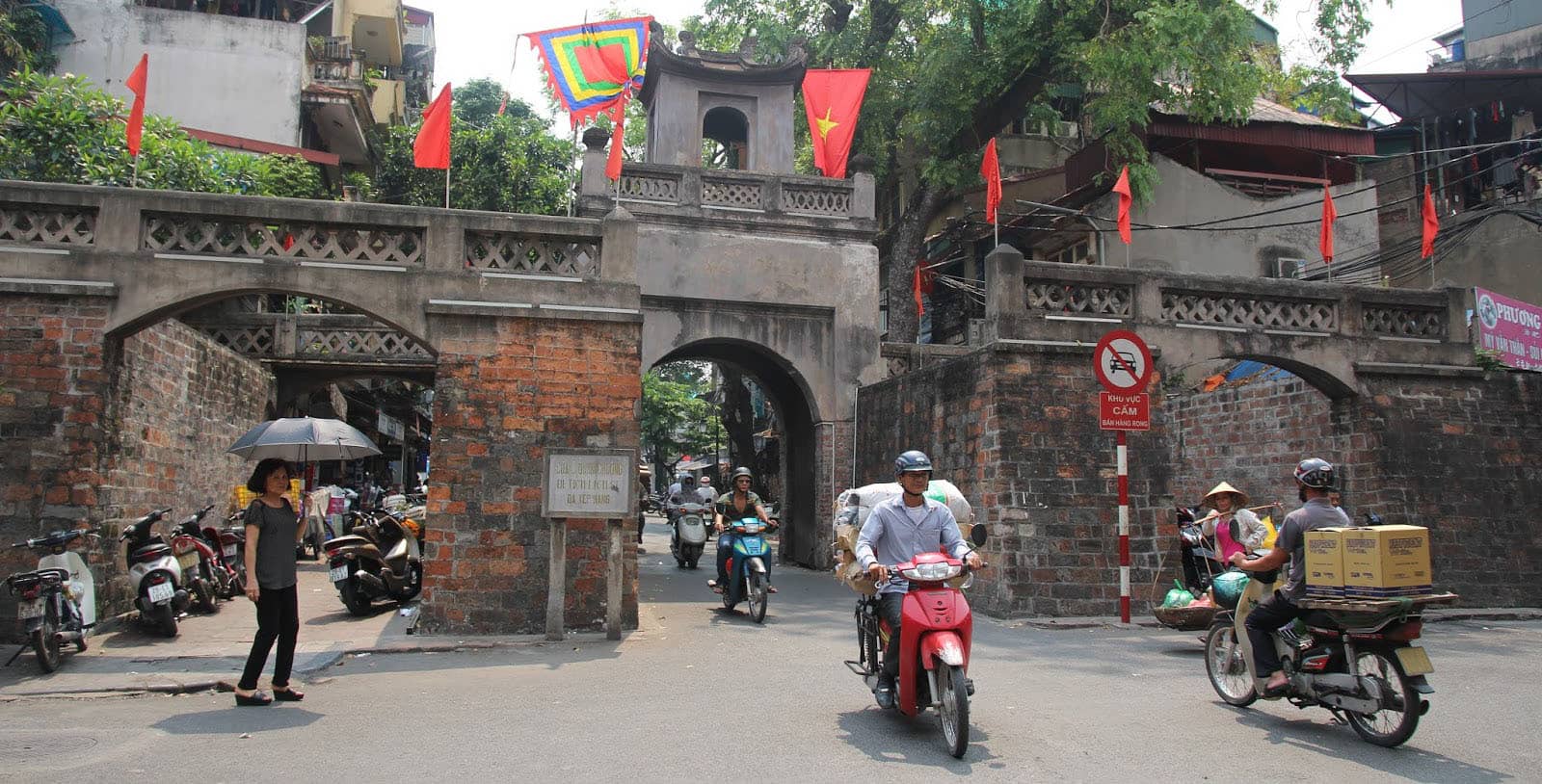
O Quan Chuong is the last remaining ancient city gate of Thang Long, offering a rare physical link to Hanoi’s pre-modern defensive system. Built to control access to the city, the gate once marked a clear boundary between the protected urban core and the surrounding areas, reminding visitors that Hanoi was historically a fortified and regulated space rather than an open city.
>>> See more: Vietnam holiday package: destinations and travel ideas
The gate reflects the defensive history of Thang Long, where city walls, gates, and watch points played a crucial role in protecting political power and trade. Its modest scale and strategic placement illustrate a form of urban defense adapted to local geography and warfare, rather than monumental architecture meant to impress.
Today, O Quan Chuong stands amid busy streets filled with traffic, shops, and daily movement. This contrast highlights the transition from the old city to modern Hanoi, where former boundaries have disappeared but historical structures remain embedded in contemporary life. The gate no longer controls entry, yet it continues to define memory, reminding the city of how it once understood space, security, and identity.
8. End Point – Ta Hien Street
From traditional trading streets to a global nightlife crossroads.
Ta Hien Street is best known today for its lively “Beer Street” atmosphere, where crowds gather on small plastic stools to drink, talk, and watch the night unfold. The popularity of this street reflects the social nature of Hanoi’s nightlife, which emphasizes openness, informality, and shared public space rather than enclosed venues.
At the center of this scene is bia hơi, a light, freshly brewed draft beer that is inexpensive and meant to be consumed socially. More than just a drink, bia hơi represents a culture of accessibility and equality, where locals, workers, and visitors sit side by side with little separation.
In recent years, Ta Hien has also become a focal point for the backpacker and international travel scene, bringing global influences into the heart of the Old Quarter. English-language signs, international music, and diverse crowds show how the area has adapted to tourism while still retaining local habits and rhythms.
As the final stop of the walking tour, Ta Hien Street provides a natural wrap-up for “Old Quarter then vs. now.” What was once a network of craft and trade streets has evolved into a shared social space shaped by globalization, tourism, and modern urban lifestyles—yet it continues to reflect Hanoi’s long-standing tradition of community-centered street life.
Conclusion- The Old Quarter as a living dialogue between past and present.
The Old Quarter is not a preserved relic of history, but a constantly evolving part of Hanoi’s urban identity. From the symbolic calm of Hoan Kiem Lake to the energy of Ta Hien Street, each stop on the tour demonstrates how historical meanings are continuously reinterpreted through everyday use.
| Location | Historical Role | Cultural / Social Meaning | Now (Present) |
| Hoan Kiem Lake | Symbolic center linked to national legend | Balance of power, humility, collective memory | Shared civic space and urban calm |
| Ngoc Son Temple | Spiritual and intellectual site | Blended beliefs: Confucian, Taoist, folk | Active spiritual space within city life |
| Old Quarter Guild Streets | Craft-based commercial zoning | Trade shaping urban form and behavior | Dense, living commercial neighborhood |
| St. Joseph’s Cathedral Hanoi | Colonial religious landmark | East–West cultural encounter | Social hub with cafés and gatherings |
| Street Food Zone | Informal food economy | Community through sidewalk dining | Everyday social interaction & food culture |
| Dong Xuan Market | Central wholesale market | Trade networks & family businesses | Functional market beyond tourism |
| O Quan Chuong | Defensive city gate | Boundary, memory, and urban identity | Historical marker in a modern city |
| Ta Hien Street | Local residential & trade street | Social life centered on bia hơi | Globalized nightlife space |
What emerges is a city shaped less by grand design and more by human activity—trade, belief, social connection, and adaptation. Understanding the Old Quarter, therefore, means recognizing Hanoi not as a city frozen in time, but as one that carries its past forward, integrating tradition into the realities of modern life.
BeDental – A Leading Dental Clinic for International Travelers in Vietnam
BeDental offers high-quality dental services for international travelers visiting Vietnam, combining modern technology with experienced dentists. Our services include general and cosmetic dentistry, dental implants, teeth whitening, and smile makeovers, all performed to international standards.
Designed for tourists, BeDental provides flexible appointments, English-speaking staff, and personalized treatment plans that fit travel schedules. With competitive pricing and convenient locations, BeDental allows visitors to improve their smile while enjoying their trip to Vietnam.