

 English
 한국어
한국어 日本語
日本語 中文 (中国)


Earlobe Repair in Vietnam: Globally, cosmetic ear procedures account for hundreds of thousands of treatments each year, with earlobe repair representing a significant portion of these cases. In Asia, growing aesthetic awareness and the expansion of modern cosmetic clinics have made procedures like earlobe repair more accessible, affordable, and minimally invasive than ever before.
Vietnam is emerging as a promising destination for aesthetic treatments, offering high-quality medical services at significantly lower costs compared with Western countries. With experienced surgeons and advanced techniques, clinics such as BeDental Vietnam provide effective solutions to restore torn or stretched earlobes while ensuring natural-looking results and fast recovery.
I. What Is Earlobe Repair Surgery? Earlobe Repair in Vietnam:
Definition of Earlobe Repair
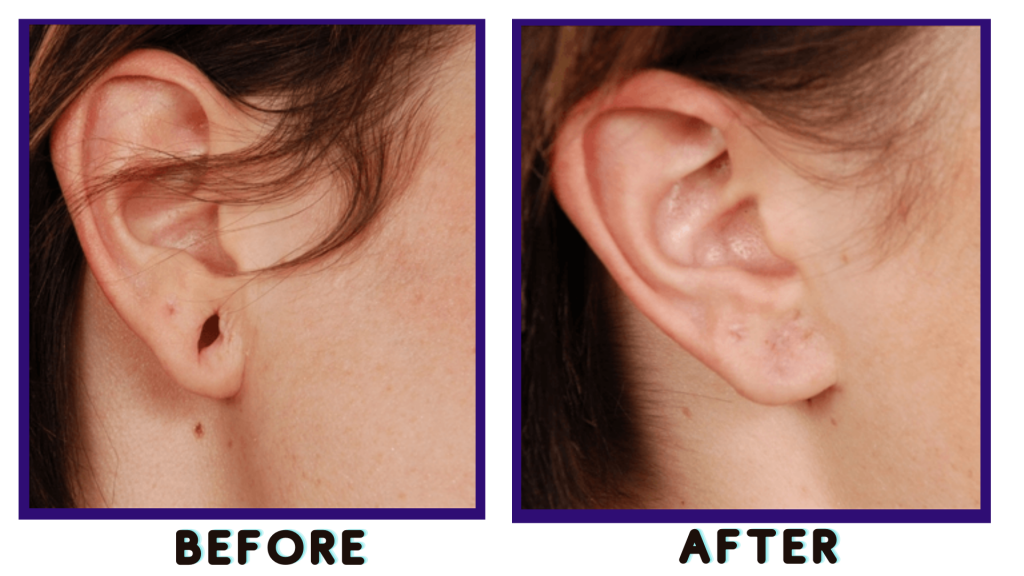
Earlobe repair surgery, often referred to as lobuloplasty, is a minor cosmetic procedure designed to restore the natural shape and structure of damaged, torn, or stretched earlobes. The surgery involves removing scarred or stretched tissue and carefully suturing the earlobe to recreate a smooth, symmetrical, and natural-looking contour.
Because the earlobe contains soft tissue without cartilage, the procedure is usually quick and minimally invasive. Most earlobe repairs are performed under local anesthesia and take about 20–40 minutes, allowing patients to return home the same day. After healing, many patients can safely re-pierce their ears within 4–8 weeks, depending on the recovery process.
>>> See more: Lip Corner Lift in Vietnam: Turn Downturned Lips into a Pleasant Smile
How the Procedure Restores Torn or Stretched Earlobes
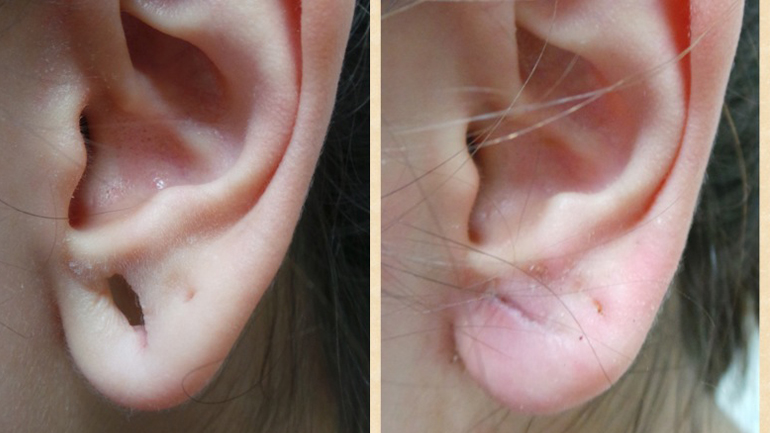
During the procedure, the surgeon first removes the damaged or elongated tissue surrounding the tear or enlarged piercing hole. The remaining tissue edges are then carefully reshaped and sutured together to restore the earlobe’s rounded and balanced appearance.
Modern surgical techniques focus on precise suturing and minimal scarring, helping the repaired earlobe look as natural as possible. Thanks to advances in cosmetic surgery, earlobe repair procedures today have success rates above 90% and very low complication rates when performed by experienced surgeons.
Common Causes of Earlobe Damage
Earlobe damage can occur for several reasons, most commonly related to jewelry use or accidental trauma.
Torn earlobes from heavy earrings Long-term use of heavy earrings is one of the leading causes of earlobe damage. The continuous downward pull gradually stretches the piercing hole, and sudden pulling—such as when earrings catch on clothing or hair—can cause the earlobe to split.
Stretched earlobes from gauges or plugs Body modification trends involving ear gauges or plugs intentionally stretch the earlobe. However, when the jewelry is removed, the tissue often does not shrink back completely, leaving the earlobe permanently enlarged or elongated.
Accidental trauma or injury Sports injuries, accidental pulling, or sudden trauma can also cause partial or complete earlobe tears. In many cases, these injuries cannot heal properly without surgical repair.
Causes of Earlobe Damage (Estimated Distribution)
Clinical reports suggest that most earlobe repair procedures are related to jewelry use. The estimated distribution of causes is shown below:
| Cause of Earlobe Damage | Estimated Share of Cases |
| Heavy earrings causing gradual stretching | 40–45% |
| Accidental tearing from earrings being pulled | 20–25% |
| Stretched earlobes from gauges or plugs | 15–20% |
| Aging-related elongation or sagging | 10–15% |
| Other trauma or injuries | 5–10% |
These figures highlight that lifestyle factors and jewelry trends play a major role in the growing demand for earlobe repair procedures.
Statistics on Earlobe Repair Procedures Globally and in Asia
Demand for cosmetic ear procedures has increased steadily in recent years. The global ear surgery and otoplasty market was valued at approximately USD 378 million in 2025 and is projected to exceed USD 770 million by 2032, reflecting strong growth in aesthetic procedures worldwide.
Within this market, earlobe-related corrections account for roughly 15–20% of ear cosmetic procedures, particularly in urban areas where jewelry and body modification trends are common.
The Asia–Pacific region is one of the fastest-growing markets for cosmetic ear procedures, driven by rising disposable incomes, increasing awareness of aesthetic treatments, and the growth of medical tourism. Countries such as Vietnam, Thailand, and South Korea are seeing steady demand for minimally invasive procedures like earlobe repair due to their affordability and short recovery time.
Ideal Candidates for Earlobe Repair
Earlobe repair surgery is suitable for individuals who want to restore the appearance and function of damaged earlobes. Ideal candidates typically include:
- People with torn or split earlobes caused by earrings
- Individuals with stretched piercing holes from gauges or plugs
- Patients with elongated or sagging earlobes due to aging
- Those seeking to restore symmetry between both ears
Candidates should generally be in good overall health and have realistic expectations about the results. When performed properly, earlobe repair can restore a natural ear appearance and improve overall facial harmony.
II. Common Reasons Patients Need Earlobe Repair
Earlobe repair procedures are typically performed to correct structural damage caused by jewelry use, body modification trends, or natural aging. Because the earlobe is composed mainly of soft tissue without cartilage, it is more susceptible to stretching and tearing than other parts of the ear. As cosmetic awareness grows, more patients are seeking simple surgical procedures to restore the natural appearance of their earlobes.
Key Causes of Earlobe Damage
The most common reason for earlobe repair is torn earlobes caused by earrings, especially when heavy jewelry is worn over a long period of time. Sudden pulling of earrings—such as when they catch on clothing or hair—can also cause partial or complete tears. Clinical estimates indicate that earring-related injuries account for approximately 60–70% of all earlobe repair cases.
Another common cause is stretched earlobes from ear gauges or plugs, which intentionally enlarge the piercing hole as part of body modification trends. However, once the jewelry is removed, the tissue often cannot shrink back completely. Cosmetic clinics report that about 15–20% of earlobe repair procedures involve patients who previously used gauges or plugs.
A smaller proportion of patients seek treatment to address elongated or sagging earlobes caused by aging, as the skin gradually loses elasticity over time. In addition, some individuals undergo the procedure to restore symmetry between both earlobes, particularly when previous injuries or stretched piercings create uneven ear shapes.
Demand Trends for Earlobe Repair in Vietnam and Asia
Demand for minimally invasive cosmetic procedures—including earlobe repair—has grown steadily in Asia due to increasing disposable income, rising aesthetic awareness, and the expansion of cosmetic clinics in major cities. Although earlobe repair is often categorized within cosmetic ear procedures, it represents an estimated 15–20% of total ear aesthetic treatments globally.
Industry estimates suggest that Vietnam performs approximately 8,000–12,000 cosmetic ear procedures annually, with around 1,200–2,000 cases involving earlobe repair. Neighboring countries with more mature cosmetic surgery markets, such as South Korea and Thailand, report significantly higher numbers due to larger medical tourism sectors and higher demand for aesthetic procedures.
>>> See more: Ear Surgery (Otoplasty) in Vietnam: Correct Ear Shape for Better Balance
Estimated Number of Earlobe Repair Procedures by Region
| Region | Estimated Ear Cosmetic Procedures | Estimated Earlobe Repair Cases |
| North America | ~200,000 | 30,000 – 40,000 |
| Europe | ~150,000 | 22,000 – 30,000 |
| Asia–Pacific | ~180,000 | 27,000 – 36,000 |
| Latin America | ~70,000 | 10,000 – 14,000 |
| Middle East & Africa | ~40,000 | 6,000 – 8,000 |
The table above shows that North America and Asia-Pacific account for the largest share of cosmetic ear procedures globally. Asia-Pacific, in particular, is experiencing rapid growth as cosmetic treatments become more accessible across countries such as South Korea, Thailand, Japan, and Vietnam.
Within Asia, the distribution of procedures also reflects the maturity of each country’s aesthetic industry.
| Country | Estimated Ear Cosmetic Cases / Year | Estimated Earlobe Repair Cases |
| South Korea | 25,000 – 35,000 | 4,000 – 6,000 |
| Thailand | 15,000 – 20,000 | 2,500 – 3,500 |
| Japan | 10,000 – 15,000 | 1,500 – 2,500 |
| Vietnam | 8,000 – 12,000 | 1,200 – 2,000 |
These figures highlight that while South Korea and Thailand remain leading centers for cosmetic ear procedures in Asia, Vietnam is emerging as a growing market. The increasing number of aesthetic clinics and relatively affordable treatment costs are contributing to the gradual rise in demand for procedures such as earlobe repair.
III. Types of Earlobe Repair Procedures
Earlobe repair surgery involves several techniques depending on the type of tissue damage, size of the tear, and cosmetic goals. Because the earlobe consists mainly of soft tissue and fat without cartilage, reconstruction procedures are generally precise and minimally invasive.
Simple Earlobe Tear Repair
This technique is used for partial or complete splits in the earlobe, most commonly caused by heavy earrings or accidental pulling.
Technical details
- Incision length: 3–8 mm along the torn edge
- Tissue trimming: removal of 1–2 mm damaged epithelial edge
- Suture type: 6-0 or 7-0 nylon / polypropylene
- Procedure time: 20–30 minutes per ear
The surgeon removes the scarred edges of the tear and closes the wound with fine sutures to restore the natural contour of the earlobe.

Repair of Stretched Earlobes from Gauges
This procedure corrects large piercing holes caused by ear gauges or plugs, where the tissue has expanded significantly.
Technical details
- Gauge hole diameter treated: typically 8–20 mm
- Excess tissue removal: 2–6 mm circular wedge excision
- Reconstruction technique: layered soft-tissue closure
- Suture type: 5-0 or 6-0 absorbable + skin sutures
The surgeon reshapes the earlobe by excising the stretched tissue and reconstructing the remaining soft tissue to restore thickness and shape.
Earlobe Reduction Surgery
Patients with large or elongated earlobes may undergo reduction surgery to create better facial proportion.
Technical details
- Typical tissue reduction: 4–10 mm vertical or wedge excision
- Incision placement: inferior or central lobule
- Average procedure time: 30–40 minutes
- Sutures: 6-0 fine cosmetic sutures
The excess tissue is removed and the earlobe is reshaped to create a smaller and more symmetrical appearance.
Re-Piercing After Earlobe Repair
After complete healing, patients can safely have their ears pierced again.
Technical considerations
- Recommended waiting time: 6–8 weeks after surgery
- New piercing placement: 2–3 mm lateral to previous scar
- Needle size: 20–22 gauge sterile needle
Proper placement reduces the risk of recurrence or weakening of the repaired tissue.
Comparison of Earlobe Repair Techniques
| Procedure Type | Incision Size | Tissue Removal | Procedure Time | Typical Recovery |
| Simple tear repair | 3–8 mm | 1–2 mm edge trimming | 20–30 min | 5–7 days |
| Stretched gauge repair | 6–15 mm | 2–6 mm tissue excision | 30–45 min | 7–14 days |
| Earlobe reduction | 5–12 mm | 4–10 mm wedge removal | 30–40 min | 7–10 days |
| Re-piercing after repair | puncture | none | 5–10 min | 1–3 days |
IV. Why Choose BeDental Vietnam for Earlobe Repair
At BeDental Vietnam, earlobe repair procedures are performed by experienced cosmetic surgeons specializing in facial aesthetics and minor reconstructive surgery. The clinic applies minimally invasive techniques with fine cosmetic sutures (6-0 to 7-0) to ensure natural-looking results and minimal scarring. On average, the procedure takes 20–40 minutes, and more than 95% of patients can return to daily activities within a few days.

BeDental has also seen steady growth in demand for minor aesthetic procedures. In 2023–2024, the clinic performed over 250 ear-related aesthetic procedures, including earlobe repair, earlobe reduction, and otoplasty consultations. Approximately 30–35% of these cases involved patients seeking correction for torn or stretched earlobes, showing increasing awareness of small but impactful facial aesthetic treatments.
Another advantage of BeDental is its transparent consultation and personalized treatment planning. Each patient receives a detailed assessment of ear symmetry, tissue condition, and surgical options before the procedure. The clinic also offers multilingual support and treatment coordination for international patients, making it accessible for visitors seeking affordable cosmetic care in Vietnam.
Patient Stories
Case 1 – Torn Earlobe from Heavy Earrings
A 32-year-old female patient visited BeDental after her earlobe was completely torn from years of wearing heavy earrings. The repair procedure took approximately 25 minutes under local anesthesia, and the sutures were removed after 7 days. Six weeks later, the patient successfully re-pierced her ear and reported a natural appearance with minimal scarring.
Case 2 – Stretched Earlobe from Gauges
A 27-year-old male patient sought treatment to close a 12 mm stretched earlobe hole caused by ear gauges worn during his teenage years. Surgeons performed a tissue reconstruction procedure to reshape the earlobe. After two weeks of recovery, the earlobe regained a balanced contour and symmetrical appearance.
Table: Earlobe Repair Cost in Vietnam vs Other Countries
| Country | Average Cost per Procedure | Notes |
| Vietnam | $120 – $300 | Affordable cosmetic clinics and outpatient procedures |
| Thailand | $300 – $600 | Popular medical tourism destination |
| South Korea | $500 – $1,200 | Advanced cosmetic surgery market |
| United States | $1,500 – $3,500 | Higher medical and clinic costs |
| United Kingdom | $1,200 – $2,500 | Private cosmetic surgery pricing |
Overall, Vietnam is emerging as a cost-effective destination for minor cosmetic procedures, with treatment prices often 60–80% lower than Western markets while still providing professional medical care and modern techniques.

Conclusion
Earlobe repair surgery is a safe, quick, and highly effective procedure that can restore the natural appearance of damaged earlobes. Whether the issue is caused by torn piercings, stretched gauges, or age-related changes, modern surgical techniques allow doctors to reshape the earlobe with minimal scarring and short recovery time.
As demand for minor aesthetic procedures continues to grow worldwide, Vietnam is becoming an increasingly attractive option for patients seeking professional care at affordable prices. Clinics like BeDental Vietnam combine experienced surgeons, modern equipment, and personalized treatment planning to deliver reliable results for both local and international patients.
For individuals looking to regain balanced and natural-looking earlobes, earlobe repair offers a simple yet transformative solution that helps restore confidence and overall facial harmony.
BeDental: Trusted Dental and Aesthetic Clinic for International Patients
Founded in 2012, BeDental is one of the leading brands in dentistry and cosmetic surgery in Vietnam, trusted by many international patients. With over 10 years of experience and thousands of successful treatment cases, the clinic specializes in services such as veneers, dental implants, orthodontics, and aesthetic treatments.
Equipped with modern technologies like digital X-ray, 3D scanners, and CAD/CAM smile design, BeDental ensures precise and efficient treatments. Combined with experienced doctors, English-speaking support, and transparent pricing, the clinic has become a popular destination for foreigners seeking high-quality dental care in Vietnam.
 TS.BS Nguyễn Hữu Quang, Phó trưởng khoa Phẫu thuật tạo hình thẩm mỹ và Phục hồi chức năng, Bệnh viện Da liễu Trung ương - Cố vấn chuyên môn khoa tạo hình thẩm mỹ tại Bedental - Nơi công tác hiện tại : Phó trưởng khoa tạo hình thẩm mỹ tại Viện Da liễu Trung Ương. Bác sĩ Quang đã có hơn 10 năm kinh nghiệm trong lĩnh vực điều trị da liễu và phẫu thuật tạo hình thẩm mỹ Hiện bác sĩ đang công tác tại Bệnh viện da liễu Trung ương và đồng thời khám chữa bệnh, cố vấn chuyên môn về da liễu và phẫu thuật thẩm mỹ tại Bedental