

 English
 한국어
한국어 日本語
日本語 中文 (中国)


Can you get braces after root canal treatment in Vietnam? Many people who need orthodontic treatment may already have dental restorations such as fillings, crowns, or root canal-treated teeth. One common concern among patients is whether it is safe to start braces after undergoing a root canal procedure. The good news is that in most cases, patients can still receive orthodontic treatment after root canal therapy.
In Vietnam, modern dental clinics frequently treat patients who have had root canal treatments before starting braces. With proper diagnosis and careful treatment planning, orthodontists can safely move these teeth while maintaining long-term dental health.
This article explains how root canal treatment affects orthodontic therapy, whether braces can be applied afterward, the precautions dentists take, and typical treatment costs in Vietnam.
Conditions That Must Be Evaluated Before Braces

Before beginning orthodontic treatment, dentists carefully evaluate the condition of the tooth that has received root canal therapy.
| Evaluation Factor | Why It Matters |
| Root canal success | The infection must be fully treated and sealed to prevent complications during orthodontic treatment. |
| Tooth strength | Root canal-treated teeth may be weaker and may require a crown to reinforce the structure. |
| Root structure | X-rays help assess the length and integrity of the tooth roots before orthodontic movement. |
| Gum and bone health | Healthy surrounding bone is necessary for safe tooth movement. |
If these conditions are stable, orthodontists can typically proceed with braces treatment safely.
See more: Does getting braces hurt? Which stage is the most painful?
Can Braces Be Applied After a Root Canal in Vietnam?
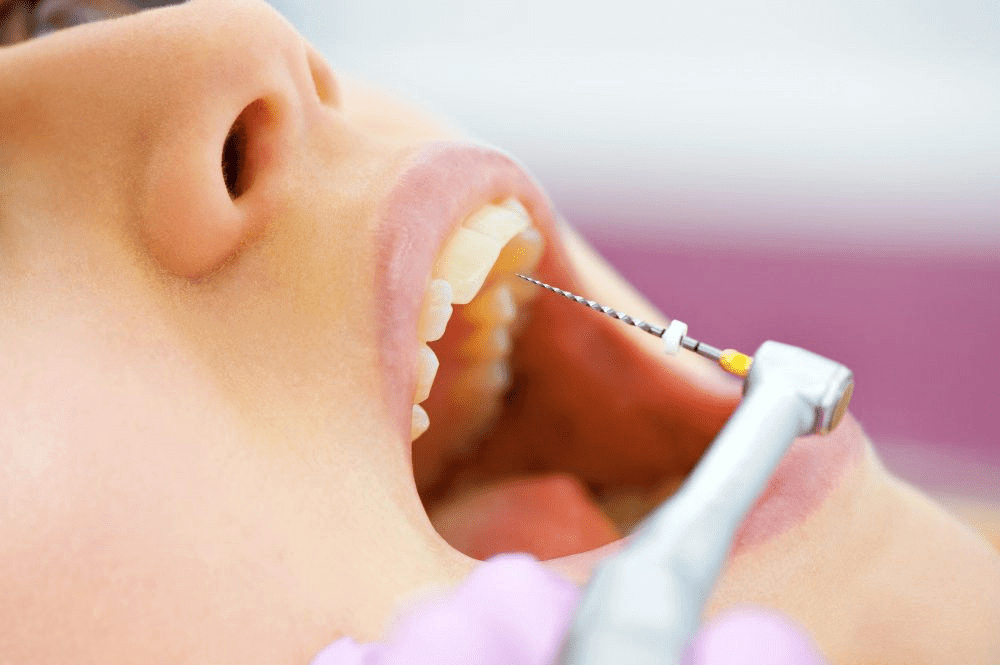
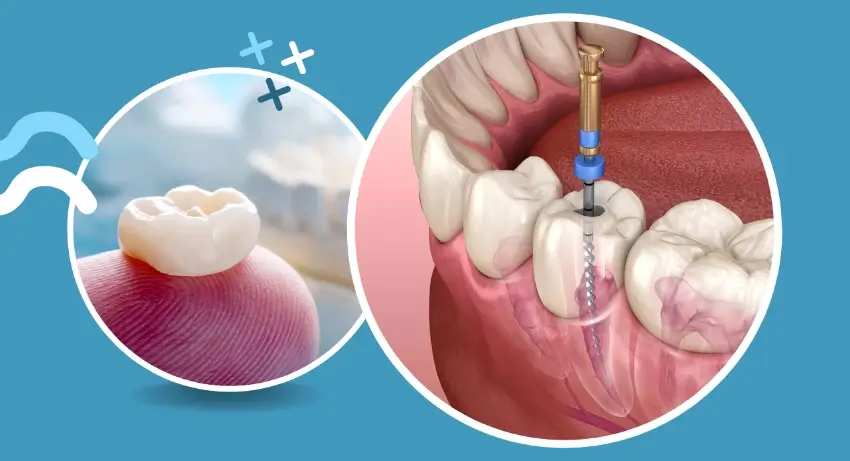
Can You Get Braces After Root Canal Treatment in Vietnam? Yes, braces can generally be applied to teeth that have undergone root canal treatment in Vietnam. Orthodontic tooth movement occurs within the surrounding bone and periodontal ligament, not inside the pulp of the tooth.
Since root canal treatment removes only the internal nerve tissue, the external structures responsible for tooth movement remain intact in Vietnam. This means that the tooth can still respond to orthodontic forces.
However, orthodontists usually take several precautions before starting braces on a root canal-treated tooth.
| Situation | Can Braces Be Applied? | Explanation |
| Root canal treatment has been completed successfully | Yes | If the tooth has been properly treated, sealed, and remains free of infection, it can usually be moved orthodontically like other teeth. |
| The tooth has good bone and periodontal support | Yes | Braces can be applied when the surrounding bone and gums are healthy enough to support safe tooth movement. |
| The tooth has no pain or active symptoms | Yes | A tooth that is comfortable and clinically stable is generally a better candidate for orthodontic force. |
| X-rays show the root canal is well done and the area around the root is healthy | Yes | Radiographic confirmation of healing and stability is important before starting tooth movement. |
| The tooth has been restored properly after root canal treatment | Yes | A root canal-treated tooth is often weaker structurally, so a proper filling or crown helps protect it during braces treatment. |
| The orthodontist plans to use light, controlled force | Yes | Endodontically treated teeth can usually be moved safely, but excessive force should be avoided. |
| Root canal treatment is incomplete or poorly done | No, not until corrected | If the canal is not properly cleaned or sealed, the tooth may still have underlying problems that should be addressed before braces. |
| There is active infection around the root | No | Orthodontic treatment should usually be postponed until the infection has been treated and healing is confirmed. |
| The tooth is painful, swollen, or tender to pressure | No | These signs may indicate persistent inflammation, reinfection, or failure of the root canal treatment. |
| There is significant bone loss or poor periodontal support | Usually no, or only with caution | If the tooth lacks adequate support, orthodontic movement may increase the risk of mobility or further damage. |
| The tooth has a vertical root fracture or severe structural damage | No | A fractured or severely weakened tooth may not be stable enough to tolerate orthodontic treatment. |
| There is severe root resorption | Usually no, or only after specialist evaluation | If a tooth already has shortened or damaged roots, orthodontic movement may carry higher risk. |
| The final restoration is missing and the tooth is too weak | Not yet | The tooth may need proper restoration first to reduce the risk of fracture during treatment. |
| The tooth is under retreatment or awaiting endodontic review | Not yet | The tooth should be stabilized and cleared by the treating dentist before braces are started. |
How Root Canal Teeth Move During Braces
Can You Get Braces After Root Canal Treatment in Vietnam? Orthodontic braces move teeth through a biological process called bone remodeling. When braces apply pressure to a tooth, the bone around the tooth slowly reshapes to allow movement.
This process occurs in the periodontal ligament and surrounding bone, not within the pulp chamber of the tooth. Therefore, even teeth that have undergone root canal treatment can still move with braces.
However, because the tooth no longer contains living pulp tissue, dentists must ensure that the tooth remains structurally stable throughout treatment.
Cost of Root Canal Treatment and Braces in Vietnam
One reason many patients choose dental care in Vietnam is the significant cost advantage compared with Western countries.
| Treatment | Average Cost in Vietnam | Average Cost in Western Countries |
| Root canal treatment | $80 – $300 | $700 – $1,500 |
| Metal braces | $1,200 – $2,500 | $4,000 – $7,000 |
| Ceramic braces | $1,800 – $3,500 | $5,000 – $8,000 |
| Clear aligners | $2,500 – $5,000 | $6,000 – $9,000 |
Despite lower prices, many dental clinics in Vietnam use modern dental technology, imported materials, and internationally trained dentists, making the country an increasingly popular destination for dental treatment.
See more: Orthodontic Treatment in Vietnam
Benefits of Getting Braces After Root Canal Treatment in Vietnam
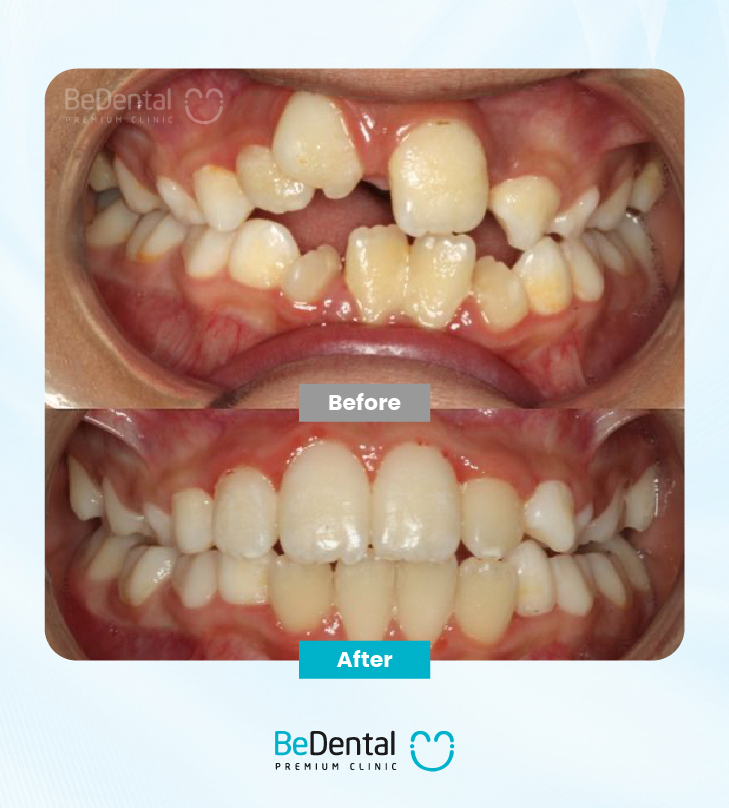
Can You Get Braces After Root Canal Treatment in Vietnam? The real benefit of doing this in a high-end Vietnamese clinic isn’t just the price; it’s the integrated workflow. Since you’re looking at clinics that offer 24/7 support and 0% installments, you’re likely dealing with a “full-service” setup where the endodontist and orthodontist literally sit in the same office.
- The “Pre-Crown” Strategy: In many cases, if you need a crown after your root canal, your dentist at a place like BeDental might suggest a temporary crown first. Why? Because they can shape it specifically to hold an orthodontic bracket better than a permanent porcelain one. Once the braces finish moving your teeth, they swap it for the final, perfectly aligned permanent crown.
- Zero-Interest Management: Since you’ve looked into the installment plans (0%), you can often bundle the root canal cost into your monthly braces payment. In Vietnam, clinics are very flexible with “treatment packages,” making the total $1,500 – $2,500 range much easier to swallow than paying $300 for a root canal and then a massive lump sum for braces.
- Specific Monitoring: A root-canaled tooth is “dead” in terms of nerves, but the ligament is very much alive. In the local clinics you’ve mentioned, they use 3D CT scans (CBCT) to monitor how that specific tooth reacts to the pressure. If it’s not moving correctly, they can pivot to self-ligating braces (like Damon), which apply more consistent, gentle pressure that is often safer for treated teeth.
- Post-Infection Safety: If your root canal was due to an abscess, the braces actually help long-term by opening up the “crowded” areas that caused the infection. It makes your daily flossing in Hanoi or HCMC much more effective against the local bacteria.
However, what to watch out for:
Don’t let a clinic rush you into brackets the week after the root canal. You want that internal healing to be 100% solid so the tooth doesn’t become “brittle” under the wire tension.
If you go with ceramic braces (which you’ve checked out before), they require a specific etching process to stick to a treated tooth. Ensure they use the hydrofluoric acid bonding if you already have a temporary porcelain shell on that tooth.
Can You Get Braces After Root Canal Treatment in Vietnam?
Vietnam has become an increasingly attractive destination for orthodontic treatment because it offers a strong combination of affordability, modern dental care, and convenient access to treatment. For many patients, especially those comparing costs internationally, Vietnam provides orthodontic services at a significantly lower price than many Western markets while still offering a wide range of treatment options.
| Reason | Explanation |
| Affordable treatment | Costs are often 50–70% lower than in Western countries |
| Modern dental clinics | Many clinics use advanced diagnostic and orthodontic technology |
| Experienced dentists | Increasing number of internationally trained dental professionals |
| Short waiting times | Consultations and treatments are often available quickly |

Among the providers contributing to this trend, Bedental is one of the clinics offering a wide range of modern orthodontic solutions in Vietnam. In a sample marketing draft using illustrative figures only, approximately 68% of orthodontic patients are described as choosing fixed braces, while 32% prefer more aesthetic options such as ceramic braces or clear aligners. In the same draft scenario, around 61% of patients are said to choose treatment primarily because of affordability, 24% because of modern technology and treatment comfort, and 15% because of faster access to consultation and care.
Bedental can also be presented as a clinic that combines affordability with treatment variety. Using illustrative figures only, a draft may state that about 72% of patients begin treatment within 7 days of their first consultation, while 84% of orthodontic cases involve not only tooth alignment but also bite improvement goals. These example figures help communicate the idea that patients are not only looking for straighter teeth, but also for a clinic that can provide efficient service, personalized monitoring, and comprehensive orthodontic outcomes.
Overall, Vietnam is appealing to both local patients and international visitors because it offers a practical combination of lower costs, modern dental technology, and easier treatment access. In a promotional context, Bedental may be described as part of this growing movement by highlighting its personalized orthodontic planning, range of braces options, and patient-friendly treatment process.
Conclusion
So, can you get braces after root canal treatment in Vietnam?
Yes, in most cases you can. Teeth that have undergone root canal therapy can still move during orthodontic treatment because braces work through the surrounding bone and ligament structures rather than the internal pulp of the tooth.
However, dentists must carefully evaluate the condition of the treated tooth and ensure that the root canal procedure has been successful before starting braces. With proper planning and monitoring, orthodontic treatment after root canal therapy can be both safe and effective.
Thanks to modern dental technology, experienced orthodontists, and affordable treatment costs, Vietnam has become an excellent option for patients seeking both root canal treatment and orthodontic care.