

 English
 한국어
한국어 日本語
日本語 中文 (中国)


A porcelain crown is often chosen to enhance both function and aesthetics. However, some patients notice an unexpected issue after treatment: their gums appear darker or discolored around the crown. This leads to a common concern: Blackened gums after porcelain crown in Vietnam. Is this a normal reaction, or a sign of poor dental work? Understanding the causes of Crown dark gums, Crown black base, and Crown gum discoloration will help you protect your smile and choose the right treatment approach.
Understanding gum discoloration around porcelain crowns
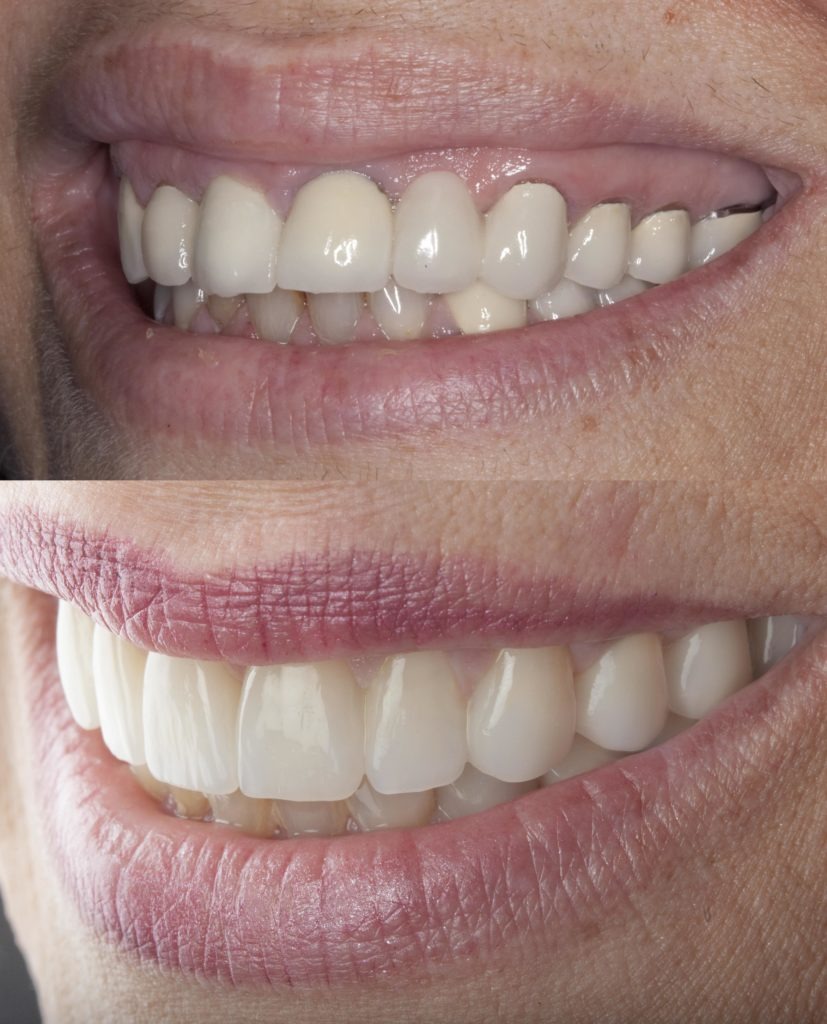
Gum discoloration refers to a change in the natural pink color of the gum tissue. In cases related to dental restorations, Crown gum discoloration typically appears as a dark line, grey shadow, or uneven gum tone near the crown margin.

This issue is more noticeable in front teeth, where aesthetics are critical. Patients often describe the crown looking “perfect,” but the gum around it appears darker, making the overall smile less natural.
According to clinical observations in prosthodontics, gum discoloration is not always a disease but often a response to materials, technique, or underlying tissue characteristics.
Why do gums turn dark after a crown?
There are several reasons why patients experience Blackened gums after porcelain crown in Vietnam, and understanding these causes helps determine the appropriate solution.
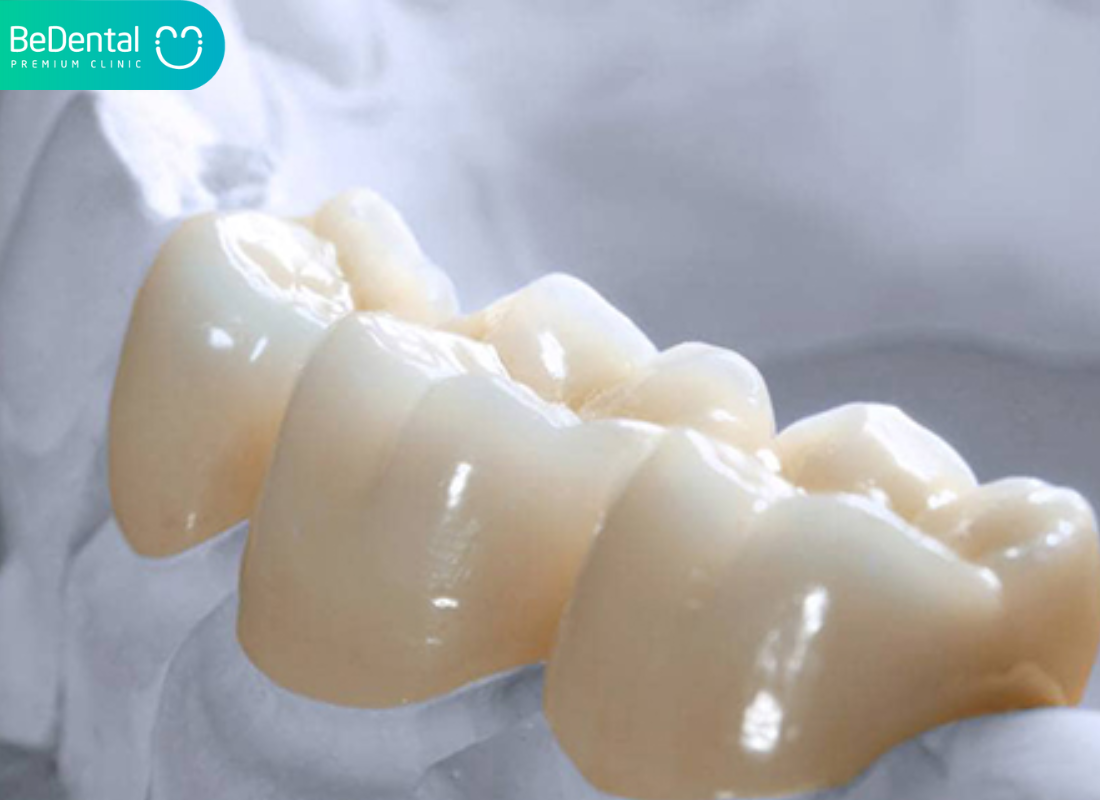
One of the most common causes is the use of metal-based crowns. Traditional porcelain-fused-to-metal (PFM) crowns may show a dark line at the gum margin over time. This is often referred to as Crown black base, where the underlying metal becomes visible as the gum recedes slightly.
Another cause is poor crown margin placement. If the crown edge is too close to or under the gum, it can irritate the tissue, leading to inflammation and discoloration.
Gum biotype also plays a role. Patients with thin or translucent gums may naturally show darker tones beneath the surface, especially when metal components are present.
Additionally, plaque accumulation and poor oral hygiene can lead to inflammation, which changes gum color and contributes to Crown dark gums.
Crown black base vs gum disease: how to tell the difference
Not all darkened gums indicate a problem. Differentiating between Crown black base and gum disease is essential for proper treatment.
A Crown black base typically appears as a thin, consistent dark line near the crown margin and is often related to the crown material. It usually does not involve swelling, bleeding, or pain.
In contrast, gum disease–related Crown gum discoloration is often accompanied by redness, swelling, bleeding, and sometimes bad breath. This indicates inflammation that requires periodontal treatment.
Recognizing these differences helps patients understand whether the issue is aesthetic or medical.
>> See more: Porcelain Crown Falling Out in Vietnam: Causes & Fixes
Does crown material affect gum color?
Crown material plays a significant role in Blackened gums after porcelain crown in Vietnam. Modern all-ceramic crowns are designed to mimic natural teeth and avoid the dark shadow effect seen in metal-based crowns.
Studies in restorative dentistry show that all-ceramic materials offer better light transmission and gum compatibility, reducing the risk of Crown dark gums.
Below is a comparison of common crown materials and their impact on gum aesthetics:
| Crown Type | Aesthetic Outcome | Risk of Dark Gum Line | Biocompatibility |
| Porcelain-fused-to-metal | Moderate | High | Medium |
| Zirconia crown | High | Low | High |
| Full ceramic (E.max) | Very high | Very low | Very high |
Choosing the right material is one of the most effective ways to prevent Crown gum discoloration.
The role of technique in preventing gum discoloration
Even with high-quality materials, poor technique can still lead to Crown dark gums. Proper margin design, gentle tissue handling, and precise fitting are essential.
Dentists must ensure that the crown margin is smooth and does not irritate the gum. Over-contoured crowns or rough edges can trap plaque and cause inflammation, leading to discoloration over time.
Modern digital technologies, such as CAD/CAM systems, help improve accuracy and reduce the risk of margin-related issues.
A real patient story: when aesthetics are affected
A 29-year-old patient visited BeDental after noticing a dark line around her front crown. She was concerned that her gums were unhealthy.
Upon examination, the issue was identified as a Crown black base caused by a metal-based crown placed years earlier. Although her gums were healthy, the aesthetic impact was significant.
The solution was to replace the old crown with a zirconia crown. After treatment, the dark line disappeared, and her smile looked more natural. This case highlights how Blackened gums after porcelain crown in Vietnam can often be resolved with the right material and technique.
Can gum discoloration be reversed?
Whether Crown gum discoloration can be reversed depends on the cause. If the issue is due to inflammation or plaque, improving oral hygiene and professional cleaning can restore gum color.
If the discoloration is caused by Crown black base, replacing the crown with a metal-free option is usually required. In cases involving gum pigmentation or recession, additional periodontal procedures may be considered.
Early diagnosis is key to achieving the best outcome.
Scientific perspective on gum discoloration
Research in periodontology highlights that gum color is influenced by blood flow, tissue thickness, and external factors such as dental materials.
According to studies published in journals like the Journal of Prosthetic Dentistry and the American Academy of Periodontology, biocompatible materials and proper crown design significantly reduce soft tissue complications, including discoloration.
These findings support the shift toward metal-free restorations in modern dentistry.
How to prevent crown-related gum discoloration
Preventing Blackened gums after porcelain crown in Vietnam begins with proper planning. Patients should choose experienced dentists who prioritize both aesthetics and gum health.
Maintaining good oral hygiene is equally important. Regular brushing, flossing, and professional cleaning help prevent inflammation that contributes to Crown dark gums.
Patients should also attend regular check-ups to monitor gum health and crown condition.
>> See more: Gum Recession After Porcelain Crown in Vietnam
Does gum thickness affect crown discoloration?
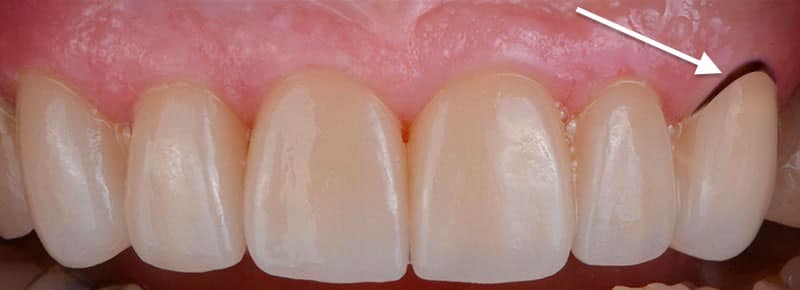
One of the most overlooked factors in Blackened gums after porcelain crown in Vietnam is gum thickness, also known as gingival biotype.
Patients with thin gums are more likely to experience Crown dark gums because the underlying structure of the crown can show through the tissue. This is especially common with metal-based restorations, where the Crown black base creates a grey shadow effect under the gum.
Even when the crown is technically well-made, thin gum tissue may still reveal slight color differences, making the result look less natural. This explains why two patients receiving the same type of crown can have completely different aesthetic outcomes.
For this reason, experienced dentists always evaluate gum thickness before treatment. In cases of thin gums, they often recommend zirconia or all-ceramic crowns to minimize the risk of Crown gum discoloration and achieve a more natural-looking smile.
Why crown margin design is critical for gum color
The design and placement of the crown margin play a decisive role in preventing Blackened gums after porcelain crown in Vietnam.
If the margin is placed too deep under the gum, it can irritate soft tissue and create an environment where bacteria accumulate. Over time, this leads to inflammation and visible Crown dark gums.
On the other hand, if the margin is too exposed or poorly fitted, it may create a visible line or gap, contributing to the appearance of a Crown black base and uneven gum color.
A well-designed margin should be smooth, precise, and biologically compatible with the gum tissue. Modern techniques such as digital scanning and CAD/CAM fabrication allow dentists to achieve higher accuracy, reducing the risk of Crown gum discoloration.
In aesthetic dentistry, success is not only about how the crown looks, but also how it integrates with the surrounding gum. A properly designed margin ensures long-term stability, healthy tissue, and a natural appearance.
BeDental – Aesthetic and biological harmony
At BeDental, every crown is designed with both aesthetics and gum health in mind. The clinic uses advanced materials such as zirconia and E.max to minimize the risk of Crown gum discoloration.
Many patients who experience Blackened gums after porcelain crown in Vietnam seek treatment at BeDental to restore natural gum color and smile harmony. With precise techniques and personalized care, the clinic ensures long-term results.
Final thoughts
Blackened gums after porcelain crown in Vietnam is a concern that affects both appearance and confidence. Whether caused by material, technique, or oral hygiene, the condition is often preventable and treatable.
Understanding the causes of Crown dark gums, identifying Crown black base, and addressing Crown gum discoloration early can help patients maintain a healthy, natural-looking smile. In modern dentistry, the goal is not just to restore teeth, but to achieve true harmony between teeth and gums.

Tư vấn chuyên môn bài viết:
BÁC SĨ DƯƠNG THỊ THÙY NGA
BEDENTAL - TOP STANDARD DENTISTRY SYSTEM
In HANOI
Address 1: 7B Thi Sach St, Ngo Thi Nham, Hai Ba Trung Dist, Ha Noi. - 0934.61.9090
Address 2: No 129 Hoang Ngan, Yen Hoa, Cau Giay Dist, Ha Noi. - 0934.61.9090
In HO CHI MINH
Address 1: 53 -55 -57 Pho Duc Chinh St, Nguyen Thai Binh, Dist. 1, Ho Chi Minh. - 0766.00.8080
Working: 9am - 8pm everyday
Website: https://bedental.vn/en/