


 English
 한국어
한국어 日本語
日本語 中文 (中国)


Porcelain crowns remain one of the most widely used dental restoration options in Vietnam, helping restore damaged teeth while maintaining chewing function and appearance. Among the available options, metal porcelain crowns and titanium porcelain crowns are two commonly chosen types. Understanding the differences between these two materials is essential for patients who want a durable, safe, and long-lasting restoration.
According to clinical principles recognized by the American Dental Association and the World Dental Federation, the choice of crown material should be based on biocompatibility, structural strength, long-term oral health impact, and individual patient needs—not price alone.
In Vietnam, both metal and titanium porcelain crowns are available at reputable clinics. At BeDental, dentists carefully assess each patient’s condition to recommend the most appropriate crown type based on international dental standards and long-term treatment success.
About BeDental – International-Standard Dental Care in Vietnam
BeDental is a modern dental system in Vietnam specializing in restorative, cosmetic, and preventive dentistry that follows internationally recognized clinical standards. The clinic is known for its conservative treatment philosophy, advanced diagnostic technology, and commitment to long-term oral health.
BeDental’s restorative dentists have extensive experience working with different crown materials, including traditional metal porcelain and titanium porcelain crowns. Through digital diagnostics, bite analysis, and careful material selection, BeDental ensures that each crown provides optimal strength, comfort, and biological compatibility.
With strict sterilization protocols, transparent consultations, and comprehensive aftercare, BeDental has become a trusted destination for porcelain crown treatment in Vietnam for both local and international patients.
What Are Metal Porcelain Crowns?
Metal porcelain crowns consist of a metal alloy core covered by a layer of porcelain on the outside. The metal core provides strength, while the porcelain layer improves appearance.

Traditional metal porcelain crowns have been used for decades and are commonly placed on back teeth where chewing force is high.
Key Characteristics of Metal Porcelain Crowns
- Strong metal framework
- Porcelain coating for basic aesthetics
- More affordable compared to advanced ceramic options
- May show dark gum margins over time
Dental associations note that metal porcelain crowns are functional but may present aesthetic and gum-related limitations.
What Are Titanium Porcelain Crowns?
Titanium porcelain crowns use titanium as the metal substructure beneath the porcelain layer. Titanium is widely used in medical and dental applications due to its excellent biocompatibility.
According to dental associations, titanium is one of the safest metals used in dentistry and is well tolerated by gum tissue.
Key Characteristics of Titanium Porcelain Crowns
- Lightweight but strong metal core
- High biocompatibility
- Reduced risk of allergic reactions
- Better gum response compared to traditional metal alloys
Metal vs Titanium Porcelain Crowns – Key Differences
1. Biocompatibility
Titanium Crowns: Titanium is a “noble” metal known for being extremely biocompatible (it is the same material used for dental implants and hip replacements). It is chemically inert, meaning it won’t react with saliva or oral tissues. This makes it the safer choice for patients with metal sensitivities.
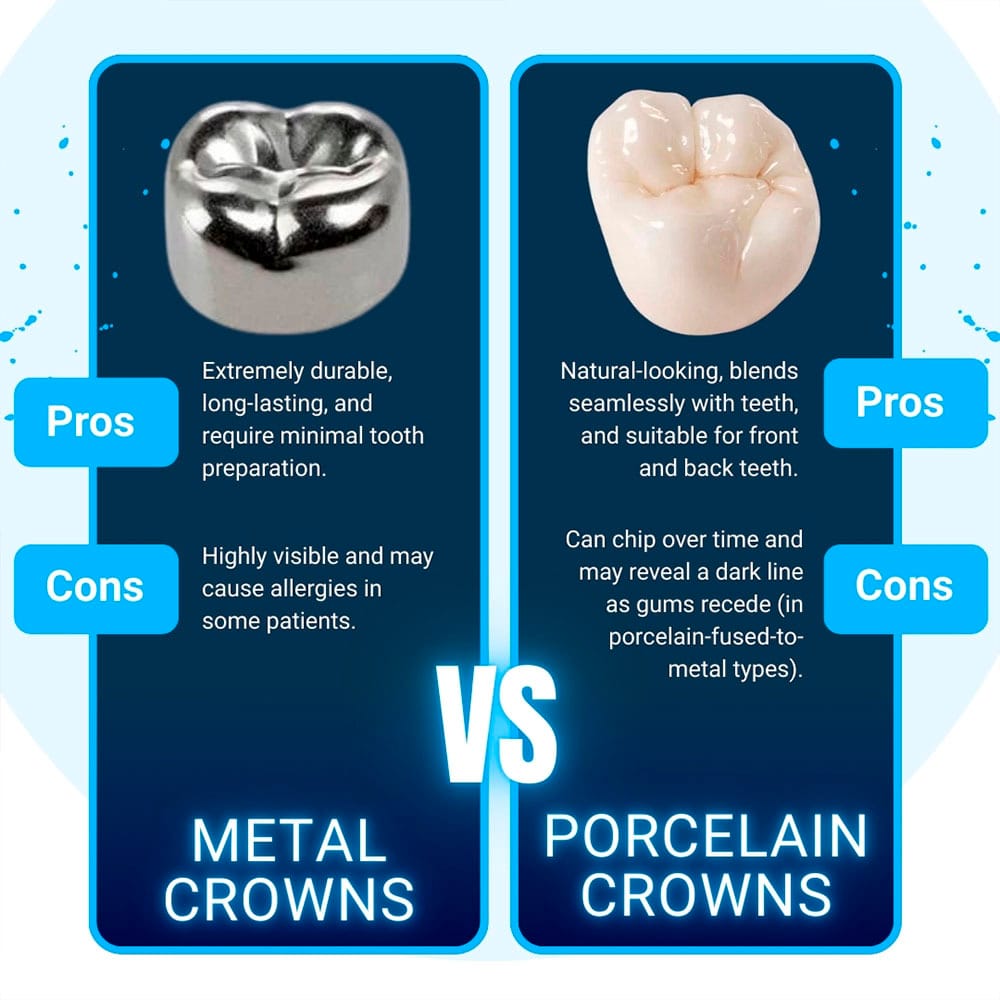
Metal Crowns: Traditional PFM crowns often use base metal alloys (like Nickel-Chromium or Cobalt-Chromium).Some patients may experience allergic reactions or localized sensitivity to these metals over time.
>> See more: Reducing Protruding Front Teeth in Vietnam: Safe, Natural, and Beautiful Results
2. Gum Health
Titanium Crowns: Because Titanium is highly compatible with soft tissue, it encourages healthy gum attachment. It is much more resistant to oxidation, which significantly reduces the risk of inflammation or gingivitis.
Metal Crowns: Traditional metal can oxidize in the acidic environment of the mouth. This oxidation often leads to the “black line” at the gumline—a dark gray shadow that occurs as the metal particles interact with the gum tissue.
3. Weight and Comfort
Titanium: Titanium is renowned for its high strength-to-weight ratio. It is noticeably lighter than traditional metal alloys, which can make the crown feel more “natural” and comfortable, especially in cases where a long dental bridge is required.
Metal: Traditional alloys are denser and heavier. While usually not a problem for a single crown, the cumulative weight of multiple metal crowns can be felt by some sensitive patients.
4. Aesthetic Outcome
Titanium: While both have a porcelain outer layer, Titanium supports better long-term aesthetics. Because it is less prone to corroding, the gumline stays pink and healthy for longer. However, like all metal-core crowns, it still has an opaque inner layer that may not be as translucent as an all-ceramic (E-max) crown.
Metal: These are excellent for molars but are generally avoided for front teeth. Over 3–5 years, the aesthetic quality often declines as the metal frame begins to cast a grayish shadow through the gums.
5. Durability
Comparison: Both types are exceptionally strong and can withstand the heavy chewing forces of molars.
Lifespan: Titanium crowns generally last longer (10–15 years) because they don’t corrode as easily as standard metal crowns (5–8 years). Dental associations highlight that the fit and bite adjustment performed by the dentist are just as critical to the crown’s lifespan as the material itself.
| Feature | Metal Porcelain (PFM) | Titanium Porcelain |
| Material | Ni-Cr or Co-Cr Alloy | 4% – 8% Titanium Alloy |
| Risk of Dark Gums | High (over time) | Low to Moderate |
| Allergy Risk | Possible | Very Low |
| Best Position | Deep Molars | Molars / Pre-molars |
| Average Cost | Lowest | Mid-range |
Which Option Is Better for Patients in Vietnam?
The choice between metal and titanium porcelain crowns depends on:
1. Consider Your Gum Sensitivity
Choose Titanium: If you have thin or sensitive gum tissue. Titanium is “biocompatible,” meaning it is well-tolerated by the body. It helps prevent chronic inflammation and maintains a healthy, pink gum line.
Avoid Metal: If you have experienced gum swelling or irritation with jewelry in the past, as traditional metal alloys (like Nickel-Chromium) can trigger localized allergic reactions.
2. Evaluate Your Aesthetic Expectations
Choose Titanium: If you want a more natural look over the long term. Titanium is highly resistant to oxidation, which significantly reduces (though doesn’t entirely eliminate) the risk of the “black gum line” that often appears after a few years.
Choose Metal: Only if the tooth is a back molar that is hidden when you smile and talk, as the greyish shadow of the metal frame is less of a concern in these areas.
3. Tooth Position (Front vs. Back)
Back Teeth (Molars): Both are excellent choices because they are extremely strong and can handle heavy chewing forces.Metal porcelain is often chosen here to save on costs.
Front Teeth (Incisors): Neither is the “gold standard” for front teeth (All-ceramic like E-max is better), but if you must choose between the two, Titanium is superior because it is lighter and allows for slightly better light reflection.
4. Long-Term Oral Health Goals
Titanium: Better for patients looking for a restoration that lasts 10–15 years. Its lightweight nature makes it ideal for long dental bridges, reducing the strain on the supporting “anchor” teeth.
Metal: Best for patients seeking a functional, short-term fix (typically 5–8 years) or those on a strict budget.
| Feature | Metal Porcelain (PFM) | Titanium Porcelain |
| Typical Cost (per tooth) | 1.000.000 – 2.000.000 VND | 2.500.000 – 3.500.000 VND |
| Biocompatibility | Moderate (may cause allergies) | High (safe for most) |
| Risk of Dark Gums | High (over time) | Low to Moderate |
| Weight | Heavier | Lightweight & Comfortable |
| Recommended For | Deep molars, budget-conscious | Sensitive gums, long bridges |
At BeDental, dentists recommend titanium porcelain crowns for patients who prioritize biocompatibility and gum health, while metal porcelain crowns may still be suitable for certain functional cases with budget considerations.
Why Choose BeDental for Porcelain Crowns in Vietnam?
1. Material-Specific Expertise
Not every tooth needs the same material. Our specialists are trained to distinguish when to use high-strength Zirconia for heavy-duty molars and when to use highly translucent E-max for front teeth.
Custom Selection: We offer a curated range of world-class materials, including Lava Plus (3M-USA), Katana (Japan), and Cercon HT, matching the material to your specific bite force and aesthetic needs.
Biocompatibility Focus: We prioritize non-metallic options to avoid the “black gum line” and potential allergic reactions often associated with traditional metal crowns.
2. International Clinical Standards
BeDental operates under the strict guidelines of the FDI World Dental Federation and the American Dental Association (ADA).
Sterilization: We utilize hospital-grade sterilization protocols to ensure a 100% safe surgical environment.
Global Quality: Our crowns are manufactured using materials that meet CE and FDA standards, ensuring the same quality you would receive in London, New York, or Sydney.
3. Advanced Diagnostic Technology
We remove the guesswork from dental restorations through a fully digital workflow:
3D Intraoral Scanning: Replaces uncomfortable putty molds with micron-perfect digital impressions.
Digital Smile Design (DSD): Allows you to see and approve your final smile in 3D before we even touch your teeth.
CAD/CAM Milling: Our computer-aided manufacturing ensures that every crown fits with “vacuum-tight” precision, which is the single most important factor in preventing future decay under the crown.
4. Conservative Treatment Planning
Our philosophy is to save as much of your natural tooth structure as possible.
Minimal Reduction: Through high-precision techniques, we aim for “minimal-prep” crowns, reducing the risk of post-operative sensitivity and the need for root canals.
Gum Health First: We plan the margins of your crown to sit harmoniously with your gum tissue, preventing the chronic inflammation or recession that can occur with poorly fitted restorations.
>> See more: Tooth Preparation Pain for Crowns in Vietnam: What to Expect and How to Stay Comfortable
5. Transparent Consultation and Aftercare
At BeDental, there are no hidden fees. Our pricing is “all-inclusive,” covering the digital design, local anesthesia, and temporary crowns.
Comprehensive Warranty: We stand by our work with long-term warranties ranging from 10 to 15 years on premium porcelain.
Post-Treatment Support: Every patient receives a detailed maintenance guide and access to 24/7 remote consultation if they have concerns during the healing process.
Who Is a Suitable Candidate for Metal or Titanium Porcelain Crowns?
You may be a suitable candidate if you:
Have Severely Damaged or Weakened Teeth
If a tooth is extensively decayed or has a large fracture that cannot be supported by a simple filling, a metal or titanium crown provides a “360-degree” protective sleeve. The metal core acts as a structural reinforcement, preventing the remaining natural tooth from splitting under pressure.
Need Durable Restoration for Molars
Your back teeth (molars) exert the highest biting forces in your mouth—often hundreds of pounds of pressure.
Metal Porcelain (PFM): Known for its exceptional fracture resistance, making it ideal for patients who chew heavy or tough foods.
Titanium Porcelain: Offers the same strength but is significantly lighter, reducing the “heavy” feeling in the back of the mouth.
Have Limited Space for Crown Thickness
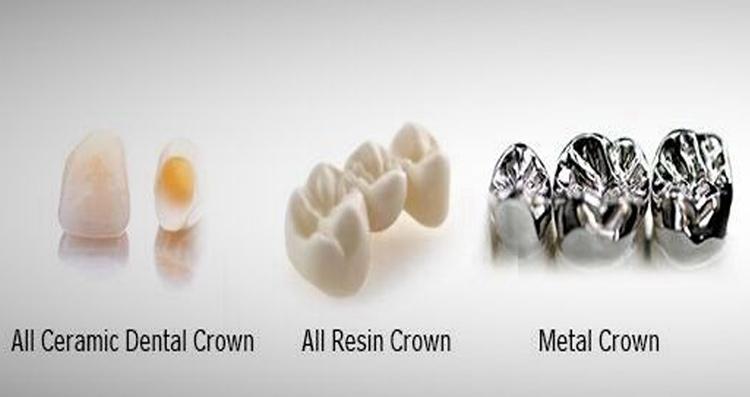
All-ceramic crowns require a thicker wall to remain strong, which often means more of your natural tooth must be shaved down. Metal and titanium alloys are incredibly strong even when they are very thin.
Conservative Prep: This makes them perfect for patients with “short” teeth or tight bites, as they allow the dentist to preserve more of your natural healthy enamel while still providing a robust restoration.
Require Protection After Root Canal Treatment
Teeth that have undergone root canals become brittle over time because they no longer have a blood supply. A metal or titanium-core crown is the standard recommendation to “seal” the tooth and prevent it from shattering during daily function.
Struggle with Teeth Grinding (Bruxism)
If you have a habit of clenching or grinding your teeth at night, all-ceramic crowns (like E-max) may chip or crack. Metal-fused restorations are much more “forgiving” under these parafunctional forces and are less likely to experience catastrophic failure.
FAQ – Metal vs Titanium Porcelain Crowns in Vietnam
1. Are titanium porcelain crowns safer than metal porcelain crowns?
Yes. Titanium is more biocompatible and generally safer for gum tissue and sensitive patients.
2. Do metal porcelain crowns last as long as titanium crowns?
Both types can last many years if placed correctly and maintained properly.
3. Can metal porcelain crowns cause gum discoloration?
Yes. Over time, some metal crowns may cause dark gum margins, especially in patients with thin gums.
4. Are titanium porcelain crowns more expensive?
Titanium porcelain crowns are usually more expensive due to material quality and biocompatibility benefits.
5. Which option looks more natural?
Both use porcelain for aesthetics, but titanium crowns often maintain better gum appearance long-term.
6. Are these crowns suitable for front teeth?
They are typically recommended for back teeth. All-ceramic crowns are usually preferred for front teeth.
7. Do metal crowns cause allergies?
Some metal alloys may cause allergic reactions. Titanium has a very low allergy risk.
8. Why choose BeDental for porcelain crowns in Vietnam?
BeDental combines experienced dentists, careful material selection, advanced technology, and adherence to international dental standards—ensuring safe, durable, and well-matched porcelain crown solutions.

Tư vấn chuyên môn bài viết:
BÁC SĨ DƯƠNG THỊ THÙY NGA