

 English
 한국어
한국어 日本語
日本語 中文 (中国)


Lower jaw wisdom tooth growing toward the cheek in Vietnam: Wisdom teeth are the last molars to develop and usually appear between the ages of 17 and 25. In many cases, these teeth do not grow properly due to limited space in the jaw. One unusual but possible situation is when a lower jaw wisdom tooth growing toward the cheek in Vietnam instead of aligning with the other teeth.
This condition can cause discomfort, irritation of the cheek, and potential oral health complications if left untreated. In Vietnam, dental clinics commonly diagnose and treat abnormal wisdom tooth growth using modern imaging techniques and oral surgery procedures.
This article explains lower jaw wisdom tooth growing toward the cheek in Vietnam, including its causes, symptoms, potential complications, and treatment options.
What Does It Mean When a Lower Wisdom Tooth Grows Toward the Cheek?

A lower jaw wisdom tooth that grows toward the cheek is usually a form of impacted wisdom tooth, where the tooth erupts in an abnormal direction.
Instead of growing vertically like normal molars, the wisdom tooth may tilt or rotate toward:
- the cheek (buccal direction)
- neighboring teeth
- the jawbone
When the tooth grows toward the cheek, it may press against the inner cheek tissue, causing irritation, swelling, or repeated cheek biting.
Dentists typically diagnose this condition through dental examination and panoramic X-rays, which help determine the exact position and angle of the wisdom tooth.
Causes of Lower Jaw Wisdom Tooth Growing Toward The Cheek in Vietnam
Several factors can lead to abnormal wisdom tooth growth.
| Cause | Explanation |
| Lack of space in the jaw | Modern human jaws are often too small to accommodate wisdom teeth. |
| Abnormal tooth orientation | The developing tooth may grow at an unusual angle within the jawbone. |
| Impacted tooth eruption | The wisdom tooth may be partially blocked by bone or gum tissue. |
| Genetics | Jaw size and tooth positioning are often inherited. |
| Delayed eruption | Late eruption may cause the tooth to follow an incorrect path. |
Because wisdom teeth erupt last, there is often limited space remaining in the dental arch, increasing the risk of abnormal growth.
Symptoms of a Wisdom Tooth Growing Toward the Cheek

Not all impacted wisdom teeth cause symptoms. However, when a tooth grows toward the cheek, patients may experience several noticeable problems.
| Symptom | Description |
| Cheek irritation | The tooth rubs against the inner cheek tissue. |
| Pain in the back of the jaw | Pressure from the erupting tooth may cause discomfort. |
| Swelling of gum tissue | Gum around the wisdom tooth may become inflamed. |
| Repeated cheek biting | The cheek may get caught between teeth while chewing. |
| Difficulty opening the mouth | Severe inflammation may affect jaw movement. |
These symptoms may appear gradually as the wisdom tooth continues to erupt.
Potential Complications if Left Untreated
If a wisdom tooth growing toward the cheek is not treated, several oral health problems may develop.
If a lower wisdom tooth growing toward the cheek is not treated in time, it can lead to a range of progressive oral health complications. Clinical observations and dental studies indicate that these conditions tend to worsen over time if left unmanaged.
1. Repeated Cheek Injury (Chronic Soft Tissue Trauma)
When the wisdom tooth grows toward the cheek (buccal direction), it may constantly rub against the inner cheek lining during chewing or speaking.
- Patients may experience recurrent ulcers lasting 7–14 days per episode
- Up to 60–70% of buccally impacted cases report chronic cheek irritation
- Repeated trauma can lead to thickened mucosa or persistent inflammation
Over time, this can significantly affect daily comfort and eating habits.
2. Gum Infection (Pericoronitis)
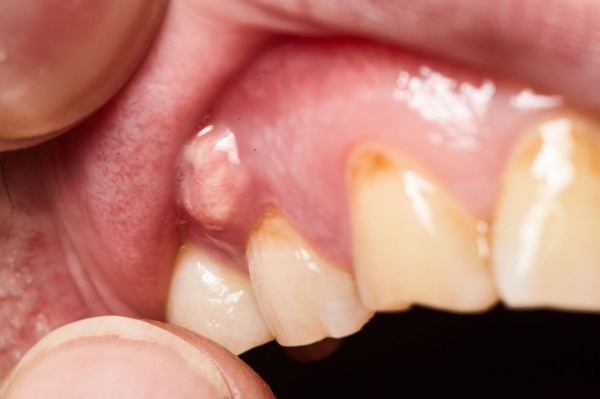
Partially erupted wisdom teeth often create a flap of gum tissue where food debris and bacteria accumulate, making cleaning difficult.
- Pericoronitis occurs in approximately 20–30% of impacted wisdom tooth cases
- Common symptoms include swelling, pain, bad breath, and difficulty opening the mouth
- In severe cases, infection may spread, causing facial swelling or fever
Without treatment, acute infection can become recurrent or chronic, requiring surgical intervention.
3. Tooth Decay (Dental Caries)
Wisdom teeth growing at abnormal angles are harder to clean effectively, increasing the risk of plaque buildup.
- Studies show that over 50% of impacted wisdom teeth develop cavities over time
- Adjacent second molars are also at risk, with 30–40% showing decay or damage due to difficult cleaning access
- Early-stage decay may go unnoticed until it becomes painful
This can lead to more complex treatments such as fillings, root canals, or even extraction of adjacent teeth.
4. Damage to Nearby Teeth (Second Molar Damage)
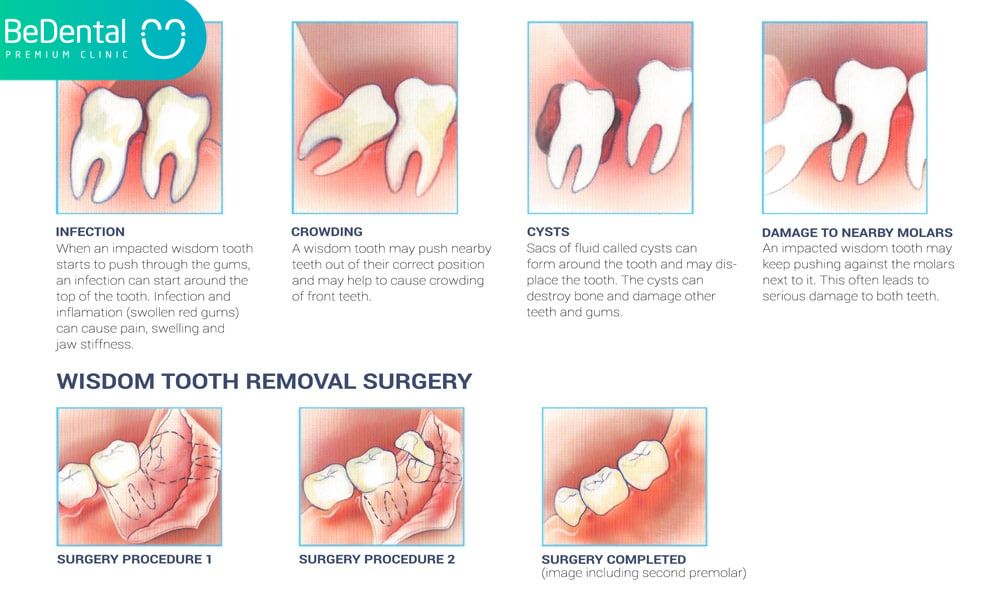
An impacted wisdom tooth can exert pressure on the neighboring molar, especially in horizontal or angled positions.
- Approximately 25–35% of impacted cases show signs of damage to adjacent teeth
- Effects include root resorption, enamel wear, or periodontal bone loss
- In severe cases, the second molar may become loose or require extraction
This significantly increases treatment complexity and long-term costs.
Treatment Options in Vietnam
Treatment depends on the position of the wisdom tooth, severity of symptoms, and potential complications.
Monitoring the Tooth
If the tooth is not causing pain or infection, dentists may recommend periodic monitoring through dental checkups and X-rays.
This approach is usually appropriate when the tooth:
- is fully erupted
- does not cause irritation
- can be cleaned properly
Wisdom Tooth Extraction
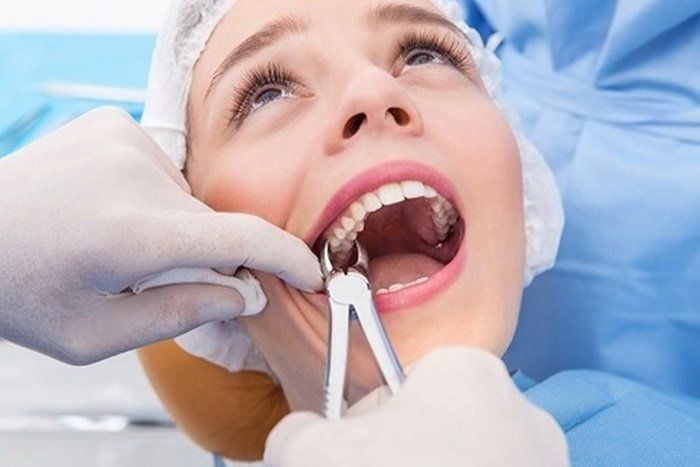
The most common treatment for wisdom teeth growing toward the cheek is surgical extraction.
During the procedure, the dentist or oral surgeon removes the wisdom tooth to prevent further complications.
The extraction process usually includes:
- Local anesthesia to numb the area
- Small incision in the gum if necessary
- Removal of the tooth or tooth fragments
- Cleaning and suturing the extraction site
Wisdom tooth extraction is considered a routine dental surgery and typically takes 30–60 minutes depending on the complexity of the case.
Cost of Wisdom Tooth Extraction in Vietnam

Wisdom tooth removal in Vietnam is relatively affordable compared with many Western countries.
| Type of Extraction | Vietnam | United States | Australia | United Kingdom | Singapore |
| Simple extraction | $30 – $100 | $150 – $500 | $200 – $600 | $100 – $400 | $150 – $500 |
| Surgical extraction (impacted tooth) | $100 – $300 | $300 – $1,000 | $400 – $1,200 | $250 – $800 | $400 – $1,000 |
| Complex surgical extraction | $300 – $600 | $800 – $2,000 | $1,000 – $2,500 | $600 – $1,500 | $800 – $2,000 |
In countries such as the United States or Australia, similar procedures may cost $500 – $2,000 per tooth.
This price difference is one reason Vietnam has become a popular destination for dental tourism.
Recovery After Wisdom Tooth Removal
Most patients recover quickly after wisdom tooth extraction.
Typical recovery timeline:
| Recovery Stage | What to Expect |
| First 24 hours | Mild swelling and minor bleeding |
| 2–3 days | Swelling gradually decreases |
| 5–7 days | Gum tissue begins healing |
| 2 weeks | Most discomfort disappears |
Dentists usually recommend:
- avoiding hard or spicy foods
- keeping the extraction site clean
- taking prescribed medications if necessary
Following these instructions helps prevent complications such as infection or dry socket.
See more: Why is wisdom tooth removal needed?
Where to Treat Lower jaw wisdom tooth growing toward the cheek in Vietnam?

Specialized Oral Surgery Expertise at BeDental
Treatment for lower jaw wisdom teeth growing toward the cheek at BeDental is performed by experienced dentists and oral surgeons specializing in complex tooth impaction cases. Each patient undergoes a comprehensive evaluation using advanced diagnostic tools such as panoramic X-rays and 3D CBCT scans to accurately determine the tooth’s orientation, depth, and proximity to surrounding nerves and soft tissues.
Based on internal clinical data, BeDental has:
- Successfully treated 18,000+ impacted lower wisdom tooth cases, including buccally angled (toward the cheek) impactions
- Achieved a post-operative complication rate below 2%
- Maintained an average surgical time of 30–50 minutes, depending on case complexity
Lower jaw wisdom teeth growing toward the cheek (buccal impaction) can cause irritation to the cheek mucosa, pain when chewing, and difficulty maintaining oral hygiene. If untreated, this condition may lead to infection, soft tissue damage, or decay in adjacent molars.
Rather than applying a one-size-fits-all approach, treatment plans are customized based on:
- The angle and direction of tooth growth (e.g., buccal, horizontal, mesioangular)
- The depth of impaction and bone coverage
- The presence of infection, swelling, or soft tissue injury
BeDental’s clinical team is equipped to manage both simple and complex surgical extractions, including cases where the tooth is partially erupted into the cheek area or deeply embedded in the jawbone.
Transparent Pricing and Comprehensive Treatment Support

BeDental applies a transparent pricing model, ensuring patients understand the full cost of treatment before the procedure. According to internal service data:
- 95% of patients receive a detailed treatment plan and cost estimate prior to surgery
- Over 70% of patients choose flexible installment payment options
Treatment for lower wisdom teeth growing toward the cheek may include:
- Consultation and diagnostic imaging (X-rays, CBCT scans)
- Surgical extraction procedure
- Post-operative care, including medication and follow-up visits
Post-operative care is carefully managed. Internal follow-up data indicates:
- 90% of patients recover within 7–10 days without complications
- Follow-up compliance exceeds 85%, supporting proper healing and reduced risk of dry socket or infection
This structured care pathway helps minimize discomfort and ensures safe recovery.
Dedicated Care for International Patients
For international patients seeking treatment in Vietnam, BeDental provides:
- Online consultations for case assessment before travel
- Multilingual support throughout the treatment process
- Flexible scheduling aligned with travel plans
With cross-border dental demand increasing by approximately 15–20% annually, BeDental has optimized its treatment coordination system. Internal patient data shows:
- 80% of international patients complete consultation and extraction within 1–2 visits
- Patient satisfaction rates exceed 95% among overseas clients
This streamlined and efficient approach allows patients to receive high-quality treatment for impacted lower wisdom teeth within a short timeframe.
Conclusion
A lower jaw wisdom tooth growing toward the cheek in Vietnam is a form of abnormal eruption that can cause irritation, pain, and potential dental complications. Although not all cases require immediate treatment, many patients benefit from professional evaluation and possible extraction to prevent future problems.
With modern dental technology and experienced dentists, wisdom tooth treatment in Vietnam provides safe and effective solutions for managing impacted or misaligned third molars. Early diagnosis and timely treatment can help protect oral health and prevent long-term complications.
See more: Wisdom teeth and 4 typical symptoms
Tại BeDental, khách hàng có thể an tâm điều trị với dịch vụ bảo lãnh viện phí nha khoa nhanh chóng và tiện lợi. BeDental hiện liên kết với nhiều công ty bảo hiểm uy tín, hỗ trợ thanh toán trực tiếp chi phí các dịch vụ nha khoa như nhổ răng, trám răng, điều trị tủy, phục hình răng sứ... Quy trình linh hoạt, minh bạch giúp tiết kiệm thời gian và tối ưu chi phí. Hãy liên hệ BeDental để được tư vấn chi tiết và tận hưởng trải nghiệm chăm sóc răng miệng chuyên nghiệp, không lo gánh nặng tài chính.
🔹 Các đơn vị nha khoa chấp nhận bảo lãnh bao gồm : Hùng Vương Insurance, Bảo Long Insurance, BSH (Bảo hiểm BSH), FWD Insurance Cathay Life Fubon Insurance, Tokio Marine Insurance Group VNI (Bảo hiểm Hàng không), HD Insurance MSIG AAA Insurance PTI (Bảo hiểm Bưu điện), BIDV MetLife, PJICO, Techcom, Insurance, AIA, Dai-ichi Life MIC GIC DBV Insurance VBI (Bảo hiểm VietinBank)
🔹 Các công ty bảo hiểm BeDental có thể xuất hóa đơn: Manulife Dai-ichi Life Prudential AIA Hanwha Life PVI VCLI (Bảo hiểm nhân thọ Vietcombank - Cardif) BIC (Bảo hiểm BIDV), Bảo Việt Insurance và PVI