


 English
 한국어
한국어 日本語
日本語 中文 (中国)


Porcelain crowns are a widely used dental restoration solution in Vietnam, valued for their durability, natural appearance, and ability to protect damaged teeth. However, one of the most common questions from patients and parents is: What is the minimum age for porcelain crowns?
According to clinical guidance from the American Dental Association and the World Dental Federation, porcelain crowns should only be placed when tooth development and jaw growth are sufficiently stable. Placing crowns too early may lead to complications as teeth and jaws continue to change during growth.
In Vietnam, dentists follow similar international principles when determining the appropriate age for porcelain crowns. At BeDental, age assessment is combined with detailed clinical examination to ensure that porcelain crowns are used safely, conservatively, and with long-term success in mind.
About BeDental – International-Standard Dental Care in Vietnam
BeDental is a modern dental system in Vietnam known for delivering restorative and cosmetic dentistry that aligns with international clinical standards. The clinic emphasizes conservative treatment, patient safety, and long-term oral health—especially when treating young patients.
BeDental’s dental team includes experienced prosthodontists and restorative dentists trained to evaluate tooth maturity, jaw development, and bite stability before recommending porcelain crowns. With advanced diagnostic tools such as digital imaging and intraoral scanning, BeDental ensures precise treatment planning tailored to each patient’s age and oral condition.
Strict sterilization protocols, transparent consultation, and comprehensive follow-up care make BeDental a trusted choice for porcelain crown treatment in Vietnam for both local and international patients.
>> See more: Tooth Preparation Pain for Crowns in Vietnam: What to Expect and How to Stay Comfortable
What Are Porcelain Crowns?
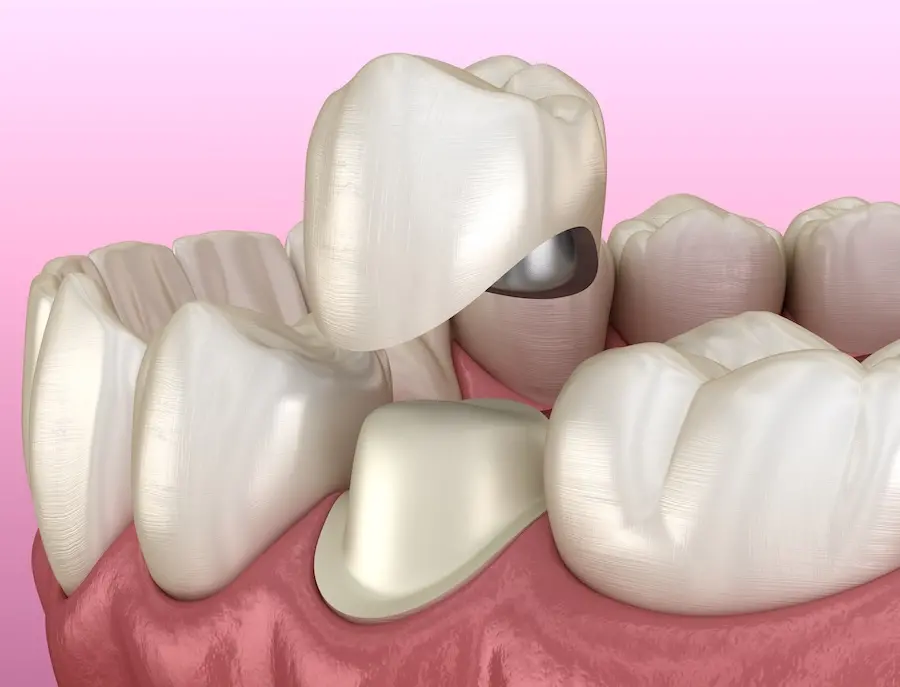
Porcelain crowns are custom-made caps designed to fully cover a damaged, weakened, or aesthetically compromised tooth. They restore tooth shape, strength, and appearance while protecting the remaining natural structure.

Dental associations recognize porcelain crowns as an effective solution after:
Understanding Porcelain Crowns
Porcelain crowns are custom-fitted caps designed to encase a damaged or weakened tooth entirely. They restore the tooth’s natural shape, strength, and appearance while providing a protective shield for the remaining healthy structure.
Structural Necessity and Protection
For teeth with severe decay or advanced enamel erosion, a crown is essential to prevent structural collapse. By holding brittle tooth fragments together, it stops further splitting or fracturing. Additionally, crowns restore the tooth’s original dimensions, ensuring a properly aligned bite and preventing jaw strain.
Restoration After Trauma or Root Canal
Crowns are critical for teeth weakened by root canal therapy, which removes the blood supply and leaves the internal structure fragile. A crown acts as a protective shell against biting forces. It is also the ideal solution for sealing deep fractures and cracks, or serving as the visible tooth atop a dental implant.
Advancements in All-Ceramic Materials
Modern dentistry has shifted from metal-based crowns to advanced Zirconia and E-max ceramics. These materials eliminate the dark metallic lines common in older crowns and perfectly mimic the translucency of natural enamel. They are exceptionally durable and can last decades with proper maintenance.
Biocompatibility and Aesthetic Versatility
Modern porcelain is highly biocompatible and “tissue-friendly,” minimizing the risk of gum inflammation or allergic reactions. At BeDental, we utilize custom-shading to match your surrounding teeth, effectively correcting severe discoloration and misshapen teeth while restoring both functional strength and aesthetic confidence.
Common Indications for Porcelain Crowns
| Condition | Why Crown Is Needed |
| Root canal treatment | Protects weakened tooth after nerve removal |
| Severe decay or fracture | Restores structure and prevents further damage |
| Tooth discoloration | Improves aesthetics when whitening is ineffective |
| Dental implant | Acts as final visible restoration |
| Cosmetic enhancement | Improves shape, size, and alignment |
Minimum Age for Porcelain Crowns – Clinical Guidelines
The decision to place a permanent porcelain crown is a nuanced process that balances immediate restorative needs with the long-term biological development of the patient. While international dental guidelines do not mandate a strict legal age, the consensus among global experts is that permanent porcelain restorations should generally wait until jaw growth and tooth eruption have reached full maturity.
1. Developmental Challenges in Children and Early Adolescents
The primary reason why porcelain crowns are generally not recommended for children and early teenagers is the ongoing development of the facial structure and dental anatomy. During these formative years, the jawbone is still expanding and the permanent teeth may not have finished “settling” into their final positions. Furthermore, young permanent teeth possess significantly larger pulp chambers—the internal area containing nerves and blood vessels—compared to adult teeth.

Preparing a young tooth for a crown requires removing a layer of enamel, which carries a much higher risk of causing nerve damage or necessitating a root canal. For these reasons, dentists prefer temporary or “interim” solutions, such as stainless steel crowns or composite bonding, which protect the tooth without interfering with natural growth.
2. Case-by-Case Assessment for Late Teenagers (Ages 16–18)
In the late teenage years, specifically between the ages of 16 and 18, porcelain crowns transition from being contraindicated to being considered on a strictly case-by-case basis. At this stage, a dentist will use digital diagnostics and X-rays to evaluate whether skeletal growth has ceased and if the patient’s bite (occlusion) has stabilized.
If a teenager has suffered severe dental trauma, significant decay, or has a congenital enamel defect that compromises the tooth’s survival, a porcelain crown may be the best clinical path. However, the clinician must be certain that the gingival margin—the gum line—has stopped receding, as a crown placed too early may eventually show an unsightly gap between the restoration and the gums as the face matures.
>> See more: Reducing Protruding Front Teeth in Vietnam: Safe, Natural, and Beautiful Results
3. Stability and Predictability in Adult Restorative Care (18+)
For adults aged 18 and older, porcelain crowns are considered a safe, standard, and highly effective treatment for a wide range of clinical indications. By early adulthood, the pulp chamber has typically receded to a stable size, and the jawbone has finished its growth cycle, providing a predictable foundation for long-term dental work. At this age, the primary focus shifts from developmental concerns to functional and aesthetic ones. Whether the crown is needed to reinforce a tooth after a root canal, repair a major fracture, or correct severe discoloration, the stability of the adult mouth ensures that the porcelain restoration will remain properly aligned and functional for many years.
4. Biological Maturity vs. Chronological Age
Modern dental associations emphasize that the final decision to proceed with a crown must be guided by biological indicators rather than chronological age alone. Every individual develops at a different rate; some 17-year-olds may have fully matured dental structures, while some 19-year-olds may still be undergoing minor jaw changes.
At BeDental, our specialists prioritize a comprehensive clinical evaluation that includes assessing root maturity and the health of the surrounding bone. By focusing on “tooth age” and skeletal stability, we ensure that every porcelain crown we place is a sustainable investment in the patient’s future oral health, avoiding complications that arise from premature intervention.
5. Long-term Maintenance and Replacement Cycles
It is essential for patients to understand that regardless of the age at which a crown is placed, it is a long-term commitment that requires diligent care. On average, high-quality porcelain or zirconia crowns last between 10 to 15 years, meaning a crown placed in early adulthood will likely need to be replaced several times over a lifetime.
Choosing the right moment to begin this restorative cycle is key to preserving the maximum amount of natural tooth tissue. BeDental provides patients with a long-term roadmap, including professional cleanings and bite monitoring, to extend the lifespan of these restorations and ensure the underlying tooth remains healthy for decades.
Why Age Matters for Porcelain Crowns
Placing porcelain crowns too early can lead to:
1. Risk of Margin Exposure and Poor Fit
Placing a crown during active growth often leads to a “receding” appearance. As the tooth continues to erupt and the jaw matures, the gum line shifts, exposing the crown’s edges. This creates unsightly gaps and “traps” where bacteria and food particles collect, significantly increasing the risk of gum inflammation and decay at the base of the restoration.
2. Impact on Jaw Alignment and Occlusion
A permanent crown is a rigid structure that cannot adapt to a changing skeleton. If the jawbone continues to expand after placement, the patient’s bite (occlusion) may become misaligned. This imbalance often triggers chronic issues, including TMJ jaw pain, headaches, and uneven wear on the surrounding natural teeth.
3. Increased Replacement Frequency
Every crown has a limited lifespan, usually 10 to 15 years. Starting this cycle too early—such as in the early teens—means the patient will require more total replacements over their lifetime. Each subsequent replacement involves removing more natural tooth structure, eventually compromising the tooth’s long-term viability.
4. Threat to Nerve Health and Tooth Integrity
Young permanent teeth have larger pulp chambers containing sensitive nerves. The shaping process required for a crown is much riskier for adolescents, as it can easily irritate or damage the pulp, leading to the need for unplanned root canal treatments. Waiting for maturity ensures the nerve has receded to a safer distance.
5. BeDental’s Stability-First Approach
At BeDental, we prioritize biological readiness over chronological age. Our specialists use digital imaging to confirm that jaw growth is complete and the bite is stable before proceeding. By choosing the optimal window for intervention, we ensure that your porcelain crown remains a durable, healthy, and beautiful investment for years to come.
At BeDental, dentists carefully evaluate growth patterns and only recommend porcelain crowns when long-term stability can be ensured.
When Porcelain Crowns May Be Necessary for Younger Patients
In certain situations, porcelain crowns may be considered for younger patients, such as:
1. Management of Severe Dental Trauma
Accidents, sports injuries, or falls can lead to significant fractures that leave the tooth’s internal nerve exposed. In cases where the damage is too extensive for a simple filling or bonding, a crown becomes necessary to hold the remaining tooth structure together and prevent total tooth loss.
2. Correction of Developmental Enamel Defects
Some younger patients suffer from conditions like Amelogenesis Imperfecta, where the enamel fails to form correctly, leaving teeth soft, sensitive, and prone to rapid wear. For these individuals, a crown serves as a critical protective shield, preventing the teeth from eroding down to the gum line during their teenage years.
3. Reinforcement After Root Canal Therapy
When a young tooth undergoes root canal treatment due to deep decay or infection, it becomes brittle and loses its natural flexibility. Without a crown to encase and reinforce the tooth, the risk of the tooth splitting vertically—which would require an extraction—is extremely high.
4. Treatment for Congenital Structural Conditions
Congenital issues can result in misshapen teeth or “peg laterals” that interfere with a patient’s bite and self-esteem. If these structural anomalies compromise the functional health of the mouth, a crown may be indicated to restore proper tooth shape and ensure the rest of the teeth align correctly as the jaw matures.
5. BeDental’s Conservative Intervention Strategy
At BeDental, we approach younger cases with extreme caution. Whenever possible, our dentists prioritize conservative alternatives, such as stainless steel crowns, long-term temporary acrylic crowns, or composite overlays. These “interim” solutions protect the tooth’s health while allowing the jaw and gums to reach full maturity before we transition to a final, permanent porcelain restoration.
In these cases, BeDental dentists prioritize conservative approaches and may recommend alternative materials or temporary solutions until full maturity is reached.
Why Choose BeDental for Porcelain Crowns in Vietnam?
1. Age-Appropriate Treatment Planning
We move beyond chronological age by evaluating the biological maturity of each patient. Our specialists conduct a thorough assessment of tooth root development, jawbone growth, and bite stability. This ensures that a crown is only placed when the oral environment is stable enough to support a permanent restoration, preventing future complications like gum recession or misalignment.
2. Adherence to International Clinical Standards
BeDental operates under the strict guidelines established by world-renowned dental organizations, such as the American Dental Association (ADA). Our protocols ensure that every step—from tooth preparation to material selection—meets global safety and quality benchmarks. This commitment to excellence guarantees that our patients receive world-class care right here in Vietnam.
3. Integration of Advanced Diagnostic Technology
Precision is at the heart of our restorative process. We utilize high-definition intraoral scanners and 3D digital imaging to create a perfect “digital map” of the mouth. This technology allows us to detect underlying issues that the naked eye might miss and ensures that the final porcelain crown is designed with micron-level accuracy for a comfortable, natural fit.
4. Conservative and Long-Term Focus
Our primary goal is to preserve as much of your natural tooth structure as possible. We adhere to “minimally invasive” dentistry, meaning we only recommend crowns when absolutely necessary. By avoiding premature or overly aggressive treatments, we help maintain the structural integrity of your teeth, ensuring they stay healthy for a lifetime rather than just solving a short-term problem.
5. Transparent Consultation and Dedicated Follow-Up
We believe in empowering our patients (and parents) with knowledge. During your consultation, we provide a clear breakdown of why a treatment is recommended, the alternative options available, and what to expect in terms of longevity and cost. Furthermore, our comprehensive follow-up care ensures that your restoration is monitored closely, providing peace of mind and long-lasting results.
Who Is a Suitable Candidate for Porcelain Crowns?
You may be a suitable candidate if you:
Possession of Fully Erupted Permanent Teeth
A crown is only as stable as the tooth it rests upon. Candidates must have their permanent teeth fully emerged from the gum line. If a crown is placed while a tooth is still erupting, the gum tissue will eventually shift, exposing the edges of the restoration and creating both aesthetic and hygienic issues.
Evidence of Stable Jaw and Bite Development
Because a porcelain crown is a rigid, non-adjustable structure, it requires a stable foundation. Ideal candidates are those whose jaw growth has plateaued, ensuring that the way the upper and lower teeth meet (occlusion) will not shift significantly after the crown is bonded. This stability prevents future jaw pain and ensures the crown doesn’t interfere with natural development.
Presence of Significant Tooth Damage or Weakness
Crowns are the primary solution for teeth that have lost a large portion of their structure. If a tooth has a cavity too expansive for a traditional filling, or if it has suffered deep fractures and cracks, a crown acts as a protective “cap.” It holds the remaining structure together, restoring the tooth’s ability to withstand chewing forces without further breaking.
Requirement for Post-Root Canal Restoration
Teeth that have undergone root canal therapy are no longer “alive,” meaning they lose their moisture and become brittle over time. To prevent these teeth from shattering under pressure, a porcelain crown is almost always necessary. It provides the 360-degree reinforcement needed to protect the treated canals and keep the tooth functional.
Goal for Long-Term Aesthetic and Functional Restoration
Ideal candidates are those looking for a permanent fix for severe discoloration, misshapen teeth, or worn-down enamel that cannot be corrected with simpler methods like whitening or bonding. Porcelain crowns offer a high-strength, biocompatible solution that mimics the translucency of natural enamel while providing a durable biting surface.
Importance of Professional Clinical Evaluation
Suitability cannot be determined at home. A comprehensive exam at BeDental—including digital X-rays and 3D scans—is essential. Our experts evaluate the health of the underlying bone and the proximity of the tooth’s nerve to ensure that a crown is the safest and most effective path forward for your specific dental anatomy.
A professional dental evaluation is essential to confirm suitability.
FAQ – Minimum Age for Porcelain Crowns in Vietnam
1. Is there a legal minimum age for porcelain crowns in Vietnam?
No. There is no legal minimum age, but dentists follow clinical guidelines based on tooth and jaw development.
2. Can children get porcelain crowns?
In most cases, no. Temporary or alternative restorations are usually recommended until growth is complete.
3. What is the safest age for porcelain crowns?
Porcelain crowns are generally safest for patients 18 years and older, once jaw growth has stabilized.
4. Can teenagers receive porcelain crowns?
In some cases, yes—if dental development is complete and the clinical condition requires it.
5. Are porcelain crowns permanent?
Porcelain crowns are long-lasting but may need replacement over time due to wear or changes in oral condition.
6. What alternatives exist for younger patients?
Temporary crowns, composite restorations, or preventive treatments may be recommended until full maturity.
7. Does early crowning damage teeth?
If done too early, it may lead to fit and bite issues. That’s why careful evaluation is essential.
8. Why choose BeDental for porcelain crowns in Vietnam?
BeDental combines age-appropriate treatment planning, experienced dentists, advanced technology, and adherence to international dental standards—ensuring safe and reliable porcelain crown treatment.

Tư vấn chuyên môn bài viết:
BÁC SĨ DƯƠNG THỊ THÙY NGA