
Câu chuyện khách hàng
Sofitel Hanoi Guide: Luxury Experience, Rooms & Amenities
Th5

The Sofitel Hanoi is one of the rare luxury hotels where accommodation goes beyond comfort and becomes a form of historical experience. Located in the heart of Hanoi’s French Quarter, the hotel represents more than a century of architectural preservation, cultural transition, and diplomatic significance since its opening in 1901.
What sets it apart is not only its colonial French heritage, but the way this heritage is still actively lived today. Guests are not placed in a modern interpretation of history — they are immersed in a space where history, luxury, and daily hospitality continue to coexist naturally. From its architecture and rooms to dining and service, every detail contributes to a consistent atmosphere of timeless elegance.
Arrival: When Hanoi Suddenly Slows Down- Sofitel Hanoi Guide
Arriving at the Sofitel Legend Metropole Hanoi does not feel like checking into a hotel. It feels like entering a different rhythm of the city — one that immediately separates itself from the speed and density of modern Hanoi. The transition begins the moment your car leaves the busy streets of the French Quarter. Traffic noise, motorbikes, and the constant movement of the city slowly fade as you approach the hotel’s entrance. There is no dramatic gate or oversized arrival statement. Instead, the shift is subtle — almost as if the city quietly lowers its volume without announcing it.
Leaving the City Noise Behind- Sofitel Hanoi Guide
Once you step through the entrance, the atmosphere changes instantly. The air feels stiller. The temperature feels softer. Even the soundscape changes — replaced by quiet movement, soft footsteps, and the controlled rhythm of staff who operate with calm precision. It is not silence in the absolute sense, but a kind of intentional quietness that feels carefully maintained.
A Check-in That Feels Like Arrival, Not Procedure
Check-in continues this same experience. There is no rush, no visible pressure, and no sense of transactional formality. Guests are welcomed in a composed, almost understated manner. The process feels less like a hotel procedure and more like being received into a private historic residence where everything has already been prepared in advance.
What stands out most at this stage is not what you see, but what disappears: the noise of the city, the urgency of movement, and the feeling of being “in transit.” In their place comes a sense of arrival — not just physically, but atmospherically. By the time check-in is complete, the impression is already clear: you have not simply entered a hotel in Hanoi. You have entered a space that operates on its own tempo, detached from the pace outside its walls.
Inside the Hotel: Two Layers of Time- Sofitel Hanoi Guide
Walking deeper inside the Sofitel Legend Metropole Hanoi, you start to notice something unusual: the hotel does not behave like a single space. Instead, it feels like it exists in two parallel versions of itself.
Two Wings, Two Different Realities- Sofitel Hanoi Guide
- One is the Heritage Wing — preserved, atmospheric, and deeply tied to early 20th-century Indochina. The architecture here feels older in a deliberate way, not restored to modern perfection, but carefully maintained to preserve its original character. The corridors feel quieter, the lighting softer, and the materials carry a sense of age that has not been erased.
- The other is the Opera Wing — brighter, more structured, and clearly designed with contemporary luxury in mind. The space feels more open, more functional, and more aligned with modern expectations of comfort. It does not try to replicate history; instead, it complements it with clarity and efficiency.
Moving Between Memory and the Present
What makes this transition interesting is that you are not asked to choose between them immediately. There is no clear boundary or forced separation. Instead, you experience both as you move through the hotel naturally.
One moment feels like stepping into memory — slow, textured, and atmospheric. The next feels like returning to the present — clean, bright, and precise. The shift is subtle, but noticeable enough that you become aware of how the building itself is structured around time rather than just space.
And surprisingly, these two identities do not compete. They sit beside each other without tension, as if the hotel was designed not to unify them, but to let them coexist. In that coexistence, the Metropole reveals its core idea: it is not a single hotel experience, but a layered environment where past and present are always happening at the same time.
Inside the Room: Luxury That Doesn’t Need to Be Loud
Heritage Wing: Living Inside a Preserved Memory
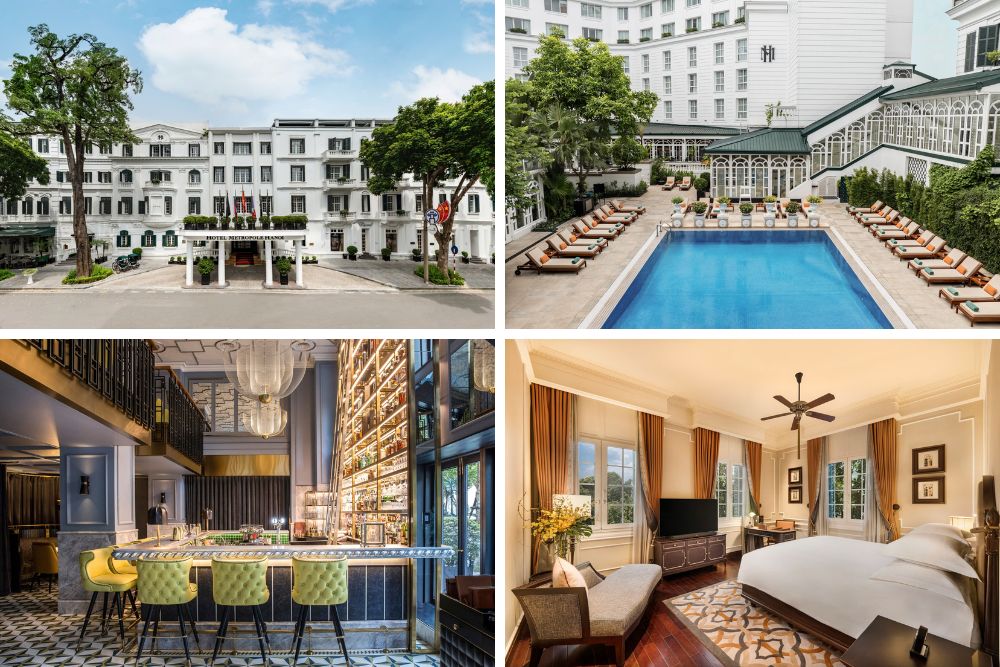
In the Heritage Wing of the Sofitel Legend Metropole Hanoi, the room does not feel designed to impress at first glance. Instead, it feels like a space that has been carefully carried through time. Nothing appears overly new or staged. The furniture, textures, and proportions all suggest continuity rather than redesign. The room carries a sense of restraint — not minimalism in a modern sense, but a kind of historical calm that has been preserved rather than created.
Silence becomes one of the most noticeable elements here. It is not empty silence, but a dense quietness shaped by thick walls, soft lighting, and a layout that feels intentionally slowed down. The atmosphere leans toward stillness, as if the room is holding onto a past version of itself.
Opera Wing: Clarity, Space, and Modern Comfort
In contrast, the Opera Wing changes the tone immediately. The space feels more open, more structured, and more aligned with how luxury is defined today. Here, comfort is not expressed through history but through functionality: larger spatial flow, brighter interiors, and a clearer sense of modern design logic. The experience is less about atmosphere and more about usability — how easily you move, rest, and operate within the space. It does not try to recreate the past. Instead, it refines the present.
Suites: The Space Between Two Worlds- Sofitel Hanoi Guide
Suites act as a transition zone between these two identities. They carry the emotional depth of the Heritage Wing while incorporating the openness and convenience of the Opera Wing.
The result is a more private environment — not just physically larger, but psychologically more detached from the outside hotel rhythm. There is a stronger sense of separation, where the room feels less like a stop in the journey and more like a contained world of its own.
Dining: Experiencing the Hotel Through Food
Meals as Part of the Same Story- Sofitel Hanoi Guide
Inside Sofitel Hanoi, dining does not feel like a separate service category. It feels like an extension of the same atmosphere that defines the hotel itself — quiet, layered, and narrative-driven. Each meal becomes part of a continuous experience rather than a standalone moment. You are not simply choosing where to eat; you are moving through different expressions of the hotel’s identity.
French Heritage on the Plate- Sofitel Hanoi Guide
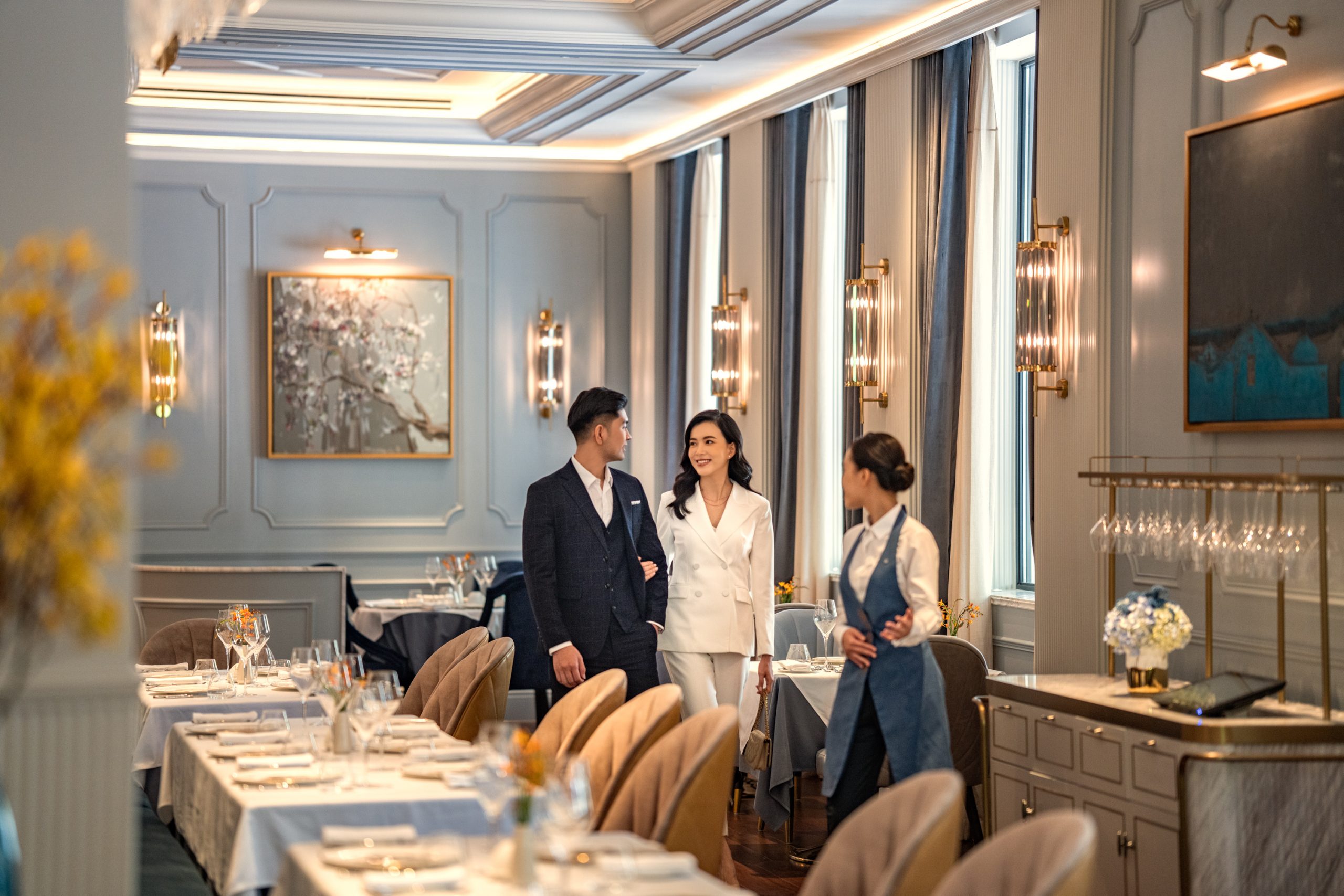
A dinner at Le Beaulieu feels closely tied to the hotel’s colonial origin. The setting, the pacing of service, and the style of cuisine all reflect a sense of European refinement that connects back to the building’s early 20th-century French foundation. The experience is not only about the food itself, but about how it fits into the historical character of the space you are sitting in.
Vietnamese Identity Outside the Walls
At Spice Garden, the experience shifts outward toward the city. Vietnamese dishes feel more grounded in local culture, bringing a different emotional tone compared to the French dining experience. Here, the connection is less about history inside the hotel and more about Hanoi outside the walls — its flavors, traditions, and everyday culinary identity expressed in a refined setting.
Evenings in Transition- Sofitel Hanoi Guide
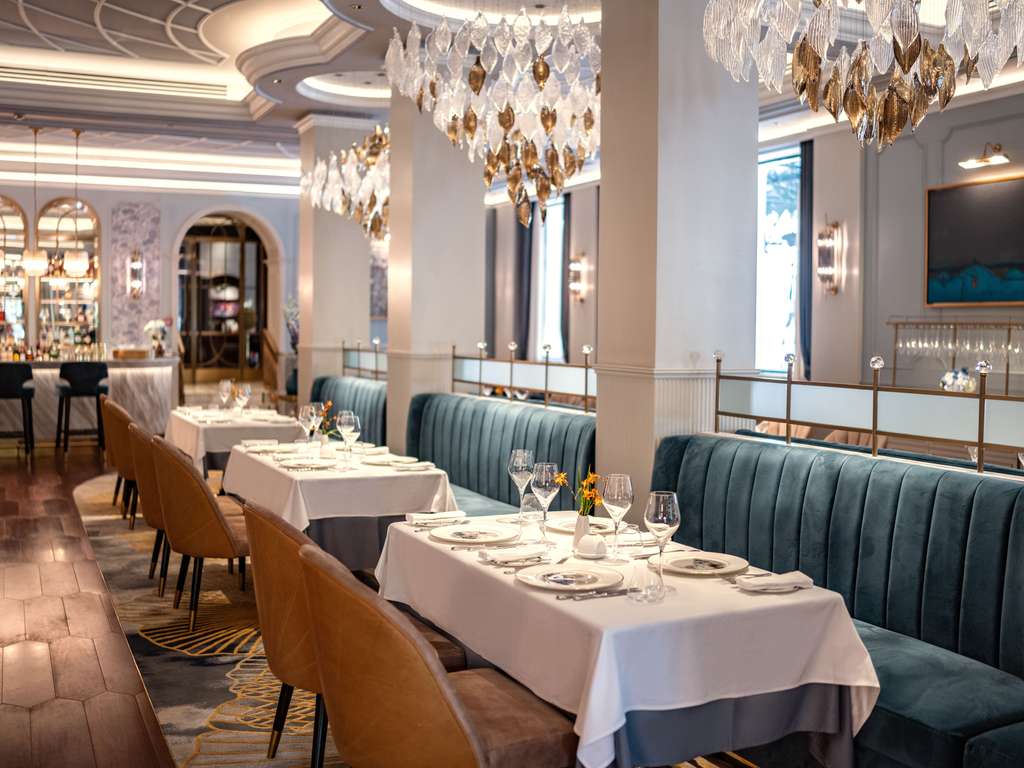
A drink at the bar is not treated as a separate nightlife activity. Instead, it feels like part of a transition — from day to evening, from movement to stillness. The lighting softens, the pace slows, and the environment becomes more reflective. It is less about “going out” and more about gradually settling into the night within the same space.
Service: Present, But Almost Invisible
Inside Sofitel Hanoi, service does not present itself in an obvious or performative way. Instead, it operates like a quiet system running in the background of the entire experience.
A System That Works Without Drawing Attention
Staff interactions are minimal but precise. There is no sense of interruption or unnecessary engagement. Even when guests move through busy periods of the hotel, the flow remains calm and controlled, as if everything has already been adjusted in advance. Requests are often handled before they fully develop into urgency. A change in room preference, an extra service, or a small adjustment is managed smoothly and discreetly, without creating friction in the guest experience.
Maintenance Without Visibility- Sofitel Hanoi Guide
One of the most noticeable aspects is how the physical space is maintained without disrupting presence. Rooms are refreshed, prepared, and adjusted in ways that rarely feel intrusive. The transition between service and personal space is almost unnoticeable. Even in shared areas, movement feels coordinated rather than reactive. Guests and staff coexist within the same environment without visual tension or operational noise.
Consistency Under Pressure
Despite hosting a constant flow of international guests, events, and diplomatic visitors, the atmosphere inside the hotel remains stable.There is no visible breakdown in rhythm, no sense of overcrowding, and no loss of control in service quality. Everything feels balanced, as if the hotel is designed to absorb complexity without exposing it.
Departure: What Stays With You- Sofitel Hanoi Guide
Leaving Without a Clear Ending
Leaving Sofitel Hanoi does not feel like a formal ending. There is no dramatic transition or strong sense of closure. Instead, it feels like stepping out of a continuous atmosphere that simply extends beyond your stay. The city outside reappears gradually. Noise returns, movement increases, and the rhythm of Hanoi becomes noticeable again. But it does not feel like a sudden contrast — more like a slow re-entry into a different tempo.
What Remains After You Leave
What stays with you is not a memory of facilities, services, or room categories. Those details fade quickly. What remains is more subtle — a feeling that is difficult to define clearly.
It is the sense of having stayed inside a place where history is not displayed, but still active in everyday life. Not something separated behind glass or preserved as an exhibition, but something that continues to exist as part of how the space is lived.
Memories as Atmosphere, Not Objects
After departure, what lingers are not specific objects or visual highlights, but small atmospheric impressions:
- the quiet stillness of the courtyard
- the softness of movement in the corridors
- the contrast between colonial structure and modern life
- the feeling of time slowing down inside the building
These are not moments you actively recall in order. They appear more like fragments of atmosphere that return unexpectedly.
Conclusion
In the end, the Sofitel Hanoi is not defined by facilities, room categories, or luxury branding. It is defined by experience and memory. Staying here leaves behind more than impressions of comfort or service. What remains is a sense of having temporarily stepped into a place where time behaves differently — where colonial heritage, wartime history, and modern luxury are not separated, but layered into a single living environment.
| Stage of Stay | What You Experience | Sensory Impression | What Makes It Different |
| ? Arrival | Transition from busy French Quarter into quiet courtyard check-in | Sudden silence, slower pace, controlled atmosphere | Feels like entering a private historic residence, not a hotel lobby |
| ?️ First Walk Inside | Movement between Heritage Wing & Opera Wing | Shift between “old memory” and “modern clarity” | Two time periods exist in one building without conflict |
| ?️ Room Experience | Heritage rooms vs Opera Wing vs Suites | Silence, warmth, space, subtle luxury | Luxury is expressed through atmosphere, not visual excess |
| ?️ Dining Experience | French, Vietnamese, cocktails, afternoon tea | Changing moods from formal → local → relaxed | Each meal feels like a different “layer of Hanoi” |
| ?️ Service Experience | Invisible but highly responsive staff system | Smooth, uninterrupted flow | Requests are handled before they become noticeable |
| ? Evening Atmosphere | Courtyard, bars, soft lighting transition | Calm, cinematic stillness | Hotel becomes quieter and more emotional at night |
| ? Departure | Leaving without clear emotional exit | Memory-based impressions instead of visuals | You remember feelings, not facilities |
This is why the hotel stands out in Hanoi’s hospitality landscape. It does not aim to be the most modern or the most extravagant. Instead, it offers something rarer: a stay that feels meaningful, atmospheric, and emotionally lasting.
For many travelers, the Metropole is not simply a hotel in Hanoi — it is a place that reshapes how they remember the city itself.
BeDental – A Leading Dental Clinic for International Travelers in Vietnam
BeDental offers high-quality dental services for international travelers visiting Vietnam, combining modern technology with experienced dentists. Our services include general and cosmetic dentistry, dental implants, teeth whitening, and smile makeovers, all performed to international standards.
Designed for tourists, BeDental provides flexible appointments, English-speaking staff, and personalized treatment plans that fit travel schedules. With competitive pricing and convenient locations, BeDental allows visitors to improve their smile while enjoying their trip to Vietnam.