
Câu chuyện khách hàng
Hanoi Le Jardin Hotel & Spa: Stay, Services & Review
Th5

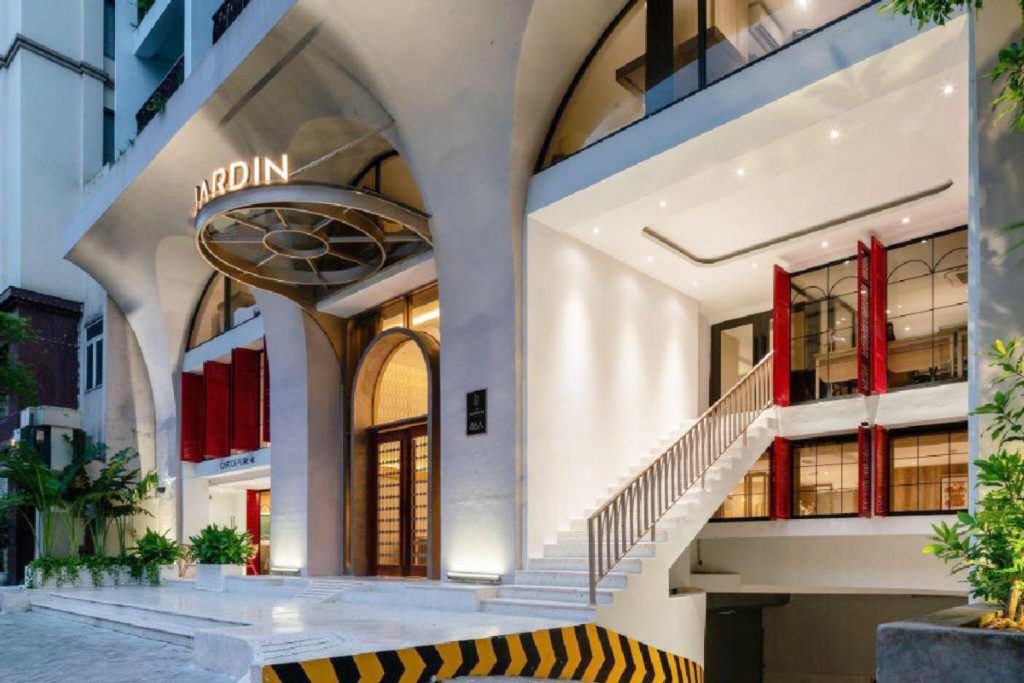
The Hanoi Le Jardin Hotel & Spa is a boutique urban hotel in Hanoi designed around the idea of calm, comfort, and practical relaxation within a busy city environment. Instead of focusing on large-scale luxury or landmark-style identity, the hotel builds its value through a more subtle concept: creating a quiet, well-balanced stay experience that still maintains easy access to Hanoi’s main districts.
Its positioning in a central urban area between Ba Dinh and West Lake allows it to function as a flexible base for both leisure and business travelers. Combined with its spa-focused identity and compact design approach, the hotel appeals to guests who prioritize comfort, privacy, and convenience over visual extravagance or resort-style facilities.
1. Hanoi Le Jardin Hotel & Spa- Location & Surrounding Experience
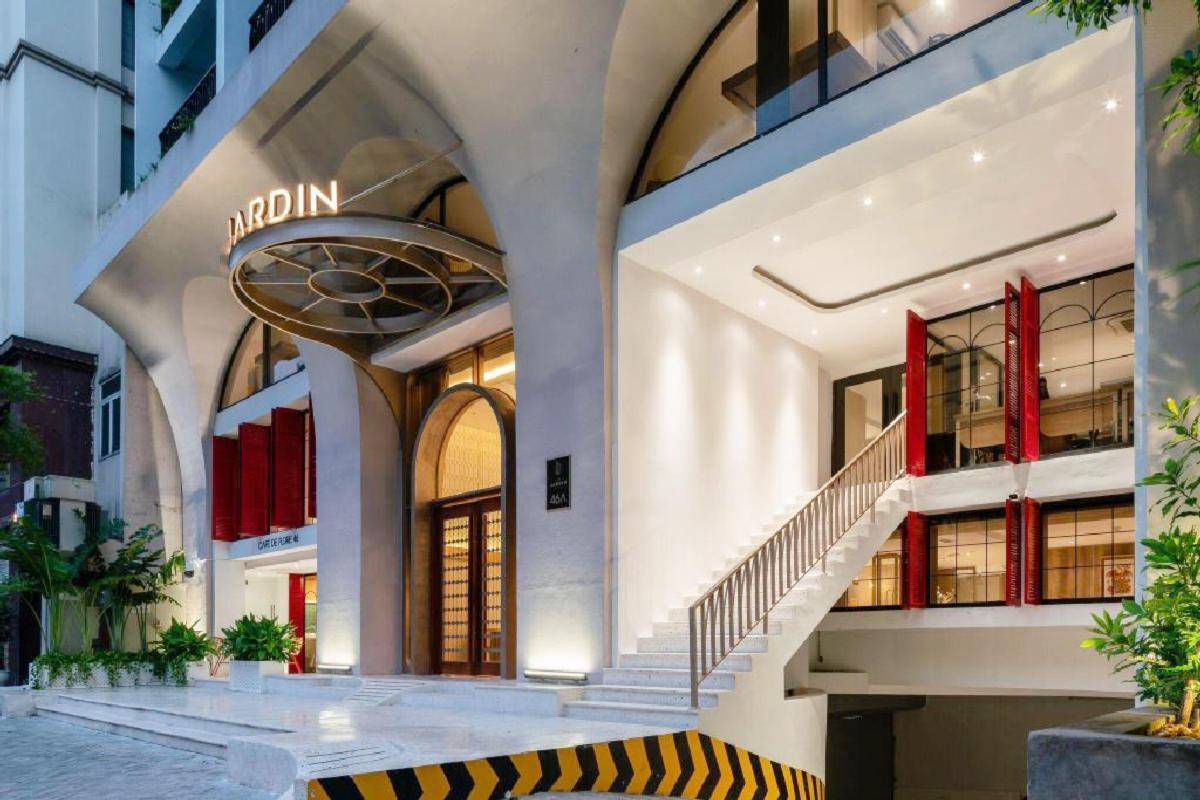
The Hanoi Le Jardin Hotel & Spa is located at 46A Nguyễn Trường Tộ Street, Ba Đình District, Hanoi, placing it on the edge between Ba Đình administrative area and the West Lake (Tây Hồ) lifestyle zone. This is not a landmark-front location, but a secondary central corridor—a street that connects residential living, small hotels, and local services rather than tourist icons.
The Hanoi Le Jardin Hotel & Spa is located in the north-central urban belt of Hanoi, in a transitional area between Ba Dinh and Tay Ho districts. It is not positioned inside a landmark zone, but rather in a mixed residential–service neighborhood where hotels, local housing, cafés, and small businesses are interwoven.This location matters less for “iconic address value” and more for how it connects different parts of the city within a short radius.
Nearby Areas (What actually surrounds it)
West Lake (Tay Ho) is the most important nearby zone. It is the closest clearly defined lifestyle area, known for cafés, lakeside walking paths, and a more international, relaxed atmosphere. From the hotel, this area is easily accessible and often becomes the main leisure extension of the stay.
- West Lake (Tây Hồ) → lakeside cafés, walking paths, brunch spots (~5–10 min drive)
- Ho Chi Minh Mausoleum area (Ba Đình Square) → historical core of Hanoi (~10–15 min drive)
- Tran Quoc Pagoda → one of Hanoi’s oldest temples on West Lake (~10 min drive)
- To Ngoc Van / Xuan Dieu streets → café & expat lifestyle area (~10 min drive)
- Local residential streets of Ba Dinh → small Vietnamese eateries, convenience stores (walking distance / short ride)
Ba Dinh district is the second key surrounding zone. This is the administrative and historical core of Hanoi, where major landmarks such as the Ho Chi Minh Mausoleum and government buildings are located. The atmosphere here is more formal and institutional compared to West Lake.
Between these two areas, the hotel sits in a quieter residential grid. This is where daily Hanoi life happens at a local level: small restaurants, family-run shops, coffee spots, and everyday services. It is not designed for tourism, but it gives the area a grounded, lived-in character.
Competitor Comparison (Same Segment – Boutique / Mid-Luxury Hotels)
Compared to other boutique and mid-luxury hotels in Hanoi, the location of Hanoi Le Jardin Hotel & Spa sits in a different positioning logic. Hotels like Hanoi La Siesta Hotel & Spa or Peridot Grand Luxury Boutique Hotel are placed directly inside the Old Quarter to maximize access to tourist streets, food culture, and nightlife energy. In contrast, Le Jardin is located in the transitional zone between Ba Dinh and West Lake, which is less tourist-driven and more residential in character.
| Hotel | Location Type | Strength | Weakness |
| Hanoi Le Jardin Hotel & Spa | Ba Dinh – West Lake edge | Balanced access, quiet street, flexible movement | No landmark identity, no strong view |
| Hanoi La Siesta Hotel & Spa | Old Quarter core | Best walkable tourist experience, food & nightlife | Very crowded, noisy, less calm |
| Peridot Grand Luxury Boutique Hotel | Near Old Quarter | Rooftop views, modern boutique luxury | Still tourist-heavy zone, limited local calm |
| Hanoi Emerald Waters Hotel & Spa | Old Quarter edge | Good price-value, central access | Dense traffic, less privacy |
This creates a more balanced experience. Unlike Old Quarter hotels, it does not offer immediate walking access to iconic sightseeing streets or dense nightlife, but it compensates with a quieter environment and a more “local living” atmosphere. At the same time, compared to hotels located directly in the West Lake area, Le Jardin is more flexible, since it is not tied to a single lifestyle zone. Guests can reach West Lake, Ba Dinh landmarks, and even the Old Quarter within a relatively short travel time.
In simple terms, Old Quarter hotels prioritize tourism immersion, West Lake hotels focus on lifestyle and relaxation, while Le Jardin sits between the two, offering a more balanced urban positioning that combines accessibility with calmness.
2. Design & Atmosphere
The design of Hanoi Le Jardin Hotel & Spa follows a clear boutique direction: modern, compact, and spa-inspired, with soft interior tones and an emphasis on calm rather than visual impact. Instead of aiming for architectural scale or landmark identity, the hotel focuses on creating a controlled, relaxing indoor environment shaped by natural light, greenery accents, and warm materials.
| Hotel | Design Style | Atmosphere | Key Character |
| Hanoi Le Jardin Hotel & Spa | Modern boutique, spa-inspired | Calm, soft, intimate | Focus on relaxation, home-like feeling, minimal visual noise |
| Hanoi La Siesta Hotel & Spa | Themed boutique, expressive design | Lively, character-rich | Strong Old Quarter identity, more decorative and narrative-driven |
| Peridot Grand Luxury Boutique Hotel | Upscale modern boutique luxury | Refined, visually strong | More polished, hotel-as-aesthetic statement, rooftop-focused experience |
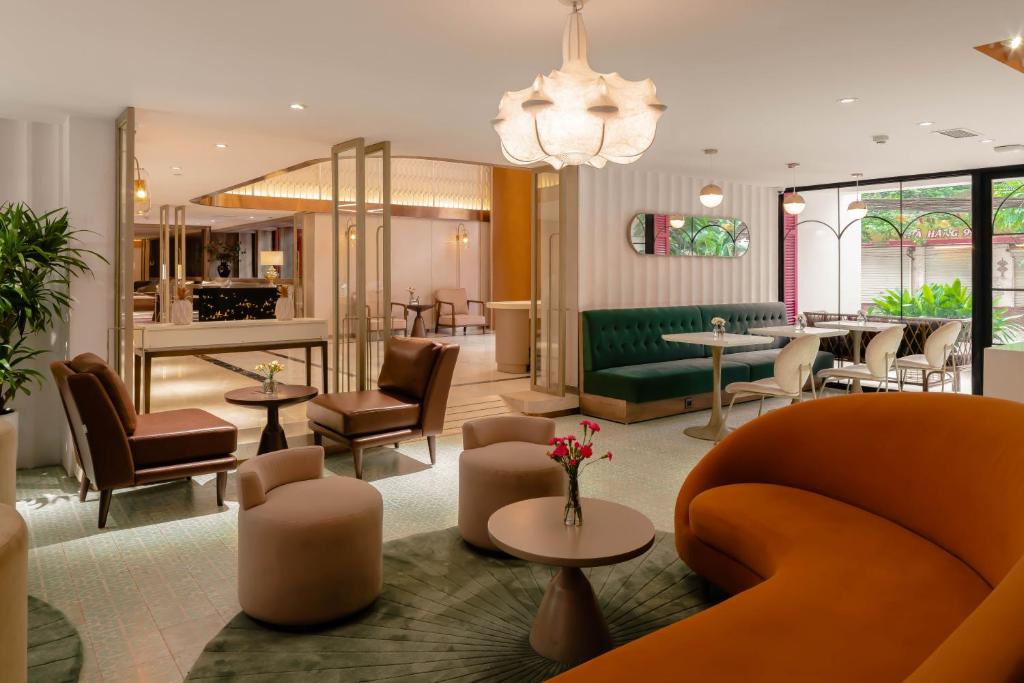
Compared to hotels like Hanoi La Siesta Hotel & Spa in the Old Quarter, which often lean toward more expressive boutique design with stronger visual character and higher tourist energy, Le Jardin feels more restrained and residential in tone. La Siesta properties tend to emphasize decorative identity and thematic interiors tied to the Old Quarter experience, while Le Jardin prioritizes softness and quiet consistency.
When compared with Peridot Grand Luxury Boutique Hotel, the contrast becomes even clearer. Peridot Grand focuses on more polished, upscale boutique luxury with stronger visual statements, rooftop experiences, and a more “showcase” design approach. Le Jardin, in contrast, avoids visual dominance and instead builds atmosphere through simplicity and spatial calm.
Overall, Le Jardin’s design direction is less about luxury display and more about emotional comfort. It does not compete in scale or visual impact; instead, it positions itself as a quiet, home-like boutique space where relaxation is the primary design outcome rather than architectural expression.
3. Rooms & Accommodation Experience
The room system at Hanoi Le Jardin Hotel & Spa is designed around compact boutique functionality, where comfort and practicality are prioritized over visual luxury or spacious grandeur. Rooms are generally structured to feel efficient, quiet, and easy to live in, with a focus on sleep quality, basic comfort, and a calm indoor atmosphere despite being in a central urban area.
| Hotel | Room Style | Space & Design | Experience Focus | Key Character |
| Hanoi Le Jardin Hotel & Spa | Compact boutique, modern minimalist | Smaller, functional, quiet | Sleep quality, calm stay, practical comfort | Simple, efficient, low-noise urban rest |
| Hanoi La Siesta Hotel & Spa | Boutique themed rooms | Medium space, richer decoration | Experience + storytelling atmosphere | Warm, character-driven Old Quarter style |
| Peridot Grand Luxury Boutique Hotel | Upscale luxury boutique | Larger rooms, more premium finishes | Visual luxury + comfort + lifestyle feel | More polished, high-end aesthetic stay |
Compared to Hanoi La Siesta Hotel & Spa, rooms at Le Jardin feel more minimal and less thematic. La Siesta properties typically emphasize stronger boutique storytelling, warmer decorative details, and a more character-driven interior style that reflects the Old Quarter identity. In contrast, Le Jardin’s rooms are more neutral and restrained, designed for rest rather than visual experience.
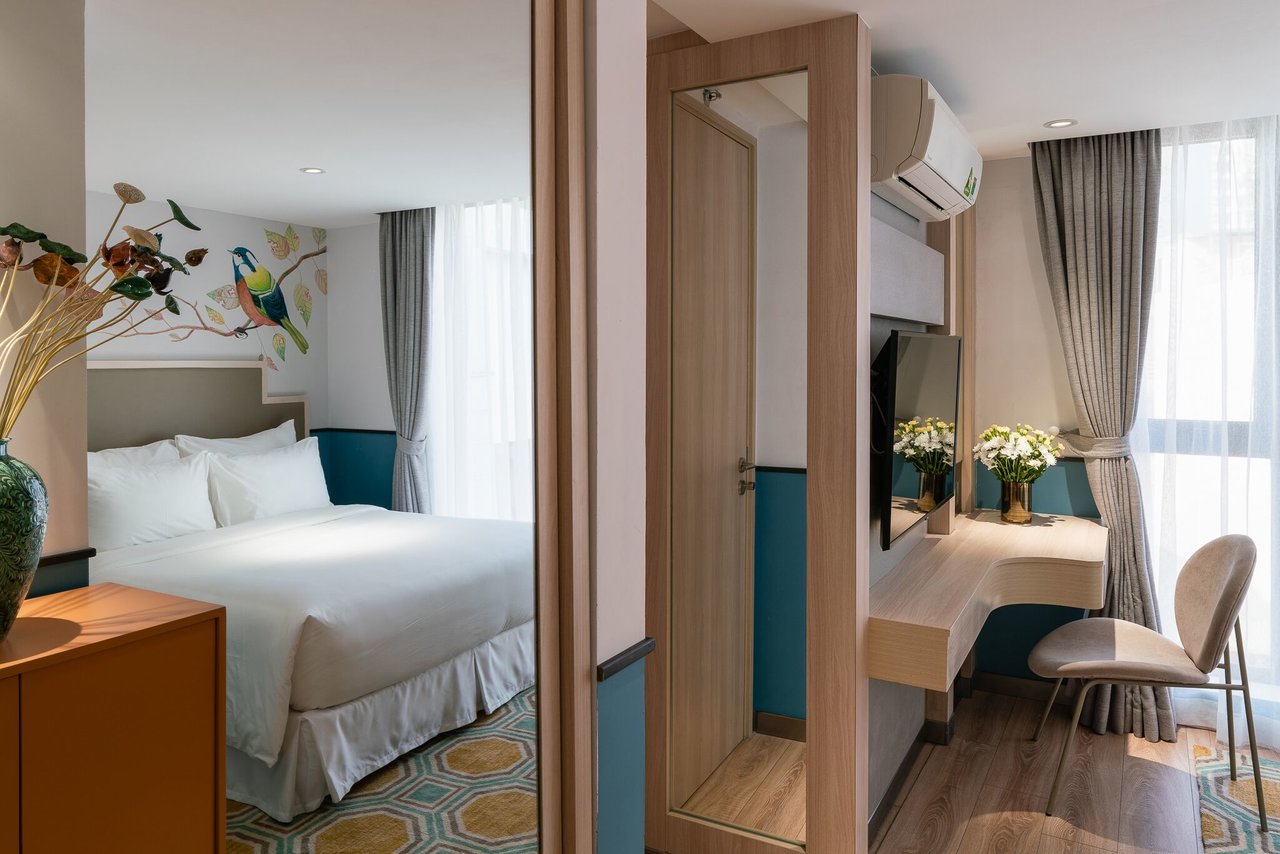
When compared with Peridot Grand Luxury Boutique Hotel, the difference is even clearer. Peridot Grand focuses on larger room scales, more premium finishes, and a stronger sense of visual luxury, especially in higher categories and suites. Le Jardin, on the other hand, does not compete in size or opulence; even its upgraded rooms and suites remain focused on functionality, quietness, and relaxation rather than luxury display.
Overall, Le Jardin’s room experience can be summarized as practical boutique comfort. It is not designed to impress through scale or design complexity, but to provide a stable, quiet, and efficient stay environment within the city.
Room Types & Price Comparison (Boutique Hotels in Hanoi)
Compared to other boutique hotels in Hanoi, the pricing and room structure of Hanoi Le Jardin Hotel & Spa clearly follows a more value-oriented and functional positioning. Its room rates are generally lower than Old Quarter boutique hotels such as Hanoi La Siesta Hotel & Spa, where pricing is higher due to stronger experiential value, themed boutique design, and a prime tourist location in the city center.
In contrast, higher-tier properties like Peridot Grand Luxury Boutique Hotel operate in a more premium segment, with significantly higher room rates driven by larger room sizes, more refined luxury interiors, and a stronger upscale boutique positioning.
| Category | Hanoi Le Jardin Hotel & Spa | Hanoi La Siesta Hotel & Spa | Peridot Grand Luxury Boutique Hotel |
| Standard Room | ~USD 60–80/night | ~USD 80–120/night (Old Quarter boutique range) | ~USD 120–180/night (premium boutique segment) |
| Superior / Deluxe | ~USD 80–110/night | ~USD 110–160/night | ~USD 150–220/night |
| Suite Category | ~USD 120–160/night (limited suites) | ~USD 180–250/night | ~USD 220–350+/night |
| Pricing Position | Mid boutique, value-focused | Mid–high boutique, experience-driven | High-end boutique luxury |
In terms of room classification, Le Jardin maintains a relatively simple structure—standard, superior, and limited suite options—focusing on practicality, comfort, and quietness rather than complex segmentation or experiential differentiation. Meanwhile, La Siesta offers a more experience-driven room concept, emphasizing boutique storytelling and Old Quarter cultural identity. Peridot Grand, on the other hand, follows a clearer luxury hierarchy with more suite categories and a stronger emphasis on space, design sophistication, and premium guest experience.
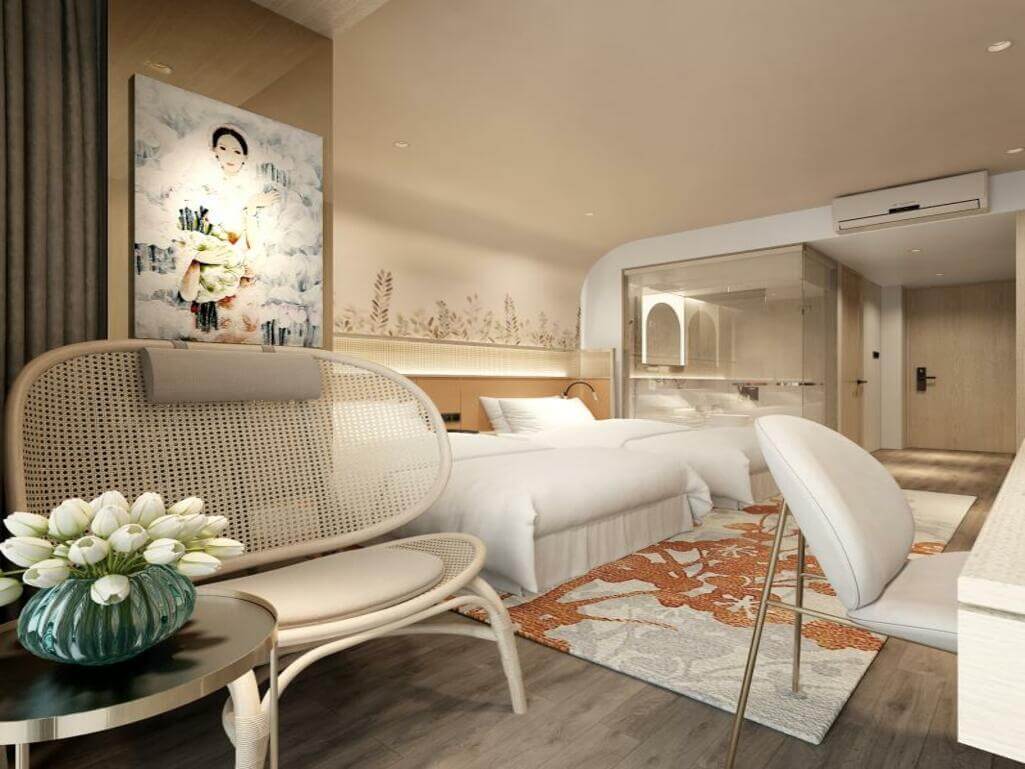
Overall, Le Jardin sits in the mid-range functional boutique segment, while La Siesta represents an experience-oriented boutique model, and Peridot Grand positions itself firmly in the luxury boutique category.
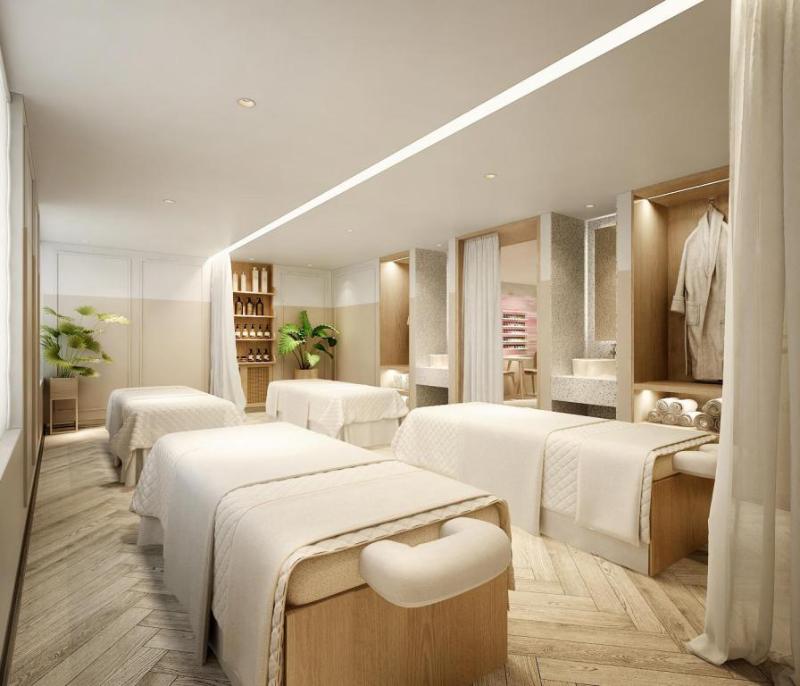
4. Spa & Wellness Experience
The spa at Hanoi Le Jardin Hotel & Spa is not treated as an additional facility, but rather as one of the central elements shaping the hotel’s identity. The entire wellness concept is built around the idea of creating a calm urban escape within the city, where guests can temporarily disconnect from Hanoi’s pace without leaving the central area.
| Hotel | Spa Concept | Experience Style | Facilities Level | Key Positioning |
| Hanoi Le Jardin Hotel & Spa | Urban retreat spa concept | Quiet, private, simple relaxation | Compact spa, basic–mid range treatments | Integrated wellness stay, “urban calm escape” |
| Hanoi La Siesta Hotel & Spa | Boutique wellness + experience spa | More curated, atmospheric spa experience | Better facilities, more treatment variety | Emotional boutique spa linked to Old Quarter stay |
| Peridot Grand Luxury Boutique Hotel | Luxury hotel spa | Premium, polished, high-end relaxation | Larger spa, wider treatment menu | Full luxury wellness experience |
The spa focuses mainly on massage treatments and relaxation therapies, designed to reduce physical fatigue and mental tension from urban travel or business stays. The services are straightforward and functional rather than overly complex, emphasizing effectiveness and comfort over luxury spectacle.
What defines the experience most is the atmosphere: a quiet, private environment where noise is minimized and movement is controlled. This creates a sense of separation from the outside city, reinforcing the hotel’s positioning as an “urban retreat” rather than a resort-style wellness destination.
Compared to larger luxury hotels, the wellness experience here is more compact and intimate, but also more integrated into the overall stay—meaning guests are not just visiting a spa, but staying in a hotel where relaxation is part of the core design intention.
5. Dining & Breakfast Experience
The dining experience at Hanoi Le Jardin Hotel & Spa is designed with a clear functional direction rather than a fine-dining ambition. The focus is on providing a comfortable, easy meal experience that supports both short stays and business-oriented guests.
Breakfast is typically served in-house with a mix of Vietnamese and Western options. The selection is straightforward—fresh fruits, eggs, bread, local noodle dishes, and basic hot items—aimed at providing enough variety without overwhelming complexity. The experience prioritizes efficiency and convenience, allowing guests to start their day quickly and comfortably.
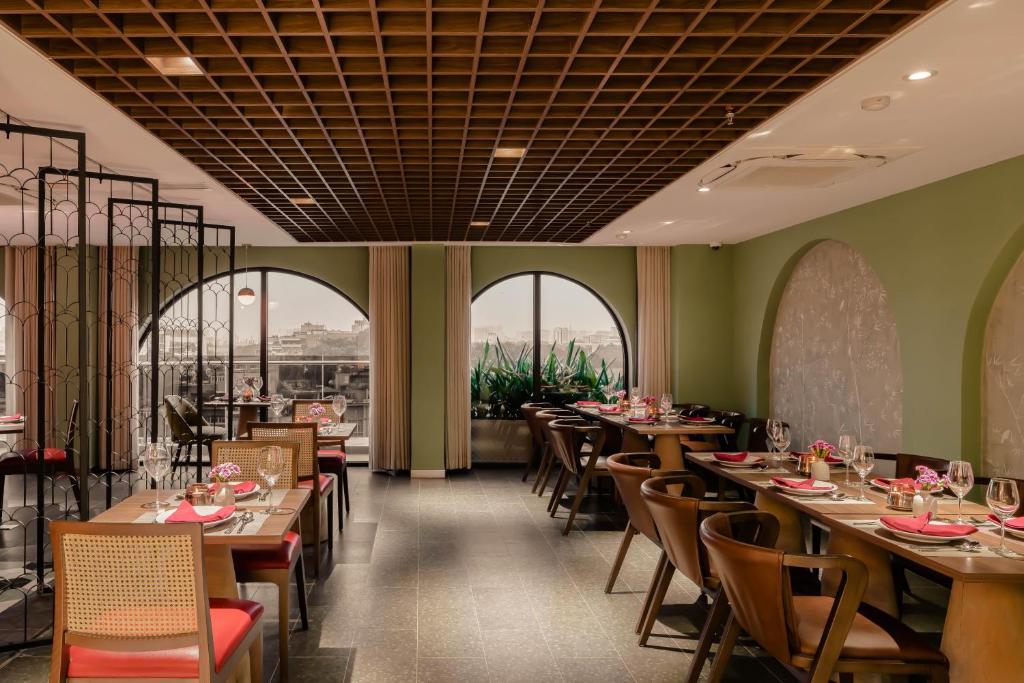
Beyond breakfast, the hotel offers a simple all-day dining or café-style service. Meals are generally light, easy to consume, and designed around freshness rather than culinary presentation. This reinforces the hotel’s positioning as a practical boutique stay rather than a destination for gourmet dining.
Dining & Breakfast Comparison Table
| Hotel | Dining Style | Breakfast Experience | Food Variety | Positioning |
| Hanoi Le Jardin Hotel & Spa | Simple café-style, functional dining | Vietnamese + Western basics (eggs, bread, pho-style items, fruits) | Limited but sufficient | Convenience-focused boutique stay, no fine dining emphasis |
| Hanoi La Siesta Hotel & Spa | Boutique restaurant experience | More curated breakfast, stronger presentation, better ambiance | Wider selection, more local + international mix | Experience-driven dining linked to Old Quarter identity |
| Peridot Grand Luxury Boutique Hotel | High-end boutique dining | Large buffet + live stations + premium presentation | Extensive variety, luxury-focused menu | Luxury dining experience with strong visual + culinary upgrade |
Compared to Hanoi La Siesta Hotel & Spa, where dining often plays a stronger experiential role with more curated restaurant concepts and a stronger Old Quarter food identity, Le Jardin’s F&B experience feels more restrained and utility-focused. La Siesta typically emphasizes atmosphere and boutique storytelling even in its dining spaces, while Le Jardin keeps things simple and functional.
In contrast, hotels like Peridot Grand Luxury Boutique Hotel offer a more refined dining experience, with higher-end presentation, wider buffet selections, and a stronger emphasis on visual and culinary sophistication. Compared to that level, Le Jardin clearly does not compete in luxury dining, but instead focuses on ease, accessibility, and consistency.
Overall, the dining experience here reflects the hotel’s broader identity: practical, calm, and convenience-driven rather than experience-driven or luxury-focused.
6. Tips for Staying
At Hanoi Le Jardin Hotel & Spa, selecting a higher room category is recommended if you prefer a noticeably quieter experience, as these rooms are typically better positioned away from internal movement areas and provide a more stable resting environment.
Key Highlights
- Spa services should be booked in advance, especially on weekends, as the wellness area is relatively compact and operates on a private, scheduled basis rather than walk-in capacity
- The hotel is best suited for relaxation-focused stays, short city breaks, or business trips where recovery and rest matter more than sightseeing intensity
- It works effectively as a calm central base, allowing easy access to both the Old Quarter for cultural exploration and West Lake for leisure cafés and walking routes
- Ideal for travelers who prioritize quiet atmosphere and convenience-based mobility over entertainment facilities or luxury-scale amenities
Conclusion
Overall, Le Jardin Hanoi represents a mid-scale boutique hospitality model focused on balance rather than luxury excess. It does not compete with high-end boutique hotels in terms of room size, design complexity, or dining sophistication, but instead offers a consistent experience built on calm atmosphere, efficient services, and wellness-oriented positioning.
Compared to Old Quarter boutique hotels or luxury properties in premium segments, Le Jardin’s main strength lies in its ability to provide a stable and quiet urban stay while still maintaining connectivity to key areas of Hanoi. This makes it particularly suitable for travelers who want a restful base in the city rather than an experience-driven or luxury-centric hotel stay.
In essence, Le Jardin is best understood not as a destination hotel, but as a functional urban retreat where simplicity, comfort, and location balance define the overall experience.
BeDental – A Leading Dental Clinic for International Travelers in Vietnam
BeDental offers high-quality dental services for international travelers visiting Vietnam, combining modern technology with experienced dentists. Our services include general and cosmetic dentistry, dental implants, teeth whitening, and smile makeovers, all performed to international standards.
Designed for tourists, BeDental provides flexible appointments, English-speaking staff, and personalized treatment plans that fit travel schedules. With competitive pricing and convenient locations, BeDental allows visitors to improve their smile while enjoying their trip to Vietnam.