


 Tiếng Việt
 한국어
한국어 日本語
日本語 中文 (中国)


Understanding the difference between milk teeth and permanent teeth is essential for maintaining good oral health from childhood into adulthood. In Vietnam, many parents and patients still underestimate the importance of early dental care, especially when it comes to baby teeth. However, according to clinical guidance recognized by the American Dental Association and the World Dental Federation, both milk teeth and permanent teeth play critical roles in oral development, chewing function, speech, and long-term dental health.
At BeDental, dentists emphasize early education and preventive care to help families understand how milk teeth differ from permanent teeth and why proper care at each stage is vital for lifelong oral health.
About BeDental – International-Standard Dental Care in Vietnam
BeDental is a modern dental system in Vietnam providing preventive, pediatric, and restorative dentistry in accordance with international clinical standards. The clinic is well-known for its patient-centered approach, advanced diagnostic technology, and strong focus on education for both parents and children.
BeDental’s dental team includes experienced pediatric dentists and general practitioners trained to monitor tooth development from infancy through adulthood. By using digital imaging, growth assessment, and preventive treatment planning, BeDental ensures that both milk teeth and permanent teeth are cared for appropriately at every stage of development.
With strict sterilization protocols, transparent consultations, and long-term follow-up care, BeDental is a trusted dental provider for families across Vietnam.
What Are Milk Teeth?
Milk teeth, clinically referred to as primary or deciduous teeth, are the foundational set of teeth that emerge during early childhood. The process of teething typically begins around 6 months of age, usually starting with the lower central incisors. While the timing can vary between individuals, most children will have their complete set of primary teeth by the age of 2 to 3 years.
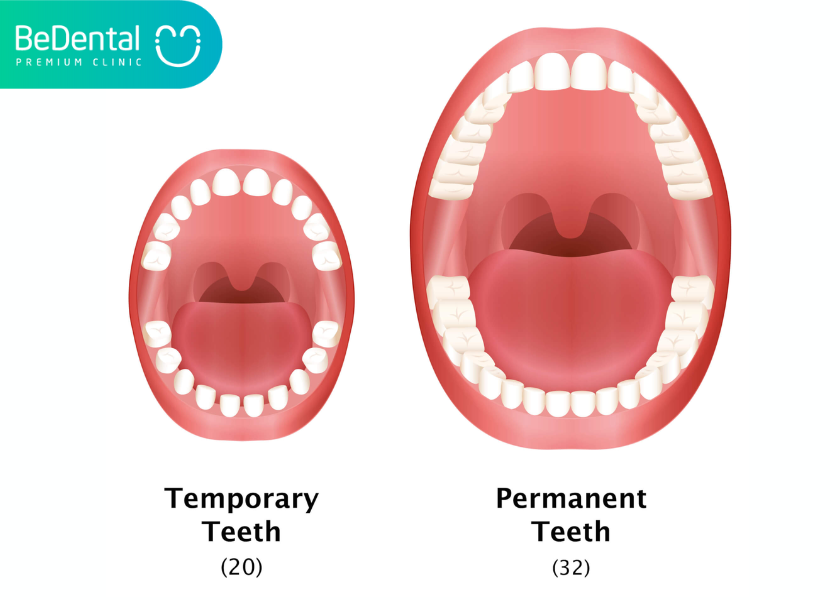
According to global dental associations, a full set of primary dentition consists of 20 teeth—10 in the upper jaw and 10 in the lower jaw. Although these teeth are eventually replaced by permanent successors, they are not merely “placeholders.” They are complex biological structures that serve as the blueprint for a child’s future oral health.
1. Facilitating Chewing and Proper Nutrition
Milk teeth are essential for a child’s transition from a liquid to a solid diet. They allow children to bite and grind various types of food, which is a critical part of the digestive process. Healthy primary teeth ensure that a child can maintain a diverse and nutrient-rich diet during their most vital years of growth and development. If these teeth are decayed or painful, children may avoid certain food groups, potentially leading to nutritional deficiencies.
2. Supporting Articulation and Speech Development
The presence and proper positioning of primary teeth are vital for learning how to speak. Teeth work in tandem with the tongue and lips to produce clear sounds and distinct syllables. For example, “th,” “f,” “s,” and “l” sounds require specific contact between the tongue and teeth. Early tooth loss due to decay can lead to speech impediments or delays that may require corrective therapy later in life.
3. Guiding the Eruption of Permanent Teeth
One of the most critical biological functions of milk teeth is to serve as a biological “roadmap.” The roots of primary teeth provide a path for the permanent teeth growing underneath them to follow. When a primary tooth is healthy and falls out naturally at the correct time, the permanent tooth is much more likely to erupt in its proper position, reducing the need for extensive orthodontic treatment in the future.
4. Maintaining Space in the Jaw
Milk teeth act as natural “space maintainers” within the dental arch. They hold the necessary horizontal and vertical gaps required for the larger permanent teeth to occupy later. If a milk tooth is lost prematurely due to an accident or severe decay, the neighboring teeth often shift into the empty space. This “drifting” can block the path of the incoming permanent tooth, leading to severe crowding, impaction, or a misaligned bite (malocclusion)
What Are Permanent Teeth?
Permanent teeth replace milk teeth and are designed to last a lifetime. They usually begin erupting around 6 years of age, starting with the first molars, and continue developing into the late teenage years.
Adults typically have 32 permanent teeth, including wisdom teeth. Permanent teeth are stronger, larger, and more complex in structure than milk teeth, as they must withstand decades of chewing forces and daily use.
Key Differences Between Milk Teeth and Permanent Teeth
Comparison Between Milk Teeth and Permanent Teeth
| Feature | Milk Teeth | Permanent Teeth |
| Number | 20 teeth | 28–32 teeth |
| Size | Smaller | Larger |
| Color | Whiter | Slightly yellow |
| Enamel thickness | Thin | Thick |
| Root structure | Short and resorbable | Strong and permanent |
| Function | Temporary, developmental | Long-term function |
1. Number of Teeth
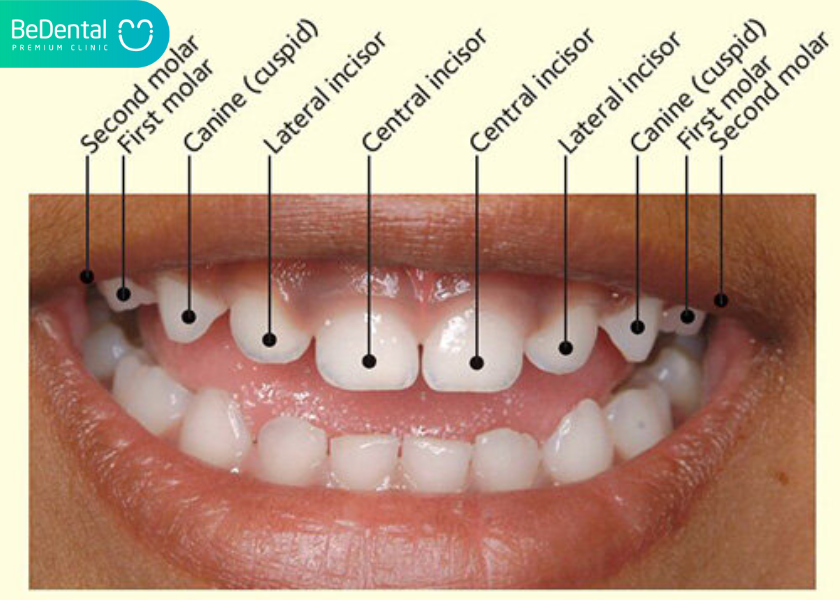
The most immediate difference is the total count of teeth in the oral cavity. A complete set of milk teeth consists of only 20 teeth (8 incisors, 4 canines, and 8 molars). These are eventually replaced and supplemented by the permanent set, which totals 28 to 32 teeth. The additional number in adults comes from the eruption of premolars—which do not exist in the milk tooth stage—and the four third molars, commonly known as wisdom teeth.
2. Physical Size and Aesthetic Color
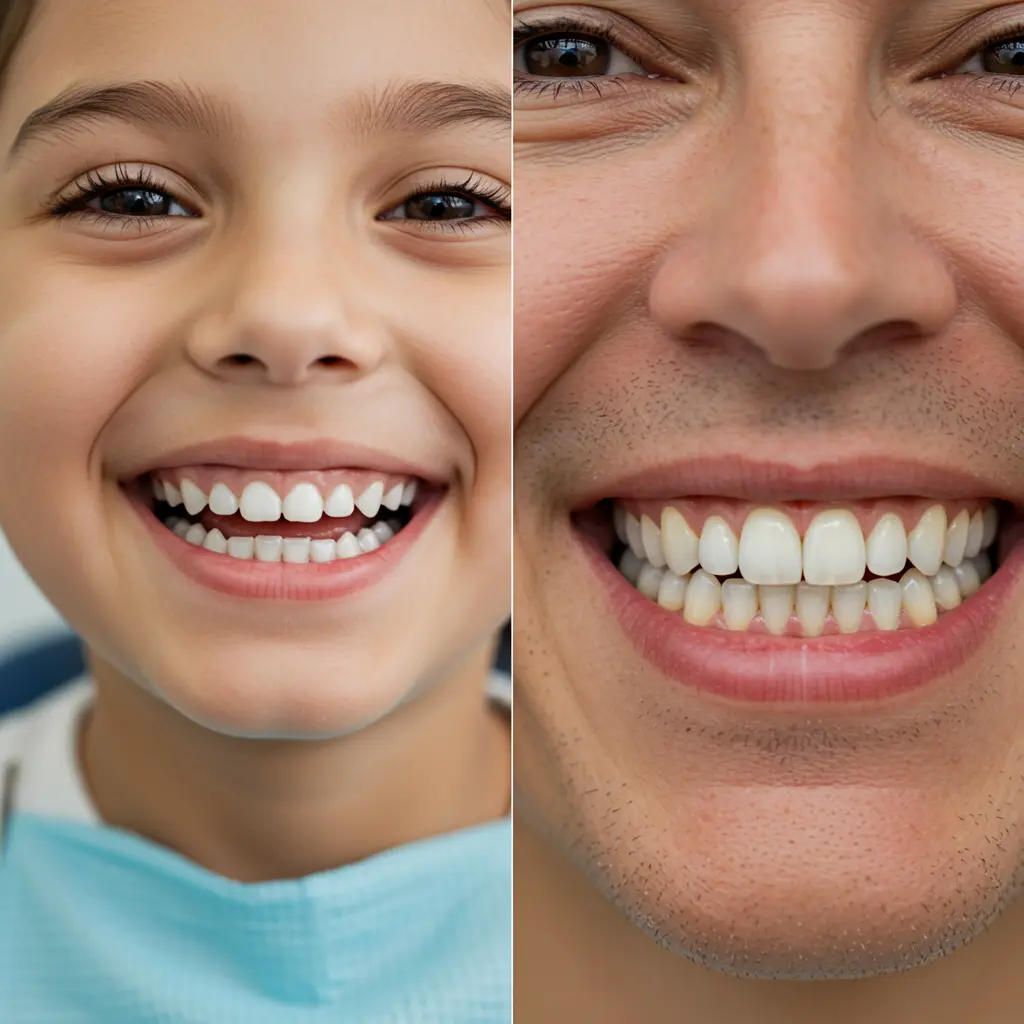
When viewed side-by-side, the physical characteristics of the two sets are distinct. Milk teeth are significantly smaller to accommodate the limited space in a child’s developing jaw. They also appear notably whiter or “milky” because their enamel is more opaque. In contrast, permanent teeth are larger and often have a slightly yellowish tint. This darker shade is not a sign of poor hygiene; rather, it is because permanent teeth have much thicker layers of dentin and enamel, which reflect light differently.
3. Enamel and Dentin Thickness
Dental associations emphasize that the structural composition of the two sets differs greatly. Milk teeth have much thinner enamel and dentin layers, usually only half the thickness of adult teeth. This thinness makes primary teeth significantly more vulnerable to rapid decay; a cavity can reach the sensitive inner nerve much faster in a child than in an adult. Permanent teeth possess a thicker, more resilient enamel shield designed to withstand decades of chewing forces, though they still require diligent care to prevent erosion.
4. Anatomy of the Root Structure
The root systems of these two sets are designed for very different lifecycles. Milk teeth have shorter, thinner, and more divergent roots. These roots are biologically programmed to undergo “resorption”—a process where they naturally dissolve as the permanent tooth underneath pushes upward. Permanent teeth have longer, wider, and much stronger roots that are firmly anchored into the jawbone. These roots are engineered for long-term stability and to support the heavy mechanical loads of adult mastication.
5. Biological Function and Longevity
The primary difference lies in their intended lifespan. Milk teeth are temporary, developmental tools; their role is to facilitate early nutrition, speech, and to act as space-holders for the future. Permanent teeth are meant to last a lifetime. Because there is no third set of teeth to follow, any loss of a permanent tooth is irreversible without artificial intervention. This is why dental organizations stress that while milk teeth guide the way, the preservation of permanent teeth is the ultimate goal of lifelong oral hygiene.
Why Milk Teeth Are Important Despite Being Temporary
A common misconception in Vietnam is that milk teeth do not need treatment because they will eventually fall out. Dental associations and pediatric specialists strongly disagree with this belief, as the health of the primary set directly dictates the health of the adult set. Neglecting these teeth can lead to localized health crises and long-term developmental setbacks.
Pain and infection
Because milk teeth have thinner enamel, decay can reach the nerve very quickly. Untreated cavities lead to chronic pain, which can interfere with a child’s sleep, concentration, and school performance. Furthermore, an infection in a milk tooth can develop into an abscess, potentially damaging the developing permanent tooth bud sitting directly beneath the gums and even leading to systemic health issues if bacteria enter the bloodstream.
Difficulty eating and speaking
Milk teeth are essential tools for a child’s nutritional and social development. Healthy teeth allow for the proper chewing of a diverse, nutrient-rich diet necessary for growth. From a developmental standpoint, teeth act as a bridge for speech; they work with the tongue and lips to form clear sounds. Early loss of these teeth can lead to nutritional deficiencies and the development of speech impediments or pronunciation struggles.
>> See more: Tooth Preparation Pain for Crowns in Vietnam: What to Expect and How to Stay Comfortable
Misalignment of permanent teeth
Milk teeth serve as natural “space maintainers” within the jaw. They hold the exact amount of space required for the larger permanent teeth to occupy later. When a milk tooth is lost prematurely, the surrounding teeth often shift or tilt into the empty gap. This “drifting” effectively blocks the path for the incoming permanent tooth, causing it to erupt in an abnormal position or become painfully impacted.
Increased risk of orthodontic problems
By failing to protect milk teeth, parents often inadvertently commit their children to years of expensive and complex orthodontic work. Maintaining primary teeth until they fall out naturally ensures that the jaw develops correctly and the bite remains aligned. Preventing early tooth loss is the most effective way to reduce the need for braces, expanders, and corrective jaw surgery in the teenage years.
At BeDental, dentists focus on preventive care and early treatment to protect milk teeth and ensure proper oral development.
We believe that a child’s first experiences at the dentist should be positive and proactive. Our pediatric specialists utilize advanced preventive measures—such as high-concentration fluoride varnishes and dental sealants—to fortify thin enamel. By identifying and treating issues in their earliest stages, BeDental helps every child transition to a healthy permanent smile with confidence and comfort.
Transition From Milk Teeth to Permanent Teeth
The transition usually occurs between ages 6 and 12, known as the mixed dentition stage. During this time, both milk teeth and permanent teeth are present.
Transition From Milk Teeth to Permanent Teeth
The transition usually occurs between ages 6 and 12, known as the mixed dentition stage. During this critical window, a child’s mouth contains a combination of both milk teeth and emerging permanent teeth. This period requires careful supervision to ensure the adult teeth have a clear, healthy path to erupt.
Ensure proper spacing
As the jaw grows, we monitor the gaps between teeth. Proper spacing is essential because permanent teeth are significantly larger than milk teeth. We ensure that as primary teeth fall out, the remaining space is preserved for their permanent successors.
Detect early bite problems
The mixed dentition stage is the best time to identify “malocclusions” or bite issues. By catching problems like crossbites or underbites early, we can often use simpler, less invasive treatments to correct the alignment while the bone is still flexible.
Prevent overcrowding
Overcrowding occurs when the jaw is too small to accommodate adult teeth, causing them to grow in crooked or overlapped. BeDental uses digital imaging to predict potential crowding issues, allowing for proactive steps that can simplify or even eliminate the need for braces later.
Guide healthy jaw development
We monitor the symmetry and growth of the facial skeleton. Ensuring the upper and lower jaws develop in harmony is vital for both facial aesthetics and long-term functional health, such as clear speech and comfortable chewing.
Early dental visits during this phase are strongly recommended by dental associations.
Starting regular check-ups by age 6 allows BeDental to create a long-term roadmap for your child’s smile. These visits ensure that the transition to a permanent set of teeth is smooth, healthy, and stress-free for both the parent and the child.
Why Choose BeDental for Children’s Dental Care in Vietnam?
1. Pediatric-Focused Expertise
BeDental dentists are experienced in managing both milk and permanent teeth at different developmental stages.
2. Preventive-First Philosophy
Emphasis is placed on early detection, fluoride therapy, and oral hygiene education.
3. Advanced Diagnostic Tools
Digital imaging allows precise monitoring of tooth eruption and jaw growth.
4. Family-Friendly Environment
BeDental provides a comfortable and supportive experience for children and parents.
5. Long-Term Oral Health Planning
Treatment plans focus on guiding healthy permanent teeth development.
Who Should Pay Special Attention to Tooth Development?
Parents should be particularly attentive if:
- A child experiences early tooth loss
- There is severe decay in milk teeth
- Permanent teeth erupt late or in abnormal positions
- The child has difficulty chewing or speaking
Professional dental evaluation is essential in these cases.
>> See more: Reducing Protruding Front Teeth in Vietnam: Safe, Natural, and Beautiful Results
FAQ – Difference Between Milk Teeth and Permanent Teeth in Vietnam
1. Do milk teeth really need treatment?
Yes. According to dental associations, healthy milk teeth are essential for proper oral development and should be treated when necessary.
2. When do permanent teeth start replacing milk teeth?
Permanent teeth typically begin erupting around age 6 and continue into adolescence.
3. Are milk teeth more prone to cavities?
Yes. Milk teeth have thinner enamel, making them more vulnerable to decay.
4. Can problems with milk teeth affect permanent teeth?
Yes. Infections or early loss of milk teeth can lead to misaligned or damaged permanent teeth.
5. How often should children visit the dentist?
Dental associations recommend regular check-ups every 6 months, starting from early childhood.
6. Is it normal for permanent teeth to look yellow compared to milk teeth?
Yes. Permanent teeth are naturally slightly darker due to thicker dentin.
7. Should loose milk teeth be removed early?
Only when advised by a dentist. Premature removal can affect permanent tooth alignment.
8. Why choose BeDental for children’s dental care in Vietnam?
BeDental combines pediatric expertise, preventive care, modern technology, and international standards to ensure healthy development of both milk and permanent teeth

Tư vấn chuyên môn bài viết:
BÁC SĨ DƯƠNG THỊ THÙY NGA