
Câu chuyện khách hàng
Egg Coffee Hanoi: What It Is & Where to Try the Best

Egg coffee Hanoi is one of the most distinctive beverages, representing a unique blend of creativity, tradition, and local café culture. Originally developed as an innovative solution during a period of limited resources, it has evolved into a signature drink that attracts both locals and international visitors. With its rich history, creamy texture, and dessert-like flavor, egg coffee has become more than just a drink—it is a cultural experience that reflects the ingenuity of Vietnamese coffee-making.
1. History & Origin- Egg Coffee Hanoi
Egg coffee Hanoi (cà phê trứng) is widely believed to have originated in the mid-20th century in Hanoi, during a period when fresh milk was scarce. According to commonly cited accounts, Vietnamese baristas began using egg yolks whipped with sugar and condensed milk as a substitute for dairy, creating a rich, creamy topping for strong black coffee.
The most frequently mentioned origin is associated with Giảng Café, founded by Nguyễn Văn Giảng in 1946. He is often credited in Vietnamese coffee history narratives as the person who popularized egg coffee after working as a bartender at the Metropole Hotel during the French colonial period. When milk was limited, he experimented with egg yolk as an alternative ingredient, leading to the creation of the drink.
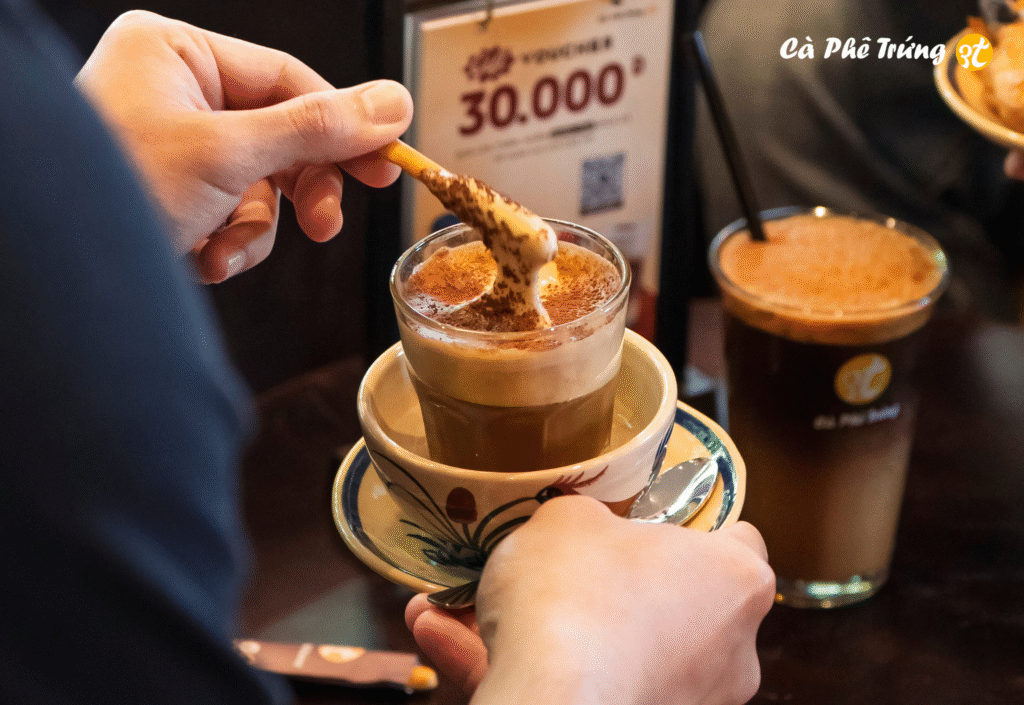
This historical account is supported by multiple international travel and food journalism sources, including publications such as CNN Travel, BBC Travel, and The Guardian, which describe egg coffee as a Hanoi innovation born out of resource scarcity and culinary creativity. However, it is important to note that there is no single official historical document confirming one definitive origin story. Instead, the widely accepted narrative is based on oral history, café tradition, and journalistic reporting.
Over time, egg coffee became closely tied to Hanoi’s café culture, especially in small traditional coffee shops in the Old Quarter, evolving from a practical substitute ingredient into a signature Vietnamese beverage.
2. What Egg Coffee Is? Variations of Egg Coffee
Egg coffee Hanoi (cà phê trứng) is a signature beverage from Hanoi made by combining strong Vietnamese coffee with a creamy whipped mixture of egg yolk, sugar, and condensed milk. This unique combination transforms a simple cup of coffee into a rich, dessert-like drink with a distinctive texture and flavor.
The drink is built on four main components: strong black coffee as the base, egg yolk whipped with sugar and condensed milk as the creamy topping, and sometimes a small amount of butter or additional milk for richness. The result is a layered drink where the coffee sits at the bottom and the airy foam rests on top.
In terms of texture, egg coffee is known for its thick, creamy, foam-like surface, often compared to custard or tiramisu cream. This topping is light yet rich, creating a contrast with the bold bitterness of the coffee underneath. The taste profile is carefully balanced between sweetness from the cream, richness from the egg, and mild bitterness from the coffee, making it both a beverage and a dessert experience.
Types of Egg Coffee Hanoi
The most common version is the classic hot egg coffee, where strong black coffee is topped with a rich, creamy layer of whipped egg yolk, sugar, and condensed milk, creating a dessert-like experience with a balance of sweetness, bitterness, and smooth texture.
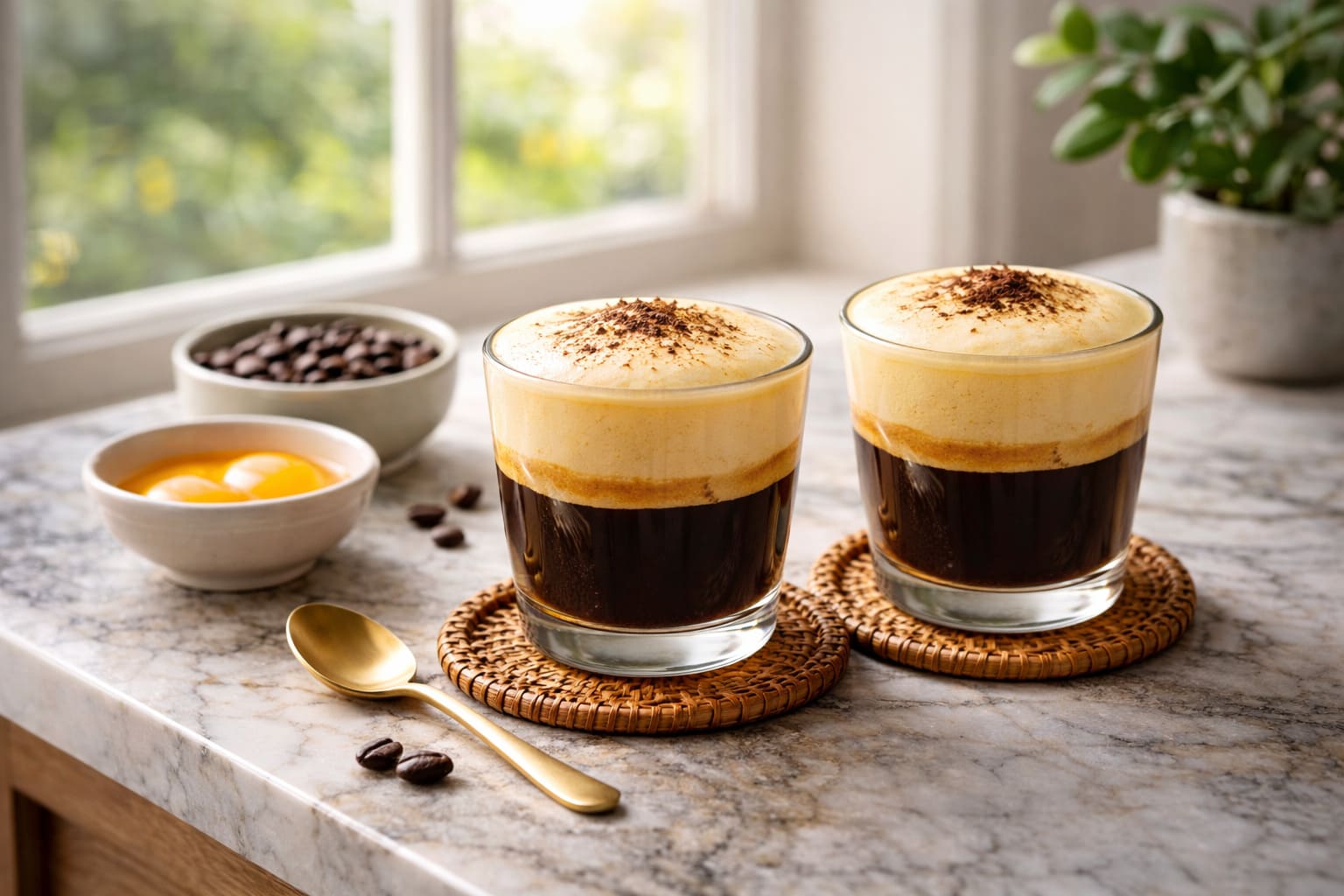
Over time, many variations have emerged to suit different tastes and modern café trends. Iced egg coffee offers a refreshing alternative for warmer weather, while egg cocoa and egg matcha introduce new flavor profiles for those who prefer non-coffee or fusion drinks. Some modern cafés even experiment with salted or extra-creamy versions, pushing the drink beyond its traditional form.
Despite these variations, all types of egg coffee share the same defining feature: a thick, velvety foam layer that transforms a simple cup of coffee into a rich and indulgent experience. This evolution shows how egg coffee has become not only a cultural symbol of Hanoi but also a flexible and innovative part of Vietnam’s contemporary café culture.
| Type of Egg Coffee | Main Ingredients | Texture | Flavor Profile | Notes |
| Classic Hot Egg Coffee | Strong coffee, egg yolk, sugar, condensed milk | Thick, creamy foam on top | Sweet, rich, slightly bitter | Traditional version, served warm |
| Iced Egg Coffee | Same ingredients + ice | Cold, still creamy but lighter | Refreshing, less heavy sweetness | Modern variation for hot weather |
| Egg Cocoa (Cà phê trứng cacao) | Cocoa, egg yolk, sugar, condensed milk | Smooth, dessert-like foam | Chocolatey, sweet, creamy | Popular alternative for non-coffee drinkers |
| Egg Matcha Coffee | Matcha, egg yolk, milk, sugar | Frothy, layered texture | Earthy, creamy, slightly sweet | Fusion-style café drink |
| Egg Salt Coffee (modern variation) | Coffee, egg foam, salt, milk | Creamy with light foam | Sweet-salty balance | Experimental modern cafés |
| Egg Cream Coffee (double egg foam) | Coffee + extra whipped egg cream | Extra thick, custard-like | Very rich, dessert-heavy | For strong sweet lovers |
Egg coffee is traditionally served hot, often placed in a bowl of warm water to maintain its temperature. However, modern variations have emerged, including iced egg coffee, which offers a refreshing twist for warmer weather while preserving the creamy texture.
Today, many cafés in Hanoi also experiment with variations such as egg cocoa, matcha egg coffee, or cheese-infused versions, showing how this classic drink continues to evolve while maintaining its original identity.
3. How It Is Made- Egg Coffee Hanoi
Egg coffee Hanoi is prepared through a simple yet precise process that focuses on creating balance between strong coffee and creamy egg foam. The first step is brewing strong Vietnamese coffee, usually using dark-roasted beans to produce a bold and slightly bitter base flavor that can stand up to the sweetness of the topping.

Next, the egg yolk is whipped together with sugar and condensed milk until it becomes thick, smooth, and creamy. This process is essential, as it transforms the raw egg mixture into a light, custard-like foam that is both rich and airy in texture.
After that, the drink is assembled using a layering technique: the hot coffee is poured into a small cup first, followed by the whipped egg mixture placed gently on top. This creates a clear contrast between the dark coffee layer and the pale, creamy foam above it.
Finally, egg coffee is typically served in a small cup, often placed inside a bowl of warm water to maintain its temperature. This traditional serving style ensures that the foam stays soft and the coffee remains hot, allowing the drink to be enjoyed slowly like a dessert-like experience rather than a quick beverage.
4. Where to Try the Best Egg Coffee in Hanoi
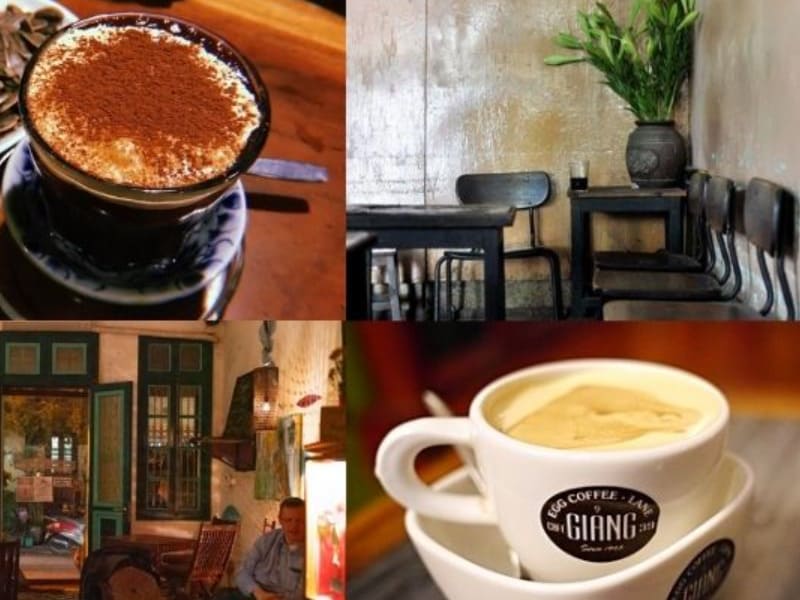
Egg coffee is best experienced in Hanoi’s café culture, where both traditional and modern interpretations can be found across the city. The most authentic experience is often in traditional cafés located in the Old Quarter, where small, family-run shops serve egg coffee in a simple, nostalgic setting. These places focus on preserving the original recipe, offering a rich and creamy drink in a quiet, old-style atmosphere.
| Café | Area | Egg Coffee Style | Highlights |
| Giảng Café | Old Quarter (Nguyen Huu Huan Street) | Traditional original recipe (coffee + whipped egg yolk) | The birthplace of egg coffee, most iconic café |
| Cafe Dinh | Near Hoan Kiem Lake | Lighter, smoother egg cream | Classic atmosphere with a nostalgic Old Quarter vibe |
| Loading T Café | Old Quarter | Creative variations (cocoa, cinnamon egg coffee) | Artistic space, popular “Instagram café” |
| The Note Coffee | Hoan Kiem Lake | Egg coffee with modern twists | Famous for its colorful note-covered walls |
| Blackbird Coffee | Hoan Kiem District | Specialty-style egg coffee | High-quality beans, modern coffee approach |
| Aramour Coffee | Ba Dinh District | Contemporary specialty egg coffee | Minimalist design, calm atmosphere |
| Cafe Pho Co | Old Quarter | Traditional egg coffee with lake view | Rooftop view of Hoan Kiem Lake, unique experience |
Another key option is famous historic coffee shops, many of which have been operating for decades and are closely associated with the origin and development of egg coffee itself. These cafés are often considered cultural landmarks, attracting both locals and international visitors who want to taste the “classic” version of the drink in its most traditional form.
In contrast, modern cafés with creative variations offer a more contemporary experience. These shops experiment with iced versions, cocoa or matcha bases, and fusion-style presentations, making egg coffee more diverse and appealing to younger generations. The atmosphere is usually more stylish and café-oriented, blending traditional Vietnamese flavors with modern coffee culture.
Overall, Hanoi offers a complete spectrum of egg coffee experiences—from heritage cafés to innovative modern shops—allowing visitors to explore both the origin and evolution of this iconic drink.
5. Tips for Visitors
When enjoying egg coffee in Hanoi, a few simple tips can help you experience the drink in the most authentic and enjoyable way. The best time to drink egg coffee is usually in the morning or early afternoon, when its rich, creamy texture feels most balanced with the stronger caffeine base. It is less commonly chosen late at night because of its sweetness and energizing effect.
To enjoy it properly, many locals recommend tasting the layers first without stirring too much, allowing you to experience the contrast between the hot coffee below and the creamy egg foam on top. You can then gently mix it if you prefer a more uniform, dessert-like flavor.
Another important factor is hygiene and freshness. Since egg coffee uses raw egg yolk as part of the preparation, it is best to choose well-known cafés with high turnover and good hygiene standards. Fresh preparation is key, as the quality of the egg foam greatly affects both taste and safety. Overall, enjoying egg coffee in Hanoi is not just about drinking coffee, but about experiencing a carefully crafted balance of flavor, texture, and local café culture.

Conclusion
Egg coffee Hanoi remains an essential part of Hanoi’s identity, standing out as a symbol of innovation within Vietnam’s broader coffee culture. From its traditional hot version to modern iced and fusion variations, the drink continues to evolve while preserving its original character: a balance of strong coffee and silky egg foam. Exploring egg coffee Hanoi is not only about tasting a unique beverage but also about experiencing the city’s creativity, history, and vibrant café lifestyle in every cup.
BeDental – A Leading Dental Clinic for International Travelers in Vietnam
BeDental offers high-quality dental services for international travelers visiting Vietnam, combining modern technology with experienced dentists. Our services include general and cosmetic dentistry, dental implants, teeth whitening, and smile makeovers, all performed to international standards.
Designed for tourists, BeDental provides flexible appointments, English-speaking staff, and personalized treatment plans that fit travel schedules. With competitive pricing and convenient locations, BeDental allows visitors to improve their smile while enjoying their trip to Vietnam.