


 Tiếng Việt
 한국어
한국어 日本語
日本語 中文 (中国)


Set high in the mountains of Lao Cai, near the border with China, Sapa in Vietnam is not a destination built around a single landmark. Instead, it unfolds through layers—of mist, terraces, villages, and quiet movement. The landscape does not reveal itself all at once. It shifts with weather, with light, and with the pace at which you choose to explore it.
Here, trekking is not just an activity—it is the way everything connects. Paths lead through places like Muong Hoa Valley, across villages such as Lao Chai Village and Ta Van Village, and into spaces where landscape and daily life exist side by side. Along the way, there is no single highlight that defines the experience—only a gradual sense of immersion.
1. Overview of Sapa in Vietnam
There are places you visit, and there are places that slowly reveal themselves—and Sapa belongs to the second kind.
Tucked away in the mountains of Lao Cai, near the Chinese border, Sapa sits within the Hoàng Liên Sơn range, where peaks rise and fall behind layers of mist. Somewhere above them all is Fansipan Mountain, often hidden behind clouds, rarely fully visible—more a presence than a constant sight. The landscape here is not open and immediate; it unfolds gradually, sometimes obscured, sometimes suddenly clear, always shifting.
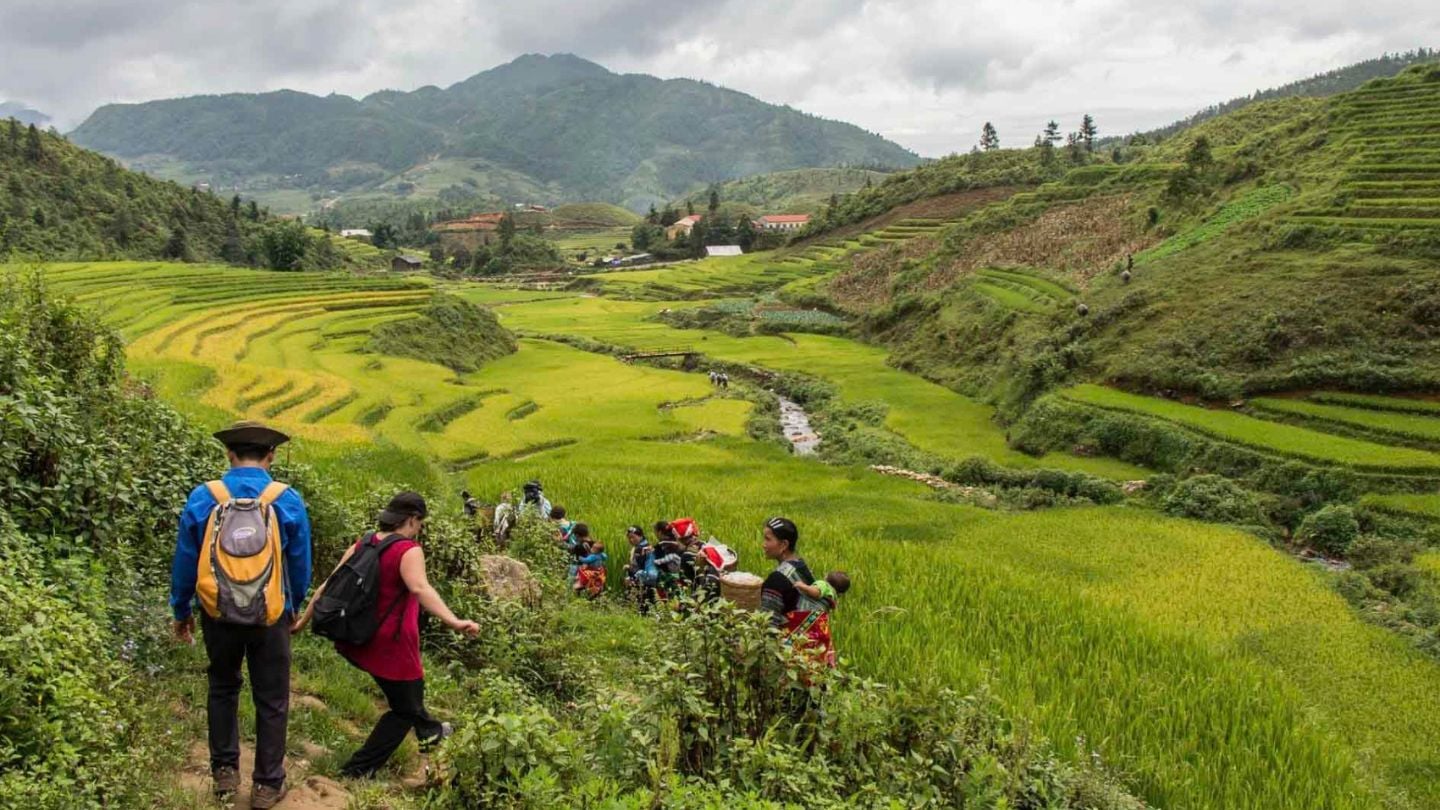
What you notice first is not a landmark, but a rhythm—the slow movement of clouds, the quiet spacing of villages, the way sound carries differently across valleys. In places like Muong Hoa Valley, the terraced rice fields stretch across entire hillsides, not as decoration, but as something lived in and worked on. When filled with water, they reflect the sky in broken fragments. When green, they feel dense and alive. And in harvest season, especially around Lao Chai Village and Ta Van Village, they turn into wide layers of gold that soften the entire valley.
Sapa in Vietnam is not only landscape—it is also presence.
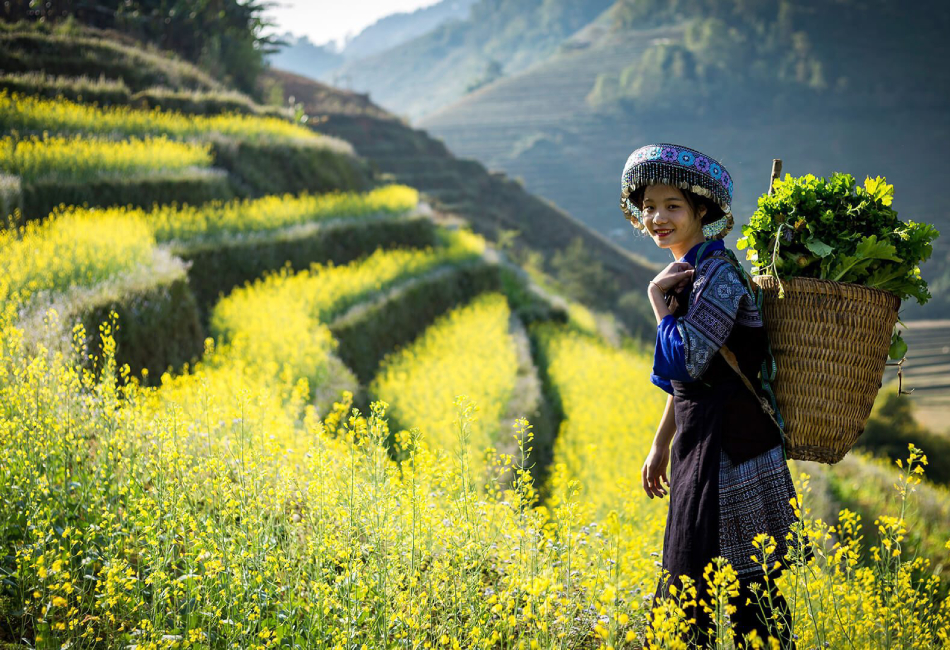
The Black Hmong, Red Dao, and Giay communities live across these mountains, not separated from the scenery but woven into it. You see them not in performances, but in motion—walking narrow paths, working fields, gathering at markets. Their traditional clothing—indigo-dyed fabrics, embroidered patterns, silver details—stands out quietly against the muted tones of the land. Culture here does not present itself loudly; it exists in repetition, in routine, in everyday life.
Even the food carries this same grounded quality. In the cold air of the mountains, meals feel warmer, simpler, more direct. A pot of thắng cố slowly simmering, skewers of grilled meat over open charcoal, or pieces of cơm lam split from bamboo—these are not just dishes, but responses to climate and terrain. At night, especially in small town corners or local markets, the smell of smoke, herbs, and heat lingers in the air, making the experience as much about atmosphere as taste.
Best Time to Visit (Quick Insight)- Sapa in Vietnam
- March – May: The mountains open up—clear skies, fresh green terraces, ideal for walking through valleys like Muong Hoa Valley
- June – August: Everything grows dense and lush, though rain softens the trails
- September – October: The landscape reaches its fullest expression—golden rice fields across Lao Chai and Ta Van
- November – February: The quietest season—cold, fog-heavy, sometimes with frost near Fansipan Mountain
What Makes Sapa Different
Sapa does not stay the same long enough to be fully captured. A place that feels open in the morning can become hidden by fog in the afternoon. A valley that appears vibrant one season may feel almost silent in another.
What makes Sapa distinct is not just its scenery, but the way it asks you to experience it—slowly, attentively, and without expectation. It is not a place of instant impressions, but of gradual understanding, where landscape, culture, and daily life blend into something you don’t just see, but quietly absorb.
2. Trekking & Must-See Places in Sapa
In Sapa, places are not simply visited—they are walked through. The landscape is not arranged into separate attractions, but connected by trails that move across valleys, fields, and villages. Trekking is not an activity you add on; it is the way you experience everything.
2.1 Muong Hoa Valley (Main Trekking Area)- Sapa in Vietnam
At the heart of Sapa lies Muong Hoa Valley, where the terrain opens into one of the most iconic landscapes in northern Vietnam. Terraced rice fields stretch across entire hillsides, following the natural curves of the mountains, creating layers that feel both structured and organic at the same time.
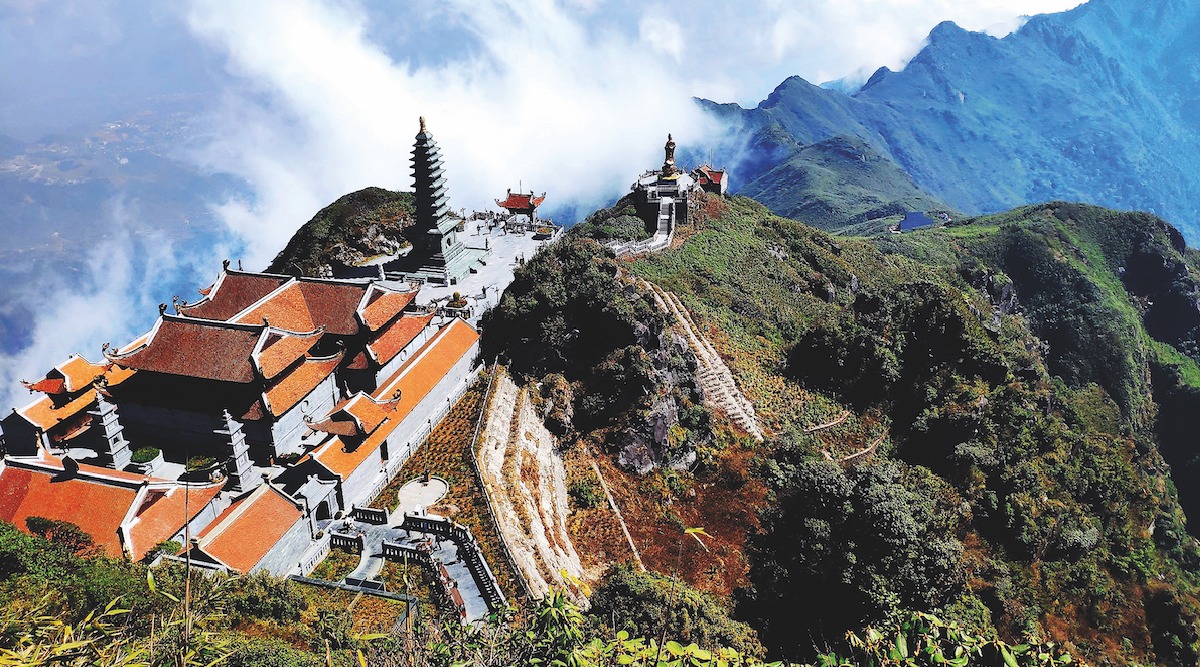
- The trails here are not fixed paths in the conventional sense. They shift between narrow dirt tracks, soft earth, small streams, and stepped terraces—sometimes clear, sometimes barely visible. As you move through the valley, the space continuously changes: open views give way to enclosed paths, and distant mountains slowly become immediate surroundings.
- A typical route begins in Lao Chai Village and continues toward Ta Van Village, passing through rice fields, wooden houses, and small sections of forest. Along the way, there is no single highlight that defines the journey. Instead, the experience unfolds gradually—through changing perspectives, quiet encounters, and the rhythm of walking itself.
What makes trekking in Muong Hoa different is the absence of a clear destination. You don’t walk to arrive somewhere specific—you walk to move through the landscape, to notice how it shifts, and to become part of its pace. Villages appear not as endpoints, but as moments along the way, where daily life continues regardless of who is passing through.
Experience: There is no fixed “must-see” point. The value lies in the movement—in the feeling of crossing space slowly, where landscape and local life blend into a continuous, unbroken experience.
2.2 Village Trekking Experience- Sapa in Vietnam
Leaving the wider paths of Muong Hoa Valley, the journey gradually moves into smaller, quieter spaces—where villages are not marked as destinations, but encountered along the way. In places like Lao Chai Village and Ta Van Village, the landscape begins to feel more lived-in, more intimate.
Here, trekking becomes less about scenery and more about presence. You walk through communities of Black Hmong, Giay, and Red Dao people, where daily life continues at its own pace—children walking along narrow paths, farmers working on terraced fields, smoke rising quietly from wooden houses in the distance. Nothing is arranged for observation, yet everything is visible.
The houses themselves—simple wooden structures, often built on slightly elevated ground—blend naturally into the terrain. Paths between them are unpaved, shaped more by habit than design. As you move deeper, the sounds change too: less wind across open valleys, more subtle layers—footsteps on soil, distant voices, the quiet rhythm of work.
What defines this experience is not a specific moment, but a gradual sense of closeness. The further you move away from the main routes, the less defined everything becomes—fewer signs, fewer people, fewer interruptions.
2.3 Fansipan Mountain (Trekking Option)- Sapa in Vietnam
Rising above the Hoàng Liên Sơn range, Fansipan Mountain stands as the highest peak in Vietnam—often referred to as the “Roof of Indochina.” Unlike the open, flowing movement of valley trekking, the experience here is more defined, more demanding, and more focused.
For those choosing to trek, the journey typically takes 1–2 days, depending on the route and pace. The terrain shifts from forested paths to steeper inclines, with changing altitude and denser vegetation. The air becomes cooler, the surroundings quieter, and the sense of effort more present with each step. It is not a walk you drift through—it requires intention, endurance, and guidance.
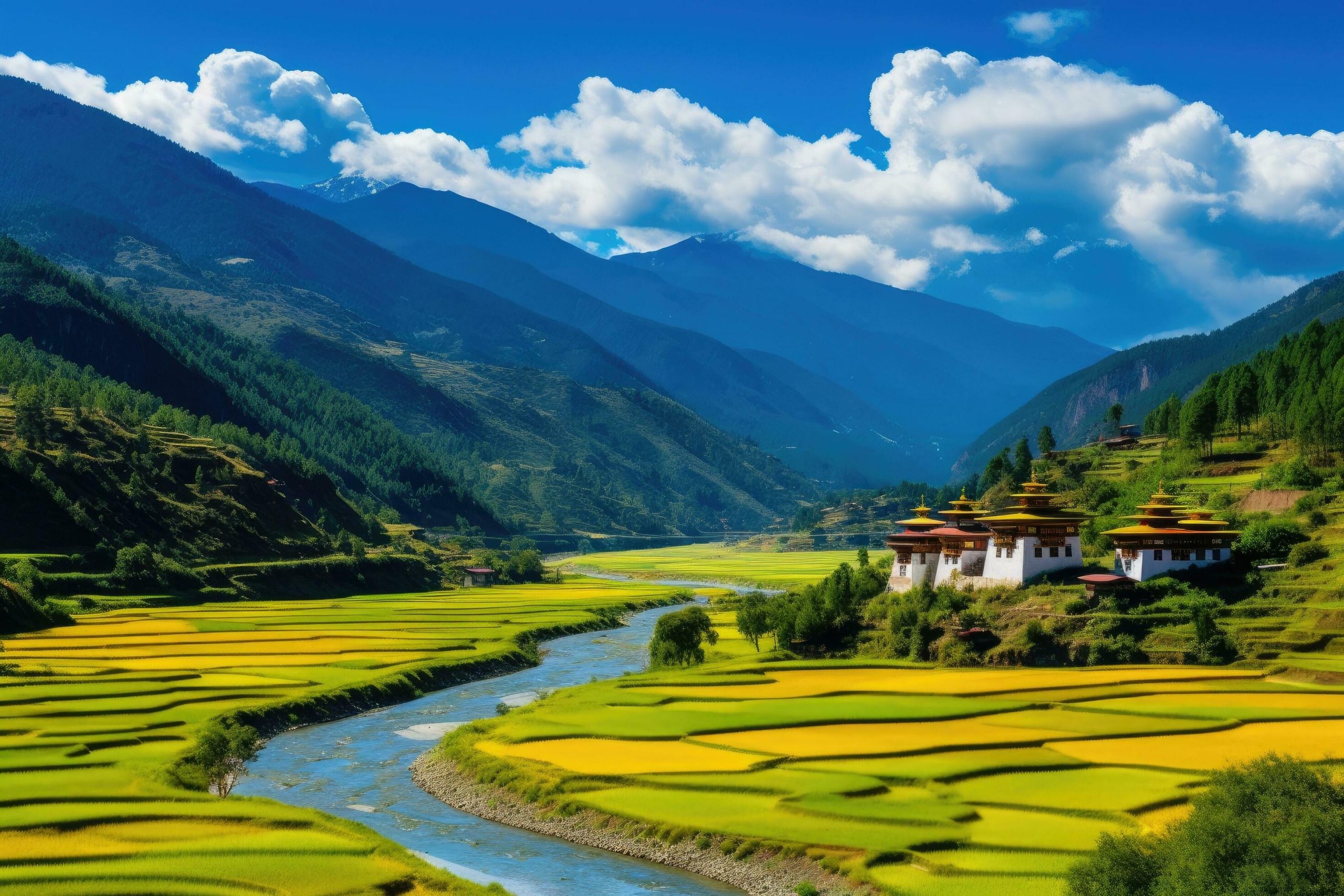
At the same time, there is an entirely different way to experience Fansipan. The cable car offers a fast and accessible route to the summit, lifting you above the mountains and through layers of cloud in a matter of minutes. From above, the landscape reveals itself in a broader, more distant perspective—less physical, but still visually striking.
2.4 Hidden Trekking Routes- Sapa in Vietnam
Beyond the well-known paths of Muong Hoa Valley, there are quieter trails that extend further into the mountains—less defined, less traveled, and often not marked on standard maps. These routes lead toward smaller, more remote communities scattered across the hills, where the landscape feels less observed and more lived in.
The paths here are narrower, sometimes uneven, and occasionally uncertain. You may pass through sections of forest, cross small streams without bridges, or walk along terraces that feel closer to working land than a designated trail. There are fewer signs, fewer groups, and long stretches where the only movement is your own.
In deeper areas beyond villages like Ta Van Village, homestays appear quietly—simple wooden houses set within the terrain rather than separated from it. Staying here shifts the experience from passing through to briefly belonging, even if only for a night. Evenings are quieter, mornings slower, and the sense of distance from the main town becomes more tangible.
3. Travel Tips for Sapa in Vietnam
Traveling in Sapa is less about strict planning and more about adapting to the terrain, weather, and pace of the mountains. A few practical choices can make a significant difference in how comfortable—and how deep—your experience becomes.
- Proper trekking shoes are essential Trails in areas like Muong Hoa Valley are often uneven, muddy, or slippery, especially after rain. Good grip and support are not optional—they shape how confidently you move through the landscape.
- Weather changes quickly—bring layers Sapa’s mountain climate shifts fast. A clear morning can turn foggy or cold within hours, particularly at higher elevations near Fansipan Mountain. Light layers allow you to adjust without discomfort.
- Fog can affect visibility at any time Mist is part of Sapa’s identity. It can soften the landscape beautifully—but also limit views unexpectedly. Plan with flexibility rather than fixed expectations.
- Carry cash when visiting villages In deeper areas beyond towns and main roads, digital payments are rare. Small purchases, local meals, or homestays often rely on cash, especially in villages like Ta Van Village.
- Consider hiring a local guide for deeper routes Many of the most meaningful trails are not clearly marked. A local guide not only helps with navigation but also opens access to places and stories you wouldn’t encounter on your own.
Conclusion
Sapa in Vietnam is not a place that leaves you with a single image. It leaves you with a feeling—one that shifts depending on when you arrive, where you walk, and how slowly you allow yourself to move.
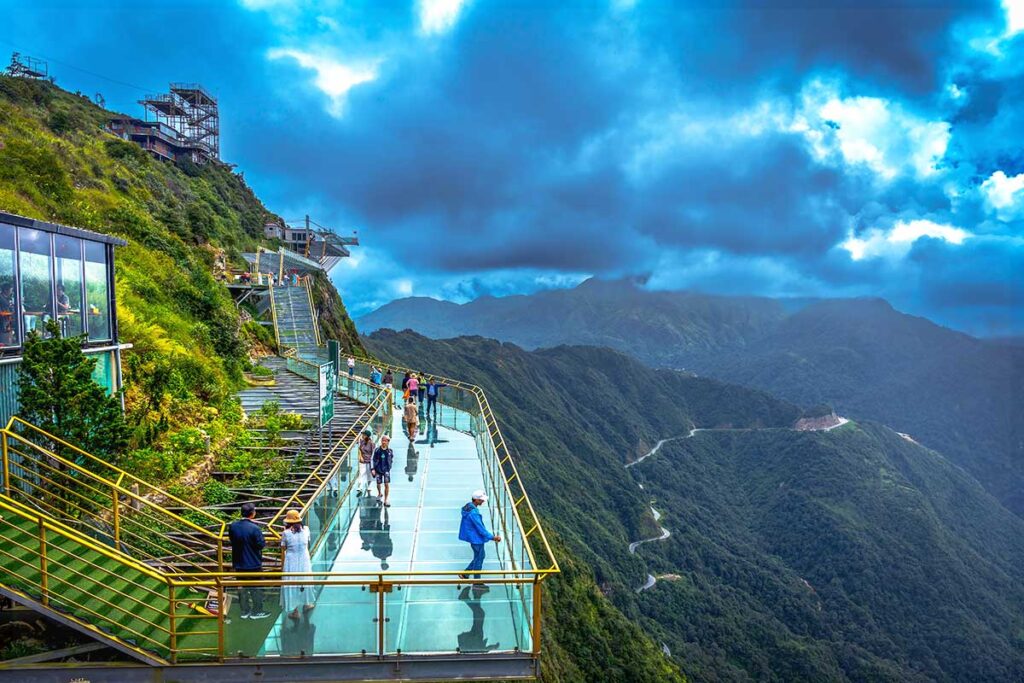
By the end of the journey, what stays with you is rarely a specific viewpoint or destination. It is the rhythm of walking through valleys, the quiet presence of villages, and the way the landscape changes without announcement—sometimes clear, sometimes hidden in mist. Whether you choose to trek through Muong Hoa Valley, reach the heights of Fansipan Mountain, or simply pause at a distant viewpoint, Sapa offers something beyond scenery. It offers a different pace—one that cannot be rushed or fully planned. And perhaps that is why people don’t just remember Sapa. They remember how it felt to move through it.
BeDental – A Leading Dental Clinic for International Travelers in Vietnam
BeDental offers high-quality dental services for international travelers visiting Vietnam, combining modern technology with experienced dentists. Our services include general and cosmetic dentistry, dental implants, teeth whitening, and smile makeovers, all performed to international standards.
Designed for tourists, BeDental provides flexible appointments, English-speaking staff, and personalized treatment plans that fit travel schedules. With competitive pricing and convenient locations, BeDental allows visitors to improve their smile while enjoying their trip to Vietnam.