
Câu chuyện khách hàng
Hanoi Opera Guide: History, Architecture & What to See
Th5

The Hanoi Opera House is one of the most iconic architectural and cultural landmarks in Vietnam. Located in the heart of Hanoi’s historic French Quarter, the building reflects more than a century of history, blending French colonial elegance with Vietnam’s evolving cultural identity.
Today, the Hanoi Opera House continues to attract visitors not only for its architecture, but also for its traditional Vietnamese performances, classical concerts, guided tours, and timeless atmosphere. Whether you are interested in history, photography, architecture, or live cultural experiences, the opera house offers one of the most memorable experiences in Hanoi.
1. History of Hanoi Opera House
The Hanoi Opera House is one of the most historically significant architectural landmarks in Vietnam, reflecting both the country’s colonial past and its cultural transformation through modern history. Located in the heart of Hanoi’s French Quarter, the opera house has witnessed political change, artistic development, and important national events for more than a century.
| Architectural Element | Description | Unique Characteristics |
| Overall Architectural Style | French colonial architecture influenced by European neoclassical opera houses | Adapted to Hanoi’s tropical climate with lighter proportions and more open spatial design |
| Design Inspiration | Inspired by the Palais Garnier in Paris | Simplified and softened compared to the grand scale of European royal opera houses |
| Exterior Façade | Symmetrical front elevation with arches, columns, balconies, and decorative reliefs | Elegant rather than monumental, blending well with Hanoi’s urban scale |
| Color Palette | Soft yellow, cream white, and muted stone tones | Typical of French colonial buildings in Vietnam and highly reflective under tropical sunlight |
| Roof & Upper Structure | Sloped roof system combined with classical detailing | Designed to better handle heat and heavy seasonal rainfall |
| Main Staircase | Wide ceremonial staircase leading to the entrance hall | One of the most photogenic architectural features due to natural light and spatial symmetry |
| Columns & Arches | Classical columns paired with curved arches and decorative moldings | Combines neoclassical structure with softer colonial-era detailing |
| Performance Hall Layout | Horseshoe-shaped opera hall with layered balconies facing the stage | Creates intimate acoustics and stronger visual connection with performers |
| Ceiling Design | Curved vaulted ceilings with ornamental plasterwork | Improves sound distribution while reducing the heaviness found in larger European theaters |
| Balcony System | Slimmer and more open balcony structures | Better suited for airflow in Hanoi’s humid climate |
| Lighting Design | Combination of chandeliers, wall lamps, and natural daylight from tall windows | Creates a softer and warmer atmosphere compared to enclosed European theaters |
| Interior Materials | Velvet seating, polished wood, decorative plaster, stone flooring, and metal railings | Blends French luxury aesthetics with practical tropical adaptations |
| Mirror Room | Elegant ceremonial room with large mirrors and French-style detailing | Uses reflected natural light to visually enlarge the interior space |
| Hallways & Corridors | Semi-open circulation spaces with decorative flooring and wall lighting | Designed for natural ventilation before air conditioning existed |
| Acoustic Design | Carefully proportioned hall with reflective ceiling geometry | Allows orchestral and traditional performances to sound warm and immersive |
| Atmosphere | Refined, intimate, and cinematic rather than overwhelmingly grand | Often described as a “tropical interpretation of a Paris opera house” |
Construction During the French Colonial Era
Construction of the Hanoi Opera House began in 1901 under the French colonial administration and was completed in 1911. The building was designed by French architects inspired by the famous Palais Garnier, one of the grandest opera houses in Europe. As a result, the Hanoi Opera House features elegant neoclassical architecture, symmetrical design, decorative columns, arched windows, and refined European artistic details.
During the French colonial period, the opera house primarily served as a cultural and entertainment venue for French officials, wealthy Europeans, and members of the colonial elite living in Indochina. Opera performances, classical concerts, and theatrical productions were held regularly, bringing a European cultural atmosphere to Hanoi at the beginning of the 20th century.
The construction itself was considered ambitious for its time, using imported materials and advanced engineering techniques to create a luxurious performance venue that symbolized French influence in Southeast Asia.
Historical Events & National Significance
The Hanoi Opera House is one of Hanoi’s most important historical and cultural landmarks. Built during the French colonial era, the opera house reflects European architectural influence while also playing a significant role in Vietnam’s political and cultural history. Over more than a century, the building has transformed from a colonial entertainment venue into one of Vietnam’s most prestigious centers for art, music, and national events.
- 1901 – Construction of the Hanoi Opera House began under the French administration
- 1911 – The opera house was officially completed and opened for performances
- 1945 – Became a gathering place connected to revolutionary and independence activities
- 1946 – Hosted the first session of Vietnam’s National Assembly
- 1954 – Transitioned into a Vietnamese cultural and performance venue after Hanoi returned to Vietnamese control
- 1990s – Major restoration and preservation projects were carried out
- 2000 – Large-scale renovation projects continued to restore the original French colonial architecture and modernize the performance facilities
- 2011 – Hanoi Opera House celebrated its 100th anniversary as one of Vietnam’s most iconic cultural landmarks
- 2022 – The Ministry of Culture launched expanded cultural tourism programs and regular guided tours inside the opera house
- Today – The Hanoi Opera House regularly hosts international concerts, symphony performances, ballet, traditional Vietnamese art shows, and important diplomatic or cultural events in Hanoi
2. Architecture & Design Highlights
The Hanoi Opera House is widely admired for its elegant French colonial architecture and refined European artistic details. Inspired by classical opera houses in France, the building combines luxury, symmetry, and historical charm, making it one of the most beautiful architectural landmarks in Hanoi.
French Colonial Architectural Style
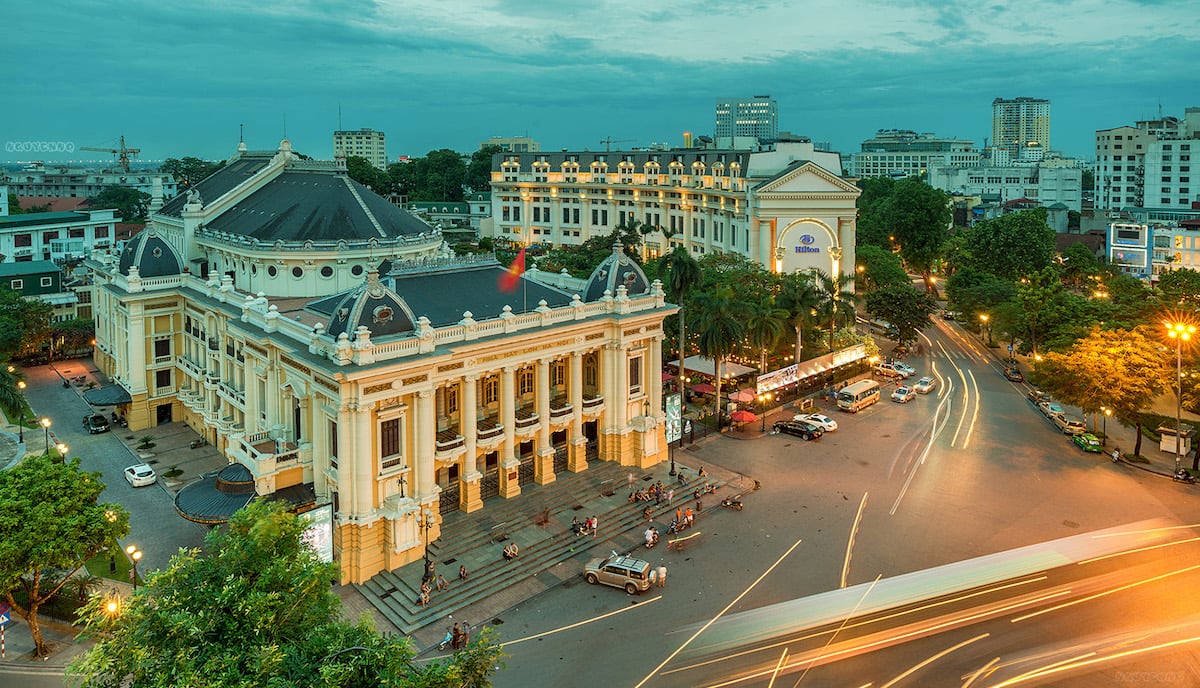
The Hanoi Opera House was designed in a European-inspired neoclassical style influenced by the famous Palais Garnier. Its grand façade features balanced proportions, decorative details, and a highly symmetrical structure that reflects the elegance of early 20th-century French architecture.
The design combines neoclassical elements such as columns, arches, and ornamental reliefs with subtle Gothic influences seen in the decorative windows and exterior detailing. The result is a sophisticated architectural style that stands out among Hanoi’s historic buildings.
Exterior Features
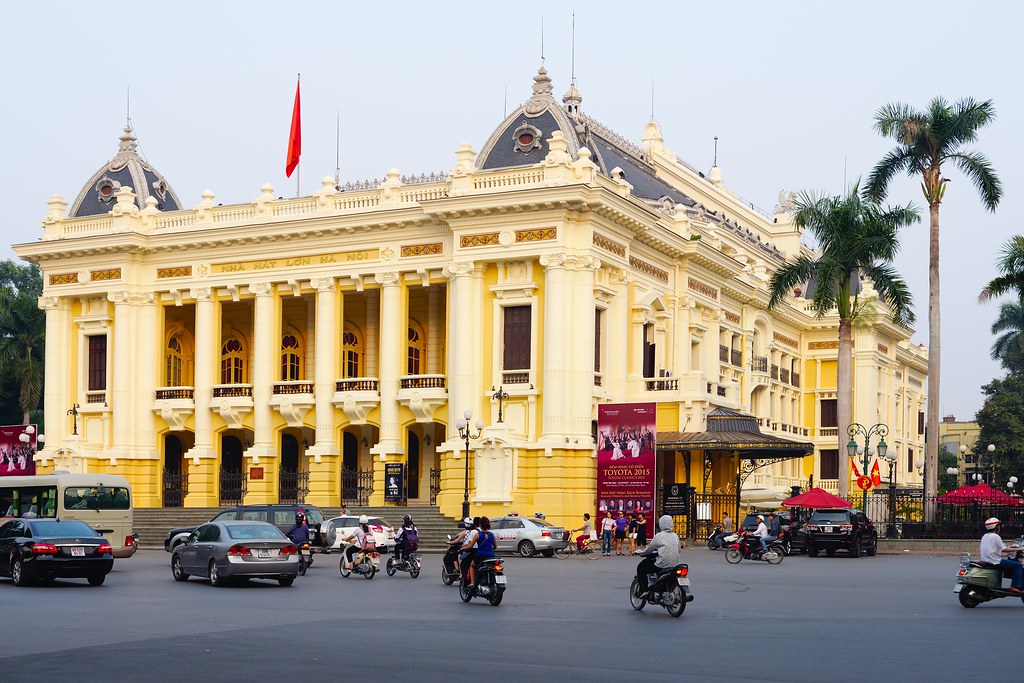
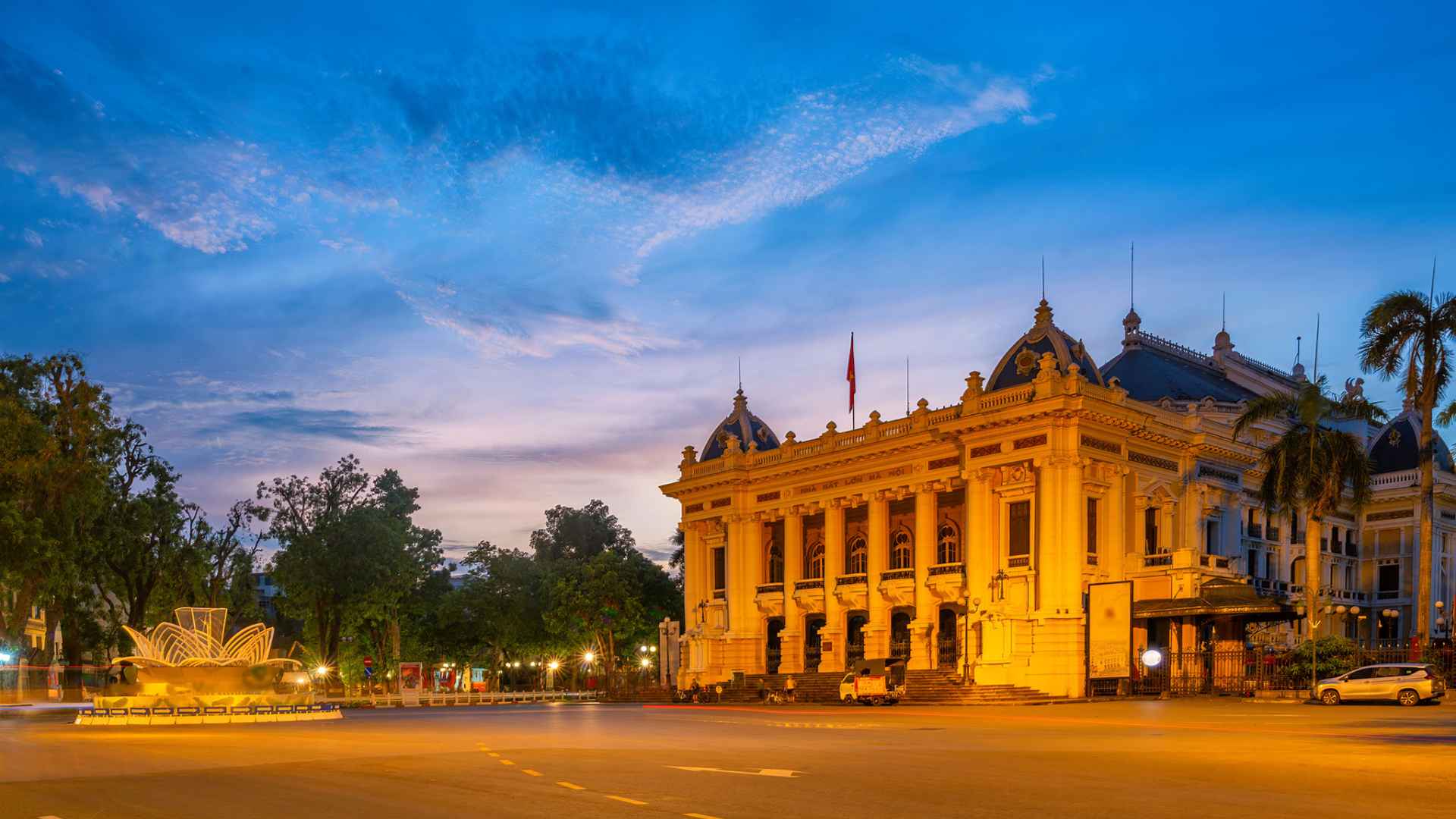
One of the most recognizable highlights of the opera house is its magnificent exterior staircase leading to the main entrance. Large balconies, curved arches, and decorative stonework create a luxurious appearance that resembles European theaters from the colonial era.
The building’s yellow-and-white color palette is also typical of French colonial architecture in Vietnam, especially when contrasted against Hanoi’s green tree-lined streets. During the evening, warm lighting illuminates the façade, creating a romantic and elegant atmosphere that attracts photographers and visitors.The open square in front of the opera house further enhances its visual impact, making it one of the most photogenic landmarks in central Hanoi.
Interior Design
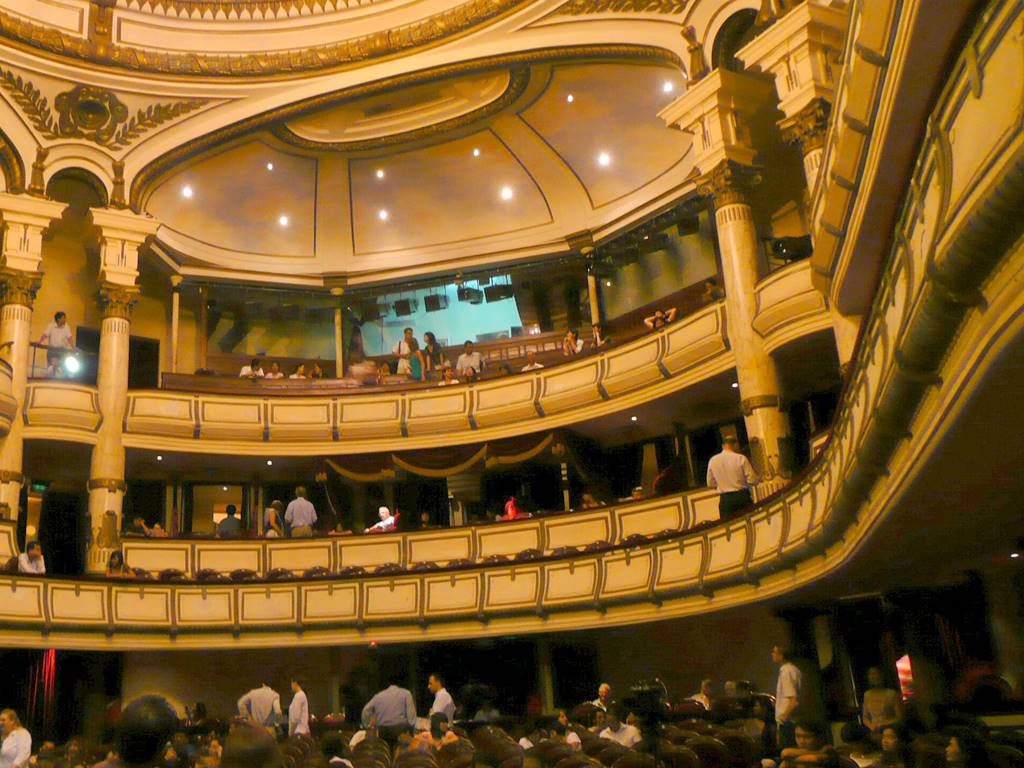
Inside, the opera house continues its luxurious European aesthetic with crystal chandeliers, ornate ceilings, polished decorative details, and rich red velvet seating that creates a classic theater atmosphere.
The main performance hall was carefully designed for excellent acoustics, allowing opera, symphony concerts, ballet, and traditional performances to be experienced with clear and balanced sound quality.
Visitors can also admire elegant reception areas, historical halls, and VIP rooms decorated with French colonial influences. These interior spaces preserve the sophisticated atmosphere of the early 20th century while continuing to host important cultural and diplomatic events today.
3. What to See Inside Hanoi Opera House
What makes the Hanoi Opera House unique is not simply that it resembles a European opera house, but how French architecture was adapted to fit Hanoi’s tropical climate, urban scale, and cultural atmosphere in the early 20th century. While many European opera houses feel monumental and palace-like, the Hanoi Opera House appears lighter, more refined, and better balanced with its surrounding environment.
Main Performance Hall
The most remarkable feature of the main hall is not its size, but its spatial proportions. Unlike the extremely tall interiors of opera houses in Paris or Vienna, the ceiling here is designed with softer curved vaults that help concentrate sound more intimately within the space. As a result, concerts and orchestral performances feel closer and more immersive rather than distant or overly echoing.
The balcony system is another distinctive architectural detail. Instead of using heavy and massive balcony structures common in traditional European theaters, the balconies inside the Hanoi Opera House are slimmer and more open, helping improve airflow in Hanoi’s humid tropical climate. The spacing between levels is also lower, allowing audiences to feel visually connected to the stage from nearly every seat.
The interior color palette is more restrained than many European opera houses. Rather than overwhelming gold decoration and deep crimson tones, the space combines soft cream-yellow walls, muted red velvet seating, and dark wood finishes. This creates a refined atmosphere that feels elegant without becoming visually excessive under tropical lighting conditions.
Another unique characteristic is the presence of natural light throughout several interior spaces. Large windows and semi-open circulation areas allow daylight to filter into the building — something rarely seen in traditional European opera houses, which were typically designed as enclosed spaces.
Mirror Room & Reception Areas
The Mirror Room feels more like a refined French colonial salon than a royal palace chamber. Instead of overwhelming luxury, the space reflects a softer and more elegant interpretation of French design adapted to Hanoi’s atmosphere.
The large mirrors are not only decorative but also strategically positioned to multiply natural light entering through the windows, making the room appear brighter and more spacious during the daytime. This was a practical architectural response to Vietnam’s tropical environment.
One particularly interesting detail is the restrained use of ornamentation. Unlike the dense decorative richness of Beaux-Arts interiors in France, the Hanoi Opera House leaves more visual breathing space between mirrors, walls, doors, and ceiling details. This creates a lighter and more graceful atmosphere rather than a display of excessive grandeur. Standing inside the room, visitors can clearly sense the fusion between colonial Parisian aesthetics and early 20th-century Hanoi — a form of elegance that feels sophisticated yet surprisingly intimate.
Historic Staircases & Hallways
The grand staircase is considered one of the most photogenic architectural elements inside the opera house because of the way natural light moves through the space. During the day, sunlight from the tall windows falls across the stone surfaces and metal railings, creating dramatic depth and cinematic shadows.
Unlike many European theaters that used darker stone materials to emphasize monumentality, the Hanoi Opera House uses lighter tones that reflect tropical sunlight more effectively. This gives the interior a softer and more open atmosphere. The hallways were also designed with semi-open circulation in mind, allowing natural airflow throughout the building — an important adaptation during a period before modern air conditioning existed. As a result, despite being a French colonial structure, the interior feels noticeably more breathable than many European buildings from the same era.
What ultimately makes the Hanoi Opera House special is not extreme luxury, but the balance between classical French artistry and the practical realities of Hanoi’s tropical environment. Rather than a direct copy of a European opera house, it feels like a uniquely “tropical Paris” interpretation shaped by Vietnam’s climate and cultural setting.
4. Performances & Cultural Experiences
Beyond its architectural beauty, the Hanoi Opera House remains one of Vietnam’s most important cultural venues. Watching a performance here is not only about entertainment, but also about experiencing music, history, and architecture together in a historic setting.
Traditional Vietnamese Performances
The opera house regularly hosts traditional Vietnamese performances that introduce visitors to local music, dance, and storytelling traditions. Folk music shows often feature instruments such as the đàn bầu, đàn tranh, bamboo flutes, and traditional drums, creating a sound that feels both delicate and deeply connected to Vietnamese culture.
Traditional dance programs and theatrical performances also present themes inspired by village life, legends, and historical stories. One of the most unique experiences is the bamboo circus, where performers combine acrobatics, live music, and bamboo structures to recreate scenes from rural Vietnam in a contemporary artistic style.
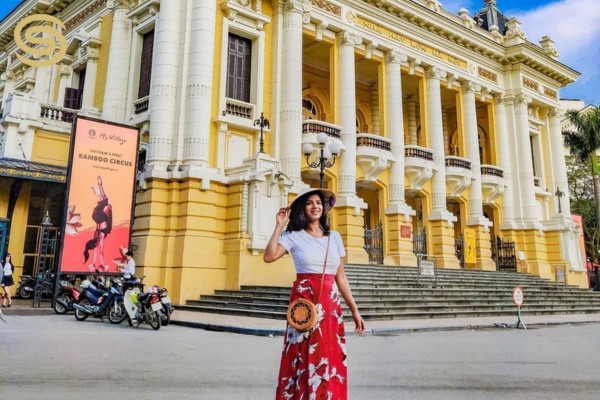
These shows are especially popular with international visitors because they rely heavily on visuals, movement, and music, making them easy to enjoy even without understanding Vietnamese.
Classical & International Events
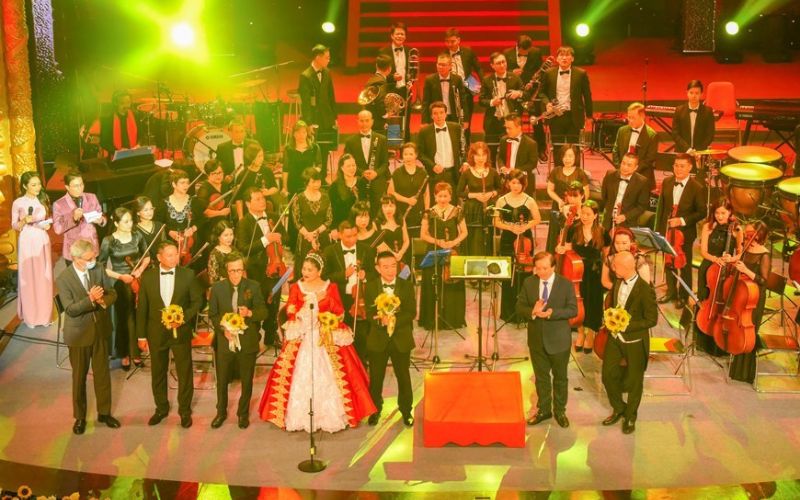
The Hanoi Opera House is also known for hosting opera, ballet, symphony concerts, and international cultural performances. Compared to modern concert halls, the theater’s smaller and more intimate design creates a closer connection between performers and the audience.
Many events feature collaborations between Vietnamese artists and international orchestras, musicians, or cultural organizations. Seasonal festivals, gala concerts, and special anniversary performances are also regularly organized here, making the opera house an important center of Hanoi’s artistic scene.
Why Watching a Show is Worth It
Watching a performance at the Hanoi Opera House feels very different from visiting a modern theater. The historic interiors, warm lighting, velvet seating, and French colonial architecture create an atmosphere that already feels theatrical before the performance even begins.
For tourists, it offers a deeper cultural experience beyond sightseeing. For locals, the opera house represents one of Hanoi’s most elegant and historically meaningful artistic spaces. Whether attending a traditional Vietnamese performance or a classical concert, the experience feels less like a regular show and more like stepping into a living part of Hanoi’s cultural heritage.
5. Guided Tours & Visitor Experience
Visiting the Hanoi Opera House is not limited to attending performances. Guided tours allow visitors to explore the building’s architecture, historical spaces, and backstage atmosphere while learning more about one of Hanoi’s most important cultural landmarks.
Opera House Tours
The guided tours provide insight into the history, architecture, and cultural significance of the Hanoi Opera House. Visitors can explore elegant interior spaces such as the main performance hall, ceremonial reception rooms, historic staircases, and selected backstage areas that are normally closed during performances.
Tour guides often explain how French colonial design was adapted to Hanoi’s tropical climate, along with stories connected to important political and cultural events that took place inside the building over the past century. The best time for tours is usually during the daytime when natural light highlights the interior architecture and decorative details more clearly. Morning and late afternoon visits are especially popular for photography.
Visitor Etiquette
Although the opera house welcomes tourists, it still functions as an active cultural venue, so respectful behavior is important. Smart casual or elegant clothing is recommended, especially for evening performances and classical concerts.
Photography is generally allowed in public areas during tours, but flash photography and video recording may be restricted inside the theater during live performances. Visitors are also expected to keep noise levels low, silence mobile phones, and avoid entering or leaving the hall while performances are taking place. Because of the formal atmosphere, attending a show here often feels more refined and ceremonial than visiting a modern entertainment venue.
Ticket Information
Ticket prices at the Hanoi Opera House vary depending on whether visitors join a guided tour or attend a live performance. Standard architectural tours usually cost around 120,000 VND per person, while combined tour-and-performance experiences are commonly priced at approximately 400,000 VND per person.
For evening performances such as opera, ballet, symphony concerts, or traditional Vietnamese cultural shows, ticket prices generally range from 300,000 VND to 1,500,000+ VND depending on the event, seating area, and performance scale. Premium concerts or VIP seating may cost significantly more.
Popular cultural shows like bamboo circus performances are often priced between 700,000 VND and 1,600,000 VND for better seating categories. Because many performances have limited seating and attract both tourists and local audiences, booking tickets in advance is highly recommended during weekends, holidays, and peak travel seasons in Hanoi.
Conclusion
More than just a historic building, the Hanoi Opera House represents the intersection of architecture, culture, and history in the heart of Hanoi. Its elegant French colonial design, carefully preserved interiors, and rich artistic atmosphere make it one of the city’s most distinctive cultural landmarks.
From exploring the grand staircases and ceremonial halls to attending traditional Vietnamese performances or classical concerts, every experience inside the opera house carries a sense of timeless sophistication. Unlike many modern entertainment venues, the Hanoi Opera House offers visitors the rare opportunity to experience live art within a space that still preserves the atmosphere of another era.
Whether visited during the day for its architectural beauty or in the evening for a performance, the Hanoi Opera House remains an essential destination for travelers seeking a deeper understanding of Hanoi’s cultural and historical character.
BeDental – A Leading Dental Clinic for International Travelers in Vietnam
BeDental offers high-quality dental services for international travelers visiting Vietnam, combining modern technology with experienced dentists. Our services include general and cosmetic dentistry, dental implants, teeth whitening, and smile makeovers, all performed to international standards.
Designed for tourists, BeDental provides flexible appointments, English-speaking staff, and personalized treatment plans that fit travel schedules. With competitive pricing and convenient locations, BeDental allows visitors to improve their smile while enjoying their trip to Vietnam.