

Câu chuyện khách hàng
Mekong Delta Tour Guide: Best Routes, Floating Markets & Tips
May

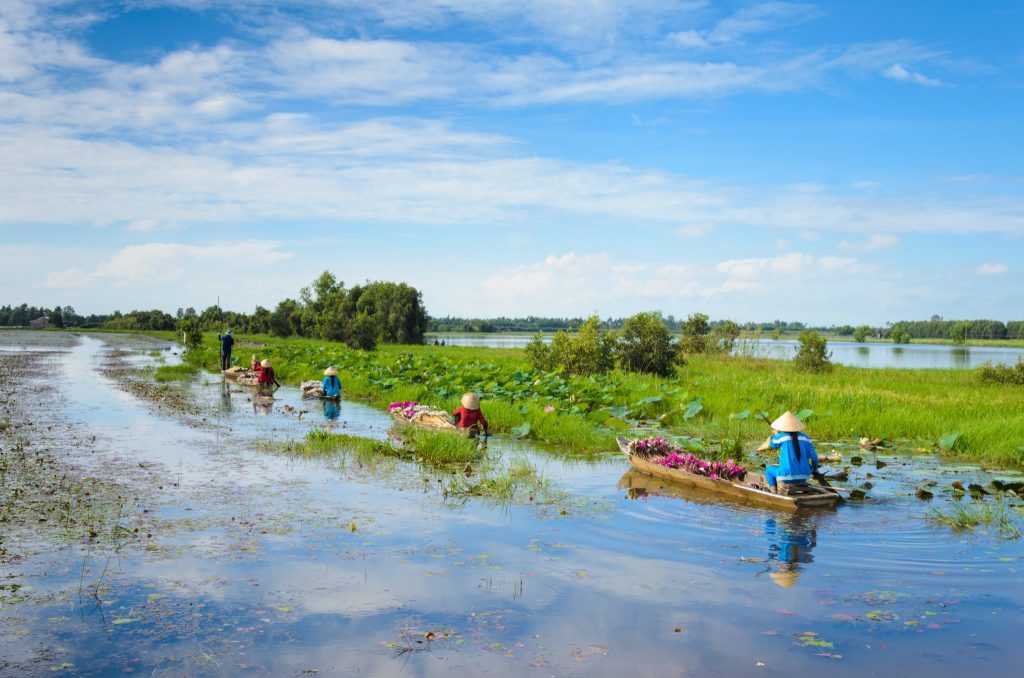
Mekong Delta Tour Guide: Best Routes, Floating Markets & Tips: The Mekong Delta in Southern Vietnam is one of the most distinctive and culturally rich regions of the country, often described as the “rice bowl of Vietnam” thanks to its vast agricultural production and dense river network. Shaped by the branches of the Mekong River, the region is a complex system of canals, islands, orchards, and floating communities where water is not just a landscape feature but the main way of life.
Unlike urban centers such as Ho Chi Minh City, the Mekong Delta moves at a slower, more natural rhythm. Daily activities are closely connected to rivers—people travel by boat, trade happens on water, and local livelihoods are deeply tied to farming and fishing. This creates a lifestyle that feels both simple and deeply rooted in tradition.
1. Best Time to Visit the Mekong Delta- Mekong Delta Tour
The Mekong Delta can be visited year-round, but each season offers a very different atmosphere depending on water levels, weather conditions, and agricultural cycles.
During the dry season (December to April), the weather is generally more stable with less rain, clearer skies, and calmer river conditions. This is considered the most convenient period for boat tours, visiting floating markets, and moving between river towns. The waterways are easier to navigate, and travel schedules tend to be more predictable, making it a comfortable time for first-time visitors.
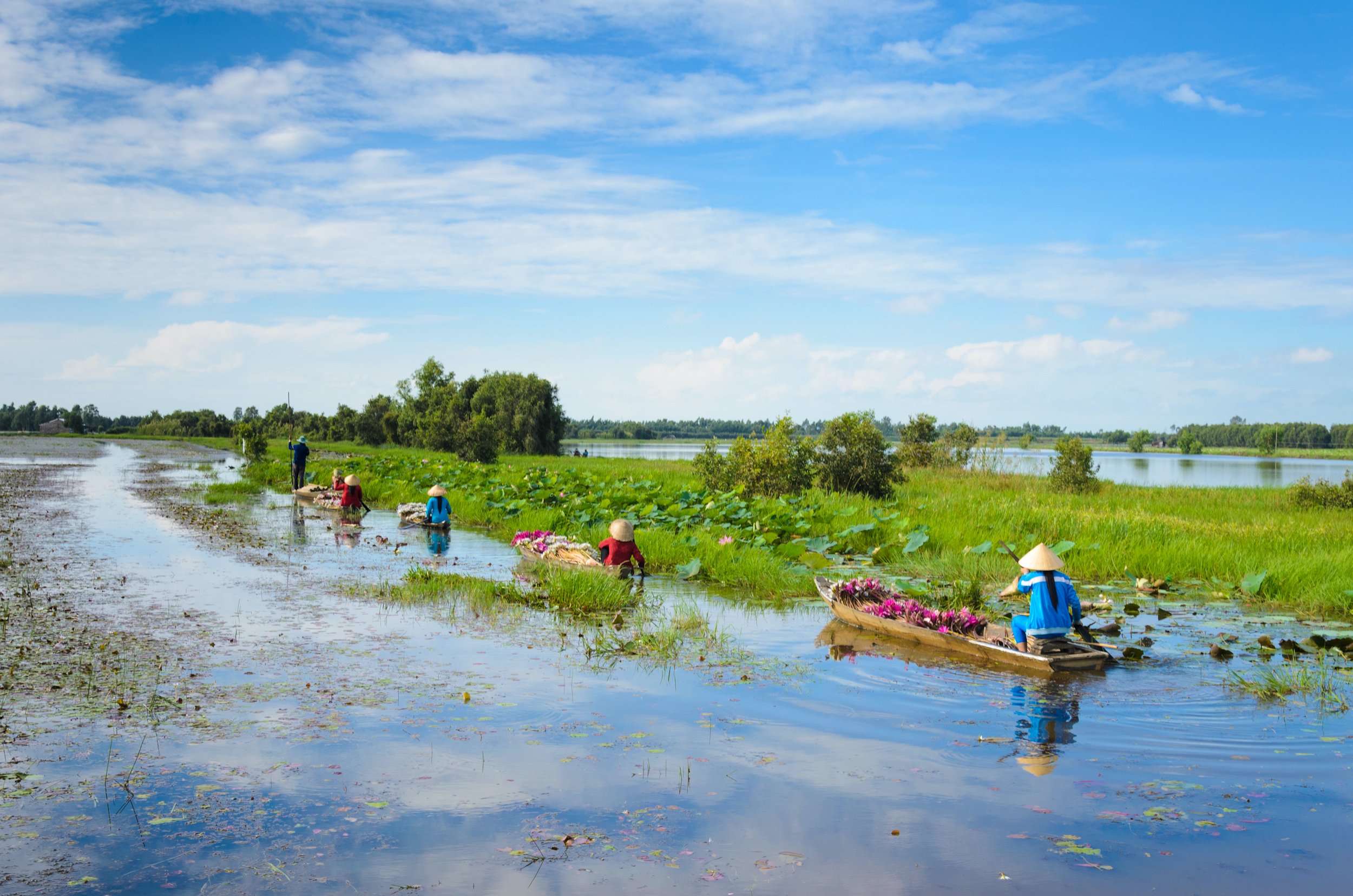
In contrast, the wet season (May to November) transforms the Mekong Delta into a much greener and more dynamic environment. Rainfall increases, river water levels rise, and the landscape becomes more lush and vibrant. Although travel can be slightly less predictable due to weather changes, this period offers a more “authentic” feeling of river life, where boats become even more central to daily movement and the scenery feels more alive and immersive.
Beyond weather patterns, the Mekong Delta also changes with seasonal highlights such as fruit harvest periods and local festivals. Depending on the time of year, visitors may encounter orchards full of ripe tropical fruits or small regional celebrations tied to agricultural cycles and community traditions. These moments add another layer of cultural depth to the journey, making each visit slightly different even within the same region.
2. Best Routes & Itineraries- Mekong Delta Tour
The Mekong Delta Tour offers a layered travel experience that changes significantly depending on the route chosen. The 1-day trip focuses on accessibility, giving a quick introduction to river life through Mỹ Tho, Cồn Thới Sơn, and Bến Tre, where boat rides and coconut villages create an easy entry point into the region. The 2–3 day classic route expands this experience into a more complete journey, connecting Vĩnh Long’s island life with Cần Thơ’s floating markets, allowing travelers to see both rural and urban river culture in one continuous flow.
For those seeking deeper exploration, the extended 4–5 day route moves into the southernmost provinces such as Sóc Trăng, Bạc Liêu, and Cà Mau, where landscapes become quieter, cultures more diverse, and tourism less dominant. Together, these routes show the Mekong Delta not as a single destination, but as a living river system that gradually reveals more depth the longer you stay.
Route Comparison Table- Mekong Delta Tour
| Tour Type | Route | Key Stops | Main Highlights | Experience Style |
| 1-Day Trip (Quick Experience) | Ho Chi Minh City → Mỹ Tho → Cồn Thới Sơn → Bến Tre → Return | Mỹ Tho, Unicorn Island (Cồn Thới Sơn), Bến Tre coconut villages | Boat ride on Tiền River, canal sampan ride, coconut workshops, orchard visits | Fast-paced, introductory, “first impression” of river life |
| 2–3 Day Classic Route | Ho Chi Minh City → Mỹ Tho → Bến Tre → Vĩnh Long → Cần Thơ → Return | Cồn An Bình (Vĩnh Long), Cái Răng Floating Market (Cần Thơ), Phong Điền | Floating markets, homestay stay, orchard cycling, deeper canal system exploration | Balanced, immersive, mix of culture + nature + local life |
| 4–5 Day Deep South Route | Cần Thơ → Sóc Trăng → Bạc Liêu → Cà Mau (or Châu Đốc extension) | Chùa Dơi (Sóc Trăng), salt fields (Bạc Liêu), mangrove forests (Cà Mau), Châu Đốc river culture | Khmer culture, remote rural life, salt fields, mangrove ecosystem, cross-border river culture | Slow, authentic, less touristy, deep cultural immersion |
2.1 1-Day Trip (Quick River Experience)- Mekong Delta Tour
Route- Mekong Delta Tour: Ho Chi Minh City → Mỹ Tho (Tiền Giang) → Cồn Thới Sơn (Unicorn Island) → Bến Tre → Return
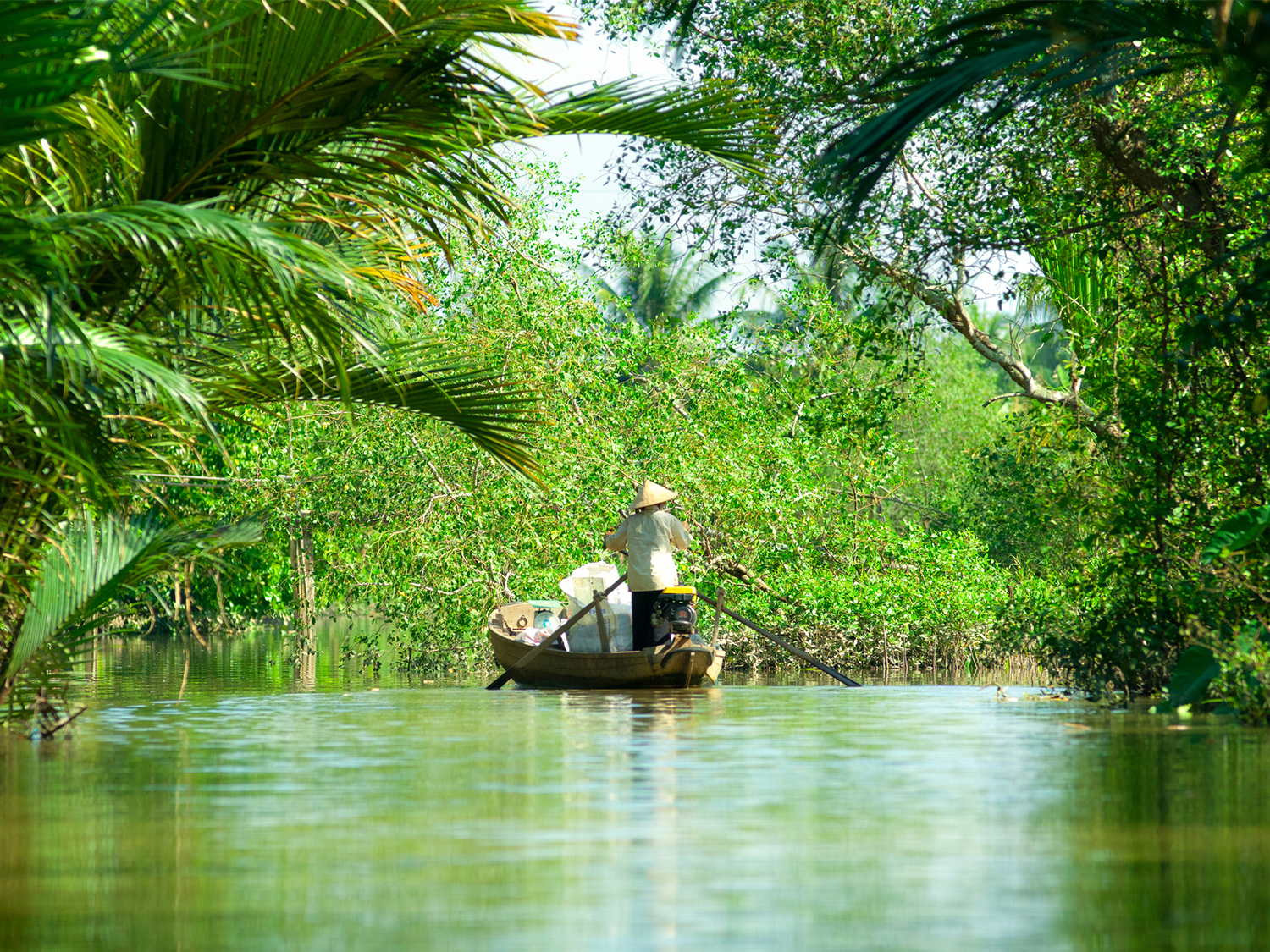
This short itinerary focuses on the upper Mekong region, starting from Mỹ Tho, where visitors board boats along the Tiền River. From here, the journey continues to Cồn Thới Sơn (Unicorn Island), a small river island known for traditional craft activities, fruit orchards, and canal boat rides through narrow palm-lined waterways.
The route then moves toward Bến Tre, often called the “coconut kingdom,” where visitors explore local workshops making coconut candy, coconut oil, and handmade products. Small sampan rides through shaded canals are also a key highlight before returning to Ho Chi Minh City in the afternoon.
2.2 2–3 Day Classic Route (Most Popular Circuit)
Route- Mekong Delta Tour: Ho Chi Minh City → Mỹ Tho → Bến Tre → Vĩnh Long → Cần Thơ → Return
This route goes deeper into the delta and introduces more diversity in river landscapes and local life. After starting in Mỹ Tho and Bến Tre, travelers continue toward Vĩnh Long, where smaller islands like Cù Lao An Bình offer a more peaceful rural atmosphere, with orchards, cycling paths, and homestays along the river.
The journey then reaches Cần Thơ, the central hub of the Mekong Delta. Here, the highlight is the early morning visit to Cái Răng Floating Market, where boats gather before sunrise to trade fruits, vegetables, and local goods directly on the water. Nearby areas like Phong Điền offer quieter floating market experiences, while riverside walks along the Ninh Kiều Wharf show the modern side of the city.
2.3 Extended Deep South Route (4–5 Days Immersive Journey)
Route- Mekong Delta Tour: Cần Thơ → Sóc Trăng → Bạc Liêu → Cà Mau (or Châu Đốc extension)
This deeper route explores the southernmost provinces of Vietnam, where tourism is lighter and local life is more visible. From Cần Thơ, the journey moves to Sóc Trăng, known for its Khmer cultural influence, pagodas such as Chùa Dơi, and quieter rural surroundings.
Next is Bạc Liêu, associated with open salt fields, coastal landscapes, and historical landmarks like the Bạc Liêu Wind Farm and local heritage sites linked to southern folk culture. The route can extend further to Cà Mau, the southernmost point of Vietnam, where mangrove forests and river networks dominate the landscape.
Alternatively, some itineraries extend toward Châu Đốc (An Giang), near the Cambodia border, offering a different river culture around the Hậu River, including floating fish farms and multi-ethnic communities.
3. Floating Markets (Highlight Experience)- Mekong Delta Tour
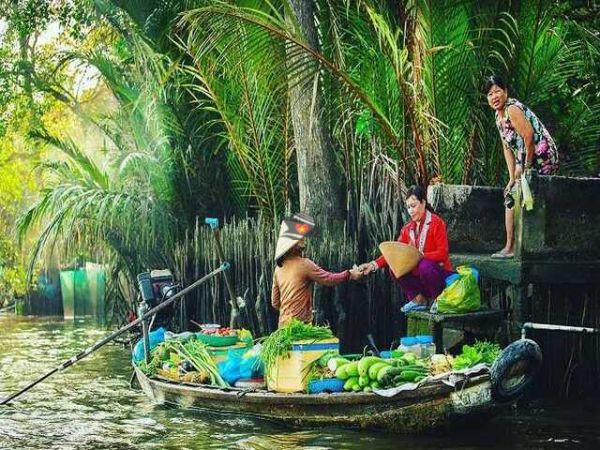
Floating markets are one of the most iconic experiences in the Mekong Delta, where daily trade happens directly on the river instead of on land. These markets are usually active very early in the morning, when boats gather in large numbers to sell and exchange goods, creating a unique floating commercial landscape that reflects the region’s water-based lifestyle.
The most well-known is Cai Rang Floating Market, located near Can Tho. This is the largest floating market in the region and often the main highlight for visitors. Activity begins before sunrise, when dozens—sometimes hundreds—of boats gather on the river. Larger boats act as “floating stalls,” displaying goods on tall bamboo poles so buyers can see what is being sold from a distance. Smaller boats move between them to trade directly. The atmosphere is lively but still naturally organized, with a mix of fruits, vegetables, noodles, and coffee being prepared and sold on the water itself. It feels less like a tourist attraction and more like a functioning river-based supply chain that has existed for generations.
A more local and less crowded alternative is Phong Dien Floating Market, located slightly outside the city center of Can Tho. Compared to Cai Rang, this market is smaller in scale and feels more traditional, with fewer tourist boats and more local traders. The experience here is quieter and more observational—you move slowly through smaller boats and narrow river sections, where interactions feel more natural and less staged. It offers a closer look at everyday trading habits rather than large-scale commercial activity.
Further north, Cai Be Floating Market in Tien Giang provides a slightly different experience, combining floating river trade with nearby village tourism. While still active on the water, this market is more integrated with land-based activities such as orchard visits and local craft stops. Because of its location closer to Ho Chi Minh City, it is often included in short day trips, making it more accessible but also slightly more structured in its tourism flow.
4. Local Experiences & Activities
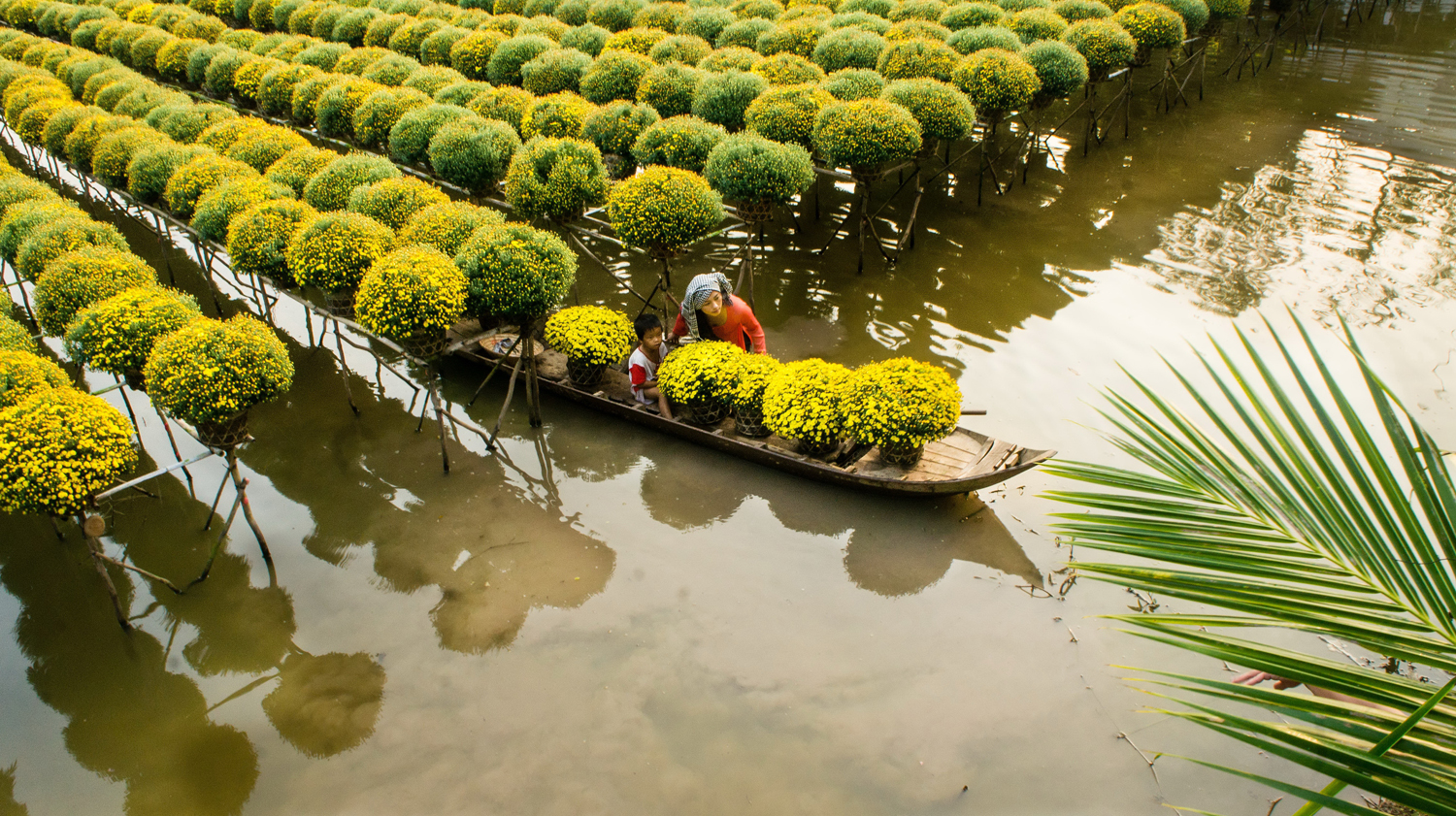
The Mekong Delta Tour offers a wide range of immersive local experiences that revolve around its river-based lifestyle and rural culture. Visitors can take boat rides through narrow “water coconut” canals, where shaded waterways create a quiet, enclosed natural environment. The journey continues with visits to tropical fruit orchards such as mango, durian, and rambutan gardens, especially vibrant during harvest seasons. Traditional workshops also provide insight into local livelihoods, where rice paper, coconut candy, and handmade crafts are produced using simple, family-run methods. On land, cycling through riverside villages offers a slow and authentic way to observe daily life, passing canals, small homes, and agricultural fields. For a deeper cultural connection, homestay experiences with local families allow travelers to stay in simple riverside homes, share meals, and experience the rhythm of everyday life in the Mekong Delta more directly.
- Boat rides through narrow canals (“water coconut forests”)
- Visiting fruit orchards (mango, durian, rambutan)
- Traditional workshops (rice paper, coconut candy, handicrafts)
- Cycling through riverside villages
- Homestay experiences with local families
Overall, these activities are not designed as isolated tourist attractions but as interconnected parts of the same river ecosystem. Each experience—whether on water, in orchards, or within villages—reflects the same slow pace and close relationship between people and nature that defines the Mekong Delta.
5. Accommodation Options- Mekong Delta Tour
Accommodation in the Mekong Delta is generally affordable and varies depending on location and experience style, ranging from simple homestays to comfortable riverside hotels and eco-lodges. The overall cost is relatively lower compared to major tourist cities in Vietnam, but still changes depending on comfort level and services.
In Can Tho, riverside hotels are the most common choice, especially around Ninh Kiều Wharf. These hotels typically range from 50–120 USD per night, depending on view, facilities, and season. Higher-end options with river views or pools can go beyond this range, while mid-range hotels usually offer good comfort with breakfast included. The advantage here is convenience—easy access to floating markets and boat tours.
In Ben Tre and My Tho, homestays are the dominant accommodation type. Prices are much lower, usually around 20–60 USD per night, depending on amenities and setting. Many homestays are located near canals or fruit gardens, offering a more local and immersive experience. Some higher-quality homestays with better design and services can reach around 70–100 USD, but still remain relatively affordable compared to hotels in major cities.
For deeper river experiences, eco-lodges in remote delta areas provide a more curated stay. These properties often combine natural surroundings with resort-style comfort, with prices typically ranging from 80–150 USD per night, and in some cases higher for premium riverside rooms or villas. A good example of this type is Can Tho-based eco-lodges, where prices reflect both location and design-focused accommodation.
Overall, the Mekong Delta Tour offers a clear spectrum: budget homestays (20–40 USD) for basic local immersion, mid-range stays (50–100 USD) for comfort and convenience, and boutique or eco-lodge experiences (100–150+ USD) for a more refined riverfront stay. The choice is less about luxury level alone and more about how close you want to stay to river life and local communities.
Conclusion
The Mekong Delta is not a destination that can be fully understood through a single visit or a checklist of attractions. Instead, it is a layered experience shaped by rivers, seasons, and the slow rhythm of rural life. From short trips in Mỹ Tho and Bến Tre, to the vibrant floating markets of Can Tho, and deeper journeys into Sóc Trăng, Bạc Liêu, and Cà Mau, each route reveals a different side of the same living river system.
What makes the region truly memorable is not only its landscapes, but the way everyday life unfolds directly on water—markets, transportation, agriculture, and even small-scale industries all operate within this fluid environment. Combined with homestays, boat rides, orchards, and local workshops, the Mekong Delta offers an experience that is both cultural and deeply human.
In the end, traveling through the Mekong Delta is less about moving from one attraction to another, and more about slowing down to observe how life adapts to the river. It leaves visitors with a lasting impression of simplicity, warmth, and connection—showing a side of Vietnam that is quiet, authentic, and shaped entirely by water.
BeDental – A Leading Dental Clinic for International Travelers in Vietnam
BeDental offers high-quality dental services for international travelers visiting Vietnam, combining modern technology with experienced dentists. Our services include general and cosmetic dentistry, dental implants, teeth whitening, and smile makeovers, all performed to international standards.
Designed for tourists, BeDental provides flexible appointments, English-speaking staff, and personalized treatment plans that fit travel schedules. With competitive pricing and convenient locations, BeDental allows visitors to improve their smile while enjoying their trip to Vietnam.